
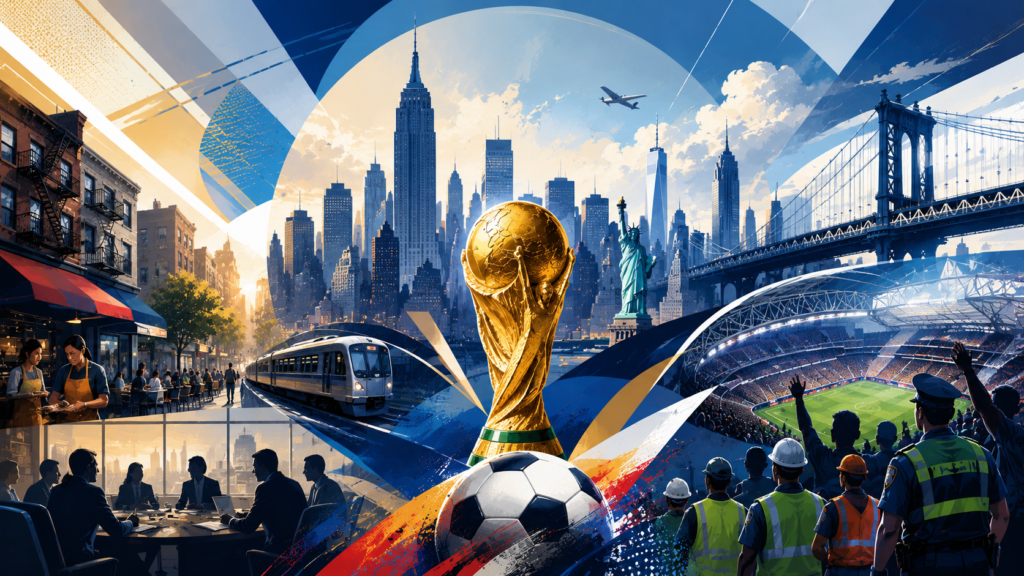
The New York City Council has approved a package of legislation aimed at preparing the city for the 2026 FIFA World Cup, as New York and New Jersey get ready to host one of the world’s biggest sporting events.
The measures are designed to strengthen the city’s readiness ahead of the tournament, with a particular focus on small businesses, tourism, public services, and coordination between local agencies. The World Cup is expected to bring large numbers of visitors to the New York metropolitan area, creating both major economic opportunities and logistical challenges.
A key part of the legislation focuses on helping small businesses benefit from the tournament. Local shops, restaurants, hotels, transportation providers, and cultural venues are expected to see increased demand as fans arrive from across the United States and around the world. City officials want to make sure that these businesses are prepared to take advantage of the surge in visitors.
The council’s plan also emphasizes public safety, transportation, sanitation, crowd management, and communication with residents. With thousands of fans expected to travel between New York City and the stadium in New Jersey, officials are looking to improve coordination across agencies and regional partners.
The 2026 World Cup will be hosted across the United States, Canada, and Mexico, making it the largest edition of the tournament in history. The New York/New Jersey area is expected to play a major role, especially as it prepares to host high-profile matches and welcome international supporters.
City leaders say the event is not only a sports tournament, but also a chance to showcase New York as a global destination. The World Cup could boost tourism, support local jobs, and bring international attention to the city’s neighborhoods, businesses, and cultural scene.
However, officials also recognize that preparation is essential. Large-scale events can create pressure on transportation networks, hotels, public spaces, and emergency services. The approved legislation aims to reduce these risks by encouraging early planning and stronger cooperation before the tournament begins.
For New York City, the 2026 World Cup represents both a challenge and an opportunity. If managed well, the event could deliver major economic benefits while strengthening the city’s image as one of the world’s leading centers for sports, culture, and international tourism.