
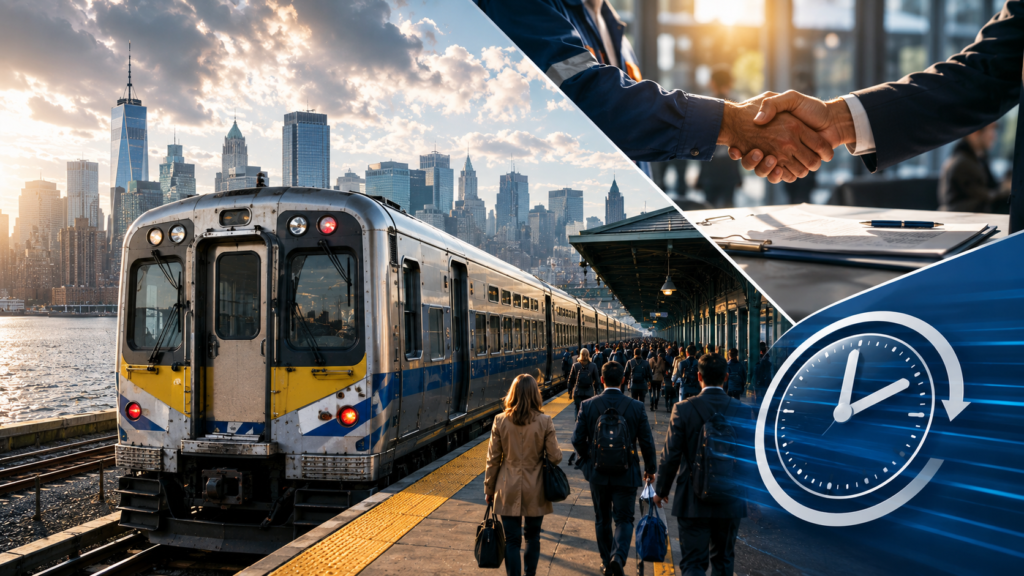
The strike by about 3,500 Long Island Rail Road workers has ended after unions reached a wage agreement with the Metropolitan Transportation Authority, bringing relief to hundreds of thousands of passengers who depend on the line between New York City and Long Island.
The walkout began over the weekend and was the first major strike on the Long Island Rail Road in more than 30 years. It disrupted one of the busiest commuter rail systems in the United States and forced many passengers to work from home, use shuttle buses, or find alternative routes into New York City.
New York Governor Kathy Hochul announced that a deal had been reached between the MTA and five labor unions representing LIRR workers. The agreement includes wage increases, though the full terms were not immediately disclosed. Hochul said the deal provides fair wages while protecting riders and taxpayers from additional fare or tax increases.
Train service was expected to resume gradually from noon on Tuesday, with fuller operations returning later in the day. The phased restart was necessary because trains, crews, and schedules had to be repositioned after the shutdown. Officials still advised some commuters to work remotely during the transition period.
The strike affected around 250,000 to 300,000 daily passengers, depending on ridership estimates. For many commuters, the LIRR is not just a transport option but a daily link between Long Island suburbs, Queens, Brooklyn, Manhattan, and major employment centers. The shutdown therefore created immediate pressure on roads, buses, subway connections, businesses, and office schedules.
The dispute centered mainly on pay and working conditions. Unions argued that workers had gone years without a wage increase while living costs continued to rise. The MTA, meanwhile, warned that a costly agreement could place additional pressure on its finances and ultimately affect riders or taxpayers.
The resolution avoids a longer transportation crisis in the New York region. A prolonged strike could have disrupted the local economy, reduced worker attendance in Manhattan offices, complicated school and hospital commutes, and increased congestion across major roads and subway transfer points.
The deal also carries political importance. The LIRR is a critical part of New York’s public transportation network, and any shutdown quickly becomes a major public issue. By ending the strike after only a few days, state officials and union leaders avoided the kind of prolonged standoff that could have caused wider economic and political damage.
For passengers, the immediate priority is the restoration of reliable service. For the MTA and unions, however, the agreement marks only one stage in a larger debate over wages, transit funding, affordability, and the future of public transportation labor in New York.
The end of the strike is therefore more than a labor settlement. It is a reminder of how central commuter rail remains to the daily life and economy of the New York metropolitan area.