
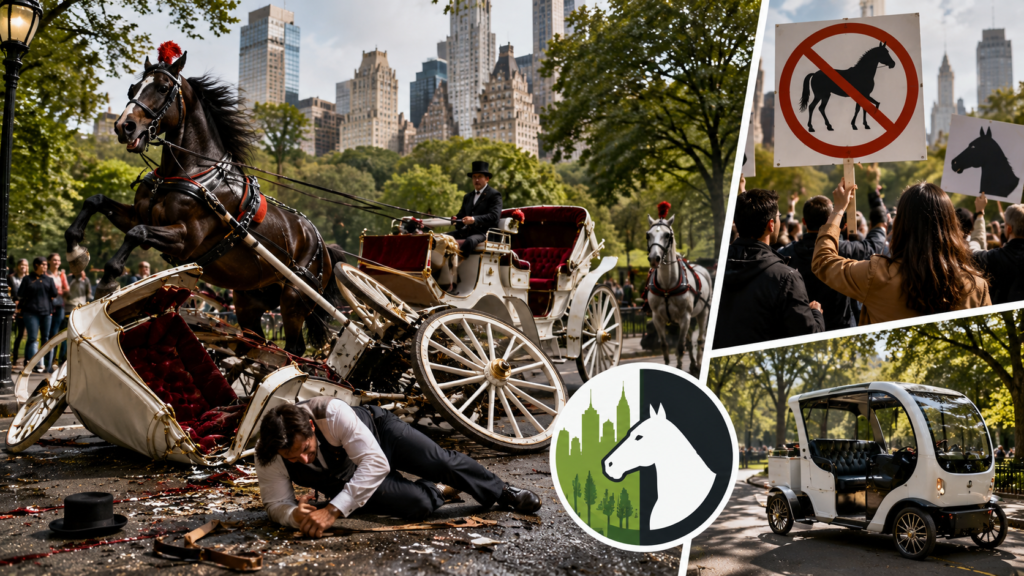
A horse carriage accident in Central Park has revived one of New York City’s longest-running animal welfare debates, after a driver was injured when a horse panicked and collided with another carriage near West 59th Street.
According to local reports, the horse became frightened inside the park, causing the carriage to crash into another carriage before overturning. The driver was injured in the incident, while the condition of the horse became a key concern for animal rights advocates and city officials. The accident quickly renewed public attention on whether horse-drawn carriages should continue operating in one of the busiest urban environments in the United States.
For supporters of a ban, the incident is further evidence that horse carriages are unsafe for both animals and people. Animal rights groups argue that horses are not suited to crowded city streets, loud traffic, emergency sirens, tourists, cyclists, and unpredictable urban conditions. They say even a single sudden noise or movement can cause a horse to panic, creating danger for drivers, passengers, pedestrians, and the animals themselves.
The accident has also brought renewed focus to Ryder’s Law, a proposed measure aimed at ending New York City’s horse carriage industry and replacing it with alternative options, such as electric vintage-style vehicles. The bill is named after Ryder, a carriage horse whose collapse on a Manhattan street in 2022 sparked widespread outrage and intensified calls for reform.
Opponents of horse carriages say the industry represents an outdated attraction that no longer fits modern New York. They argue that horses working long hours in traffic-heavy environments face stress, exhaustion, and health risks. For them, the Central Park crash is not an isolated incident but part of a broader pattern of preventable danger.
However, carriage industry supporters strongly reject those claims. Drivers and industry representatives argue that the horses are well cared for, regularly inspected, and part of a historic New York tradition. They say banning the industry would destroy jobs, harm small operators, and erase a cultural symbol closely associated with Central Park tourism.
The issue has divided New Yorkers for years. Some residents see horse carriages as romantic and iconic, while others view them as unsafe and unnecessary. City leaders have repeatedly faced pressure from both sides, with animal welfare groups demanding a full ban and carriage operators calling for stronger regulation instead of elimination.
The latest accident may increase political pressure on the City Council to revisit Ryder’s Law. Public safety concerns could strengthen the argument that the debate is not only about animal welfare but also about risks to people in crowded public spaces.
Central Park is one of the most visited urban parks in the world, and incidents involving horses there attract immediate attention. When a carriage overturns or a horse panics, the images can quickly reshape public opinion and push lawmakers to act.
For now, the investigation into the crash will determine exactly what happened near West 59th Street. But the broader question is already back in the spotlight: should horse carriages remain part of New York’s identity, or has the city outgrown this tradition?
The Central Park accident has once again turned a local crash into a citywide debate over safety, tradition, animal welfare, and the future of one of New York’s most controversial tourist attractions.