
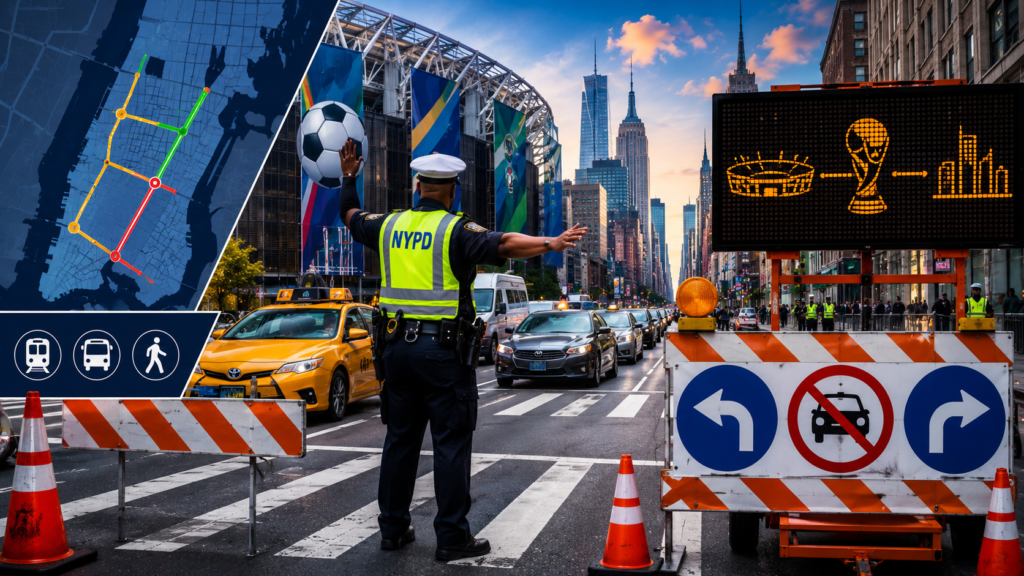
New York City authorities have announced a series of enhanced traffic management measures as preparations continue for the 2026 FIFA World Cup, with officials aiming to reduce congestion and ensure the smooth movement of residents, visitors, and event participants throughout the tournament.
The New York City Department of Transportation has designated eight additional “traffic congestion alert” days during the World Cup period, reflecting expectations of significantly increased vehicle and pedestrian activity around key venues and transportation hubs.
Under the new plan, several major streets in Manhattan will be subject to temporary closures or traffic restrictions on match days and during large fan events. Officials say the measures are designed to prioritize public transportation, emergency services, and pedestrian safety while minimizing disruptions caused by the influx of visitors.
Transportation planners have developed special traffic routes and detour systems to manage vehicle flow around stadiums, fan zones, and public viewing areas. Digital traffic monitoring systems will be used to track congestion levels in real time and allow authorities to make rapid adjustments when necessary.
Residents and commuters are being encouraged to use public transit whenever possible, as officials expect subway, commuter rail, and bus networks to serve as the primary transportation options during major match days. Additional transit services and extended operating schedules are also being prepared to accommodate increased demand.
City officials emphasized that the World Cup represents one of the largest international events ever hosted by the region, requiring extensive coordination between transportation agencies, law enforcement, emergency responders, and event organizers.
Business groups have largely welcomed the preparations, noting that the tournament is expected to generate substantial economic activity across New York City and neighboring New Jersey. However, some commuters have expressed concerns about possible delays and disruptions caused by road closures and traffic restrictions.
Authorities say regular updates on road closures, transit schedules, and congestion conditions will be provided throughout the tournament, urging residents and visitors to plan their journeys in advance.
With millions of football fans expected to travel through the metropolitan area, city leaders say the enhanced traffic measures are essential to ensuring a safe, efficient, and successful World Cup experience for everyone involved.