
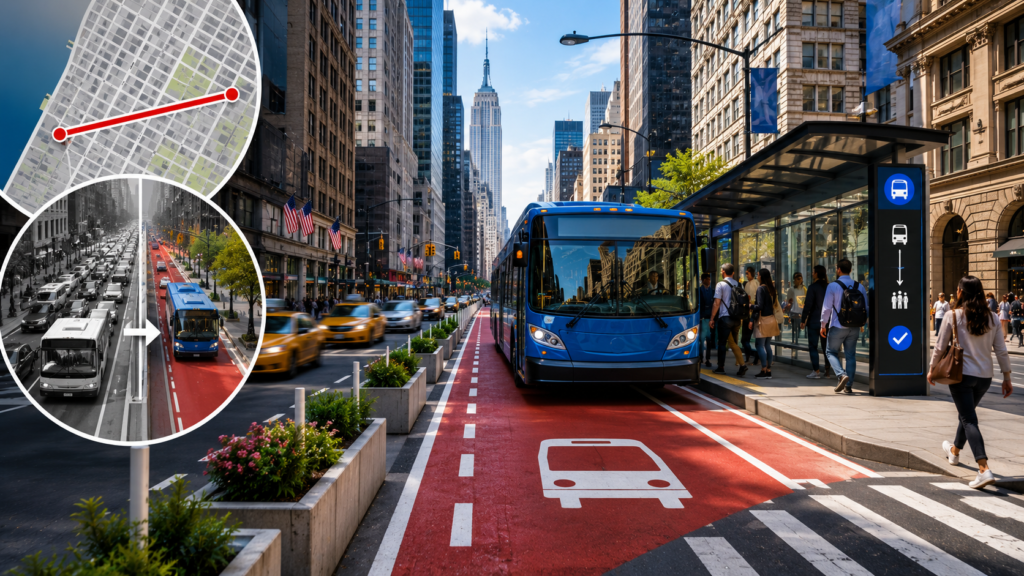
New York City has officially resumed work on the long-debated 34th Street Bus Lane project in Manhattan, reviving one of the city’s most ambitious efforts to improve public transportation and reduce chronic traffic congestion in Midtown.
City transportation officials say the renewed project aims to significantly speed up bus travel for more than 28,000 daily passengers who rely on the busy crosstown route every day. The corridor, which stretches through one of Manhattan’s most congested commercial areas, has long been criticized for severe delays caused by traffic bottlenecks, delivery vehicles, taxis, and heavy private car usage.
The redesigned project focuses on expanding and strengthening dedicated bus lanes along 34th Street, allowing buses to move more efficiently through Midtown while reducing travel times for commuters. Officials argue that buses often carry far more people than private vehicles occupying the same road space, making public transportation improvements essential for the city’s long-term mobility strategy.
Transportation planners say the relaunch is part of a broader push by New York City to prioritize mass transit over private car traffic in densely populated areas. The city has increasingly invested in bus lane expansions, bicycle infrastructure, pedestrian-friendly streets, and congestion reduction measures in recent years as officials attempt to modernize aging transportation systems.
Supporters of the initiative argue that faster and more reliable buses could provide major economic and environmental benefits. Reduced travel times may improve worker productivity, lower emissions from idling traffic, and encourage more residents to use public transportation instead of driving through Manhattan.
The 34th Street corridor is particularly important because it connects major transportation hubs, commercial districts, office towers, and tourist destinations, including Penn Station, the Hudson Yards area, and the East Side of Manhattan. Any improvements along the route are expected to affect thousands of commuters, workers, and visitors daily.
However, the project has also faced opposition from some business owners, drivers, and local groups concerned about reduced road access, delivery disruptions, and increased congestion on surrounding streets. Critics argue that limiting vehicle access in Midtown could create unintended traffic problems elsewhere and negatively impact businesses dependent on deliveries and customer access.
Despite those concerns, city officials insist that improving bus service remains a critical priority as New York continues recovering from years of transportation strain and rising commuter demand.
Urban planning experts say the relaunch reflects a larger global trend in major cities where governments are increasingly redesigning streets around public transit efficiency rather than car-centered infrastructure. Similar projects have been implemented in cities such as London, Paris, and Bogotá with varying degrees of success.
Construction and implementation phases are expected to continue over the coming months, with transportation authorities promising additional public updates as the project progresses.
For New York City officials, the message is clear: in one of the world’s busiest urban centers, moving people efficiently matters more than moving cars.