
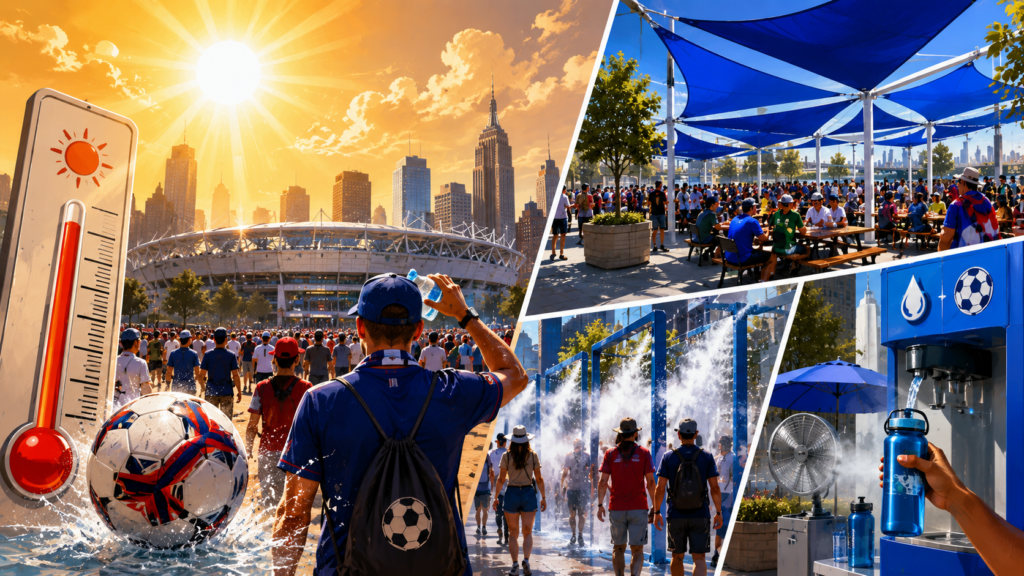
Growing concerns over extreme temperatures have prompted organizers and host cities to strengthen heat-mitigation measures during the 2026 FIFA World Cup, amid warnings that the tournament could become one of the hottest editions in the competition’s history.
Recent climate assessments have highlighted the increasing risk of heat-related illnesses for players, officials, and spectators, particularly during daytime matches and large outdoor fan events. As a result, host cities across North America have expanded efforts to protect visitors from prolonged exposure to high temperatures.
In New York, authorities have increased the number of shaded rest areas around fan zones, transportation hubs, and major gathering points. Additional cooling stations, misting systems, and free water distribution points have also been introduced to help visitors stay safe during periods of intense heat.
Public health officials are encouraging fans to remain hydrated, wear lightweight clothing, and seek shade whenever possible. Medical teams and emergency responders have been placed on heightened alert to respond quickly to heat-related emergencies as crowds continue to grow throughout the tournament.
Sports and climate experts have warned that rising global temperatures are becoming an increasingly important factor in the planning of major international sporting events. Tournament organizers have responded by reviewing scheduling options, improving venue cooling systems, and enhancing weather monitoring capabilities.
Despite the challenges, officials remain confident that the World Cup can be held safely through careful planning and coordination. Host cities continue to adapt their infrastructure and public services to ensure that millions of visitors can enjoy the tournament while minimizing the risks associated with extreme summer weather.
As the competition progresses, heat management is expected to remain a central focus for organizers, highlighting the growing intersection between climate change and global sporting events.