
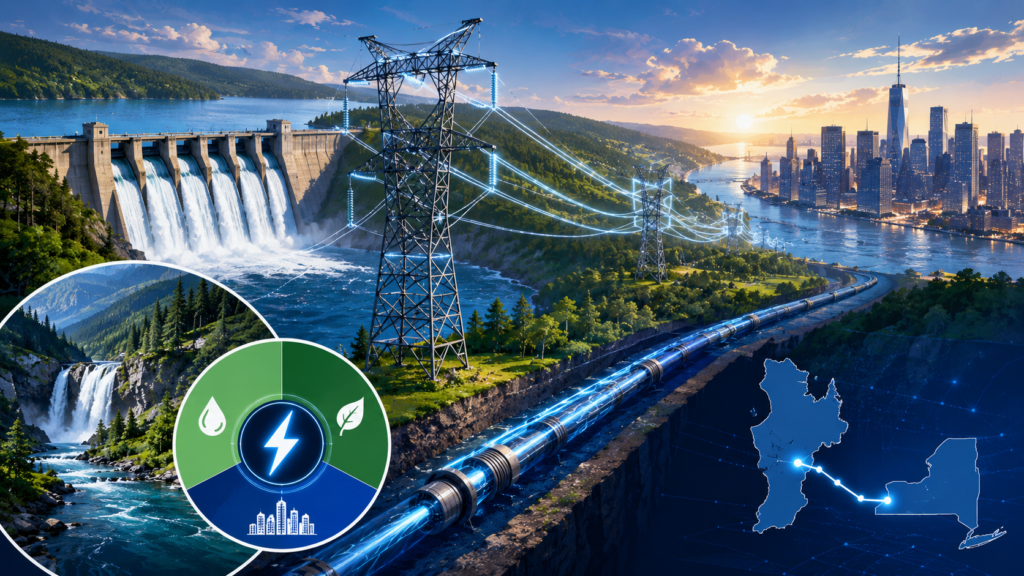
A landmark clean-energy project linking Quebec’s vast hydroelectric network with New York City has officially entered service, marking a major milestone in the region’s transition toward renewable power. The transmission line, completed at a cost of approximately $6 billion, is expected to provide around 20 percent of New York City’s electricity needs through carbon-free hydroelectric energy.
The project delivers renewable electricity generated by hydroelectric facilities in Quebec directly to consumers in New York, reducing the city’s dependence on fossil fuels and helping meet ambitious climate and emissions-reduction targets. Energy officials described the project as one of the largest clean-energy infrastructure investments in North America.
Supporters say the transmission line will significantly reduce greenhouse gas emissions while improving the reliability of the power grid. By providing a steady supply of renewable electricity, the project is expected to help stabilize energy supplies during periods of high demand and support New York’s long-term environmental goals.
Construction of the project required years of planning, regulatory approvals, and engineering work across international and state boundaries. The transmission system includes hundreds of miles of underground and underwater cables designed to minimize environmental impacts while delivering electricity efficiently to the city.
City and state leaders have welcomed the project as a major step toward a cleaner energy future. In addition to its environmental benefits, officials believe the investment will strengthen energy security, create economic opportunities, and support the continued growth of sustainable industries throughout the region.
As New York continues to pursue its clean-energy transition, the completion of the Quebec transmission line is being viewed as a transformative achievement that could serve as a model for future large-scale renewable energy partnerships across North America.