
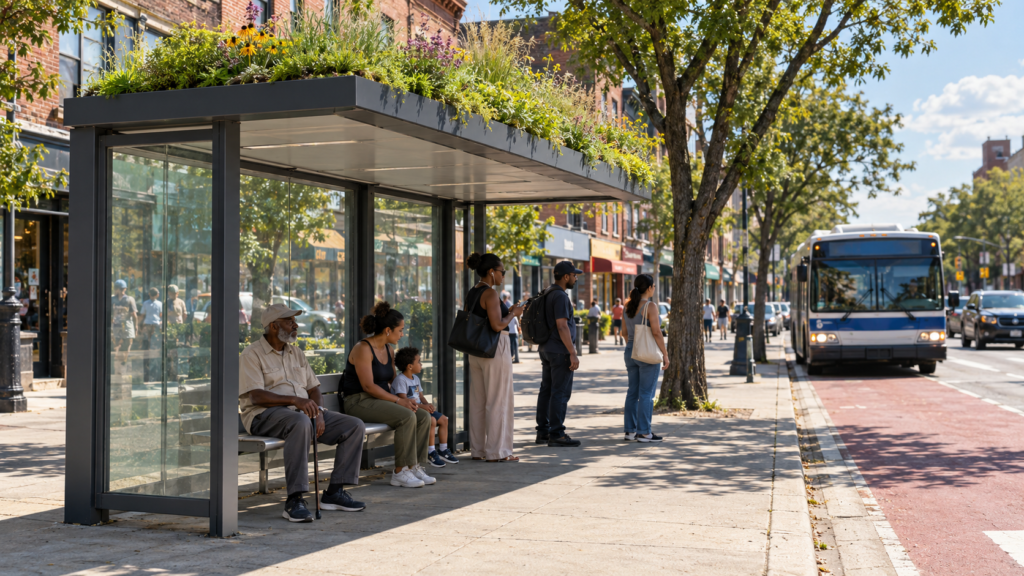
New York City has installed its first bus shelter featuring a cooling green roof in Brownsville, Brooklyn, as part of a pilot program aimed at protecting passengers from extreme heat and heavy rainfall.
The shelter, located along the busy Pitkin Avenue commercial corridor, is topped with native plants, grasses and wildflowers. The vegetation is designed to provide natural cooling, retain excess rainwater and create a habitat for local pollinators.
The project also includes three nearby bus shelters equipped with heat-resistant roofs. These shelters use an inexpensive reflective film intended to redirect sunlight and reduce heat around the waiting areas.
Together, the four installations will allow the city to compare different methods of adapting everyday transport infrastructure to increasingly hot and wet weather.
Brownsville was selected because it is considered one of New York City’s most heat-vulnerable neighborhoods. Many residents, particularly older adults, have raised concerns about high temperatures, insufficient shade and flooding along the commercial corridor.
City officials said the green roof could make waiting for buses safer and more comfortable while also improving the surrounding streetscape. The pilot will assess how effectively the plants and reflective surfaces reduce temperatures and manage stormwater.
The initiative forms part of a broader program intended to make Pitkin Avenue more resilient to climate-related risks. It combines improvements to public spaces with support for small businesses and community preparedness measures.
Officials will work with residents and local businesses to collect feedback on the new shelters. Their responses, alongside performance data from the installations, will help determine whether similar roofs could be introduced at bus stops in other parts of the city.
The project was developed through cooperation between the Mayor’s Office of Climate and Environmental Justice, the Department of Transportation, the Pitkin Avenue Business Improvement District, Resilient Cities Catalyst and the company responsible for maintaining the shelters.
Authorities described the initiative as an example of how existing street infrastructure can serve more than one purpose. In addition to providing shade and shelter for passengers, bus stops could help reduce urban heat, absorb rainfall and introduce more greenery into densely developed neighborhoods.
If the Brownsville pilot proves successful, the approach could be expanded to other heat-vulnerable communities across New York’s five boroughs.