
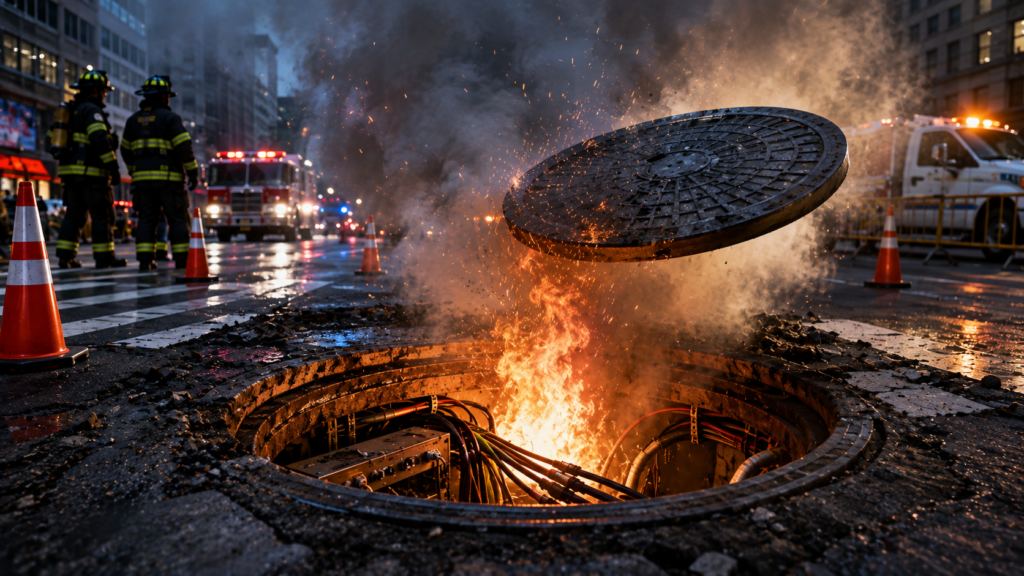
New York City is facing a sharp rise in fires, smoke incidents and explosions involving underground utility infrastructure, with city data showing more than 4,000 reports so far this year and putting 2026 on track to become one of the worst years for such incidents in recent memory.
The incidents involve manholes and underground utility vaults that contain electrical cables and other critical infrastructure beneath New York’s streets. When equipment fails, these confined spaces can fill with smoke, catch fire or, in more serious cases, produce explosions powerful enough to send heavy manhole covers into the air.
The growing number of incidents has renewed concerns about the condition of the vast underground infrastructure supporting one of the world’s largest cities.
New York’s electrical network operates beneath some of the busiest and most densely populated streets in the country. Decades-old cables and equipment coexist with newer infrastructure, while the underground system is exposed to moisture, road salt, extreme temperatures and other conditions that can contribute to deterioration.
Officials and utility experts have previously identified several factors that can contribute to underground electrical fires, including damaged cables, equipment failures, corrosion and electrical faults. Determining the exact cause of individual incidents generally requires an inspection after emergency crews have secured the area.
These events can cause significant disruption even when nobody is injured. Streets may need to be closed, buildings can temporarily lose electricity and subway or traffic operations can be affected while firefighters and utility crews respond.
Explosions present an additional public-safety concern because pressure generated underground can dislodge or launch heavy manhole covers. Authorities typically establish safety perimeters around affected locations until firefighters and utility crews determine that the area is safe.
The more than 4,000 reports recorded this year are now drawing attention to whether New York needs to accelerate inspections and upgrades of aging underground electrical infrastructure.
The issue is particularly important during periods of extreme weather. Heavy rain can introduce additional moisture underground, winter road salt can contribute to corrosion, and periods of intense summer heat can increase demand on the electrical system.
With thousands of incidents already reported in 2026, officials and utility operators face growing pressure to identify high-risk locations and determine whether additional preventive maintenance and infrastructure investment can reduce the number of underground fires and explosions.
As New York continues to modernize its electrical grid, the surge serves as a reminder that some of the city’s most important—and potentially hazardous—infrastructure remains largely invisible beneath the streets traveled by millions of people every day.