
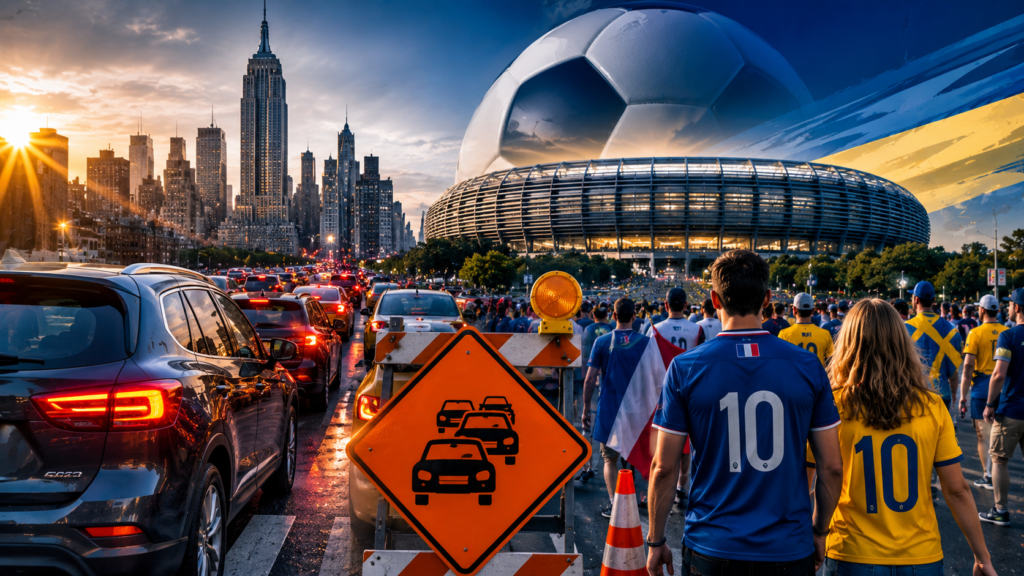
New York City is bracing for another major traffic test today as France faces Sweden in a FIFA World Cup Round of 32 match at New York New Jersey Stadium in East Rutherford. The match is scheduled for Tuesday, June 30, 2026, at 5:00 p.m., making it one of the key World Cup events expected to affect travel across the region.
City officials have designated June 30 as a Gridlock Alert Day, warning that severe congestion is expected in Midtown Manhattan with ripple effects across surrounding areas. NYC DOT says match days are being treated as some of the busiest traffic days of the year, and residents and visitors are being urged to avoid non-essential driving whenever possible.
The transportation pressure is not limited to the stadium area in New Jersey. Many fans traveling to the match are expected to pass through Manhattan, especially around Penn Station, Grand Central, Columbus Circle, Port Authority Bus Terminal, and the Lincoln Tunnel corridor. To manage the flow of spectators, official NYNJ Stadium shuttle buses are operating from three Manhattan pickup points: Port Authority, Columbus Circle, and the Grand Central area.
As part of the city’s World Cup transportation plan, several Midtown streets are being converted into bus-only or shuttle-only corridors. The plan includes turning 42nd Street into a bus and shuttle corridor from First Avenue to Twelfth Avenue, dedicating lanes on Sixth Avenue and Fifth Avenue, and creating bus-only blocks on parts of West 40th, West 41st, and West 58th streets.
The restrictions begin six hours before local matches and can remain in place up to three hours after each match ends. That means today’s evening kickoff could affect traffic for much of the day, especially during the afternoon commute and post-match return period.
Penn Station is also expected to see heavy pressure. City officials say some streets near the station will be closed to vehicles to accommodate queues, while NJ TRANSIT access during peak match-arrival periods may be limited to World Cup ticket holders heading to the stadium.
Officials are urging New Yorkers to use subways, buses, ferries, bikes, and walking routes instead of driving into Midtown. NYC DOT says it will monitor traffic in real time and adjust signals to help keep vehicles, buses, pedestrians, and emergency services moving safely.
The France-Sweden match adds another layer of pressure to a city already managing summer crowds, tourism, commuter traffic, and World Cup-related events. For fans, the message is to plan early and use public transit. For everyday New Yorkers, the warning is clear: Midtown Manhattan could face serious delays throughout the day.