
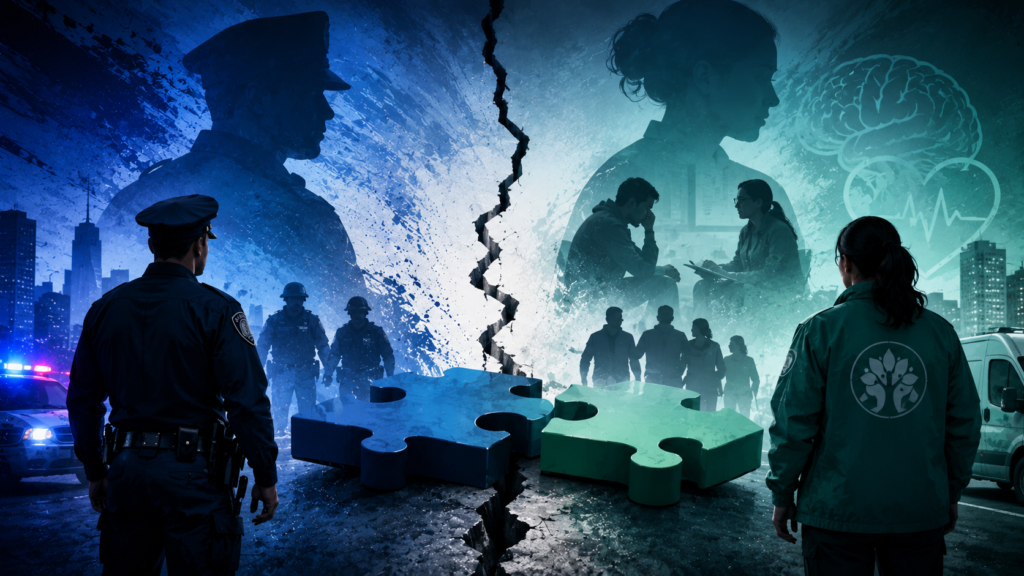
A growing disagreement inside New York City’s administration has emerged over how the city should respond to mental health crises, highlighting tensions between law enforcement officials and advocates pushing for a new public safety approach.
The controversy intensified after New York Police Commissioner Jessica Tisch confirmed that no official discussions have yet taken place between the New York Police Department and the city’s newly created Community Safety Office regarding a proposed plan to transfer some mental health emergency response duties from police officers to specialized civilian teams.
The proposal is part of a broader effort by city officials and activists to rethink how New York handles nonviolent mental health emergencies. Supporters of the initiative argue that many crises involving individuals experiencing psychological distress should be addressed primarily by trained mental health professionals, social workers, and medical specialists rather than armed police officers.
Advocates say the current system often places police officers in situations that require healthcare expertise rather than law enforcement tactics. They point to incidents in cities across the United States where encounters between police and mentally ill individuals escalated into violence, sometimes ending in tragedy.
Under the proposed model, specialized civilian crisis response teams would be dispatched to selected emergency calls involving mental health episodes, homelessness, emotional breakdowns, or behavioral crises where there is no immediate threat of violence. Similar programs have already been introduced in several American cities with varying levels of success.
However, the lack of coordination between the NYPD and the Community Safety Office has raised concerns about how such a major transition could be implemented effectively in the nation’s largest city.
Police leadership has emphasized that officers remain responsible for maintaining public safety and responding rapidly to unpredictable emergencies. Critics inside law enforcement circles warn that separating mental health response from policing could create operational confusion, delayed responses, or unclear authority during dangerous situations.
At the same time, reform advocates accuse city institutions of moving too slowly on promises to modernize crisis response systems. Some progressive lawmakers argue that relying heavily on police for mental health incidents places unnecessary pressure on officers while failing to provide vulnerable individuals with the medical support they actually need.
The debate reflects a larger national conversation in the United States about policing, public safety, and mental healthcare following years of scrutiny over police conduct and emergency response practices.
New York City, with its enormous population and complex social challenges, has become one of the most closely watched testing grounds for these reforms. Any changes implemented there could influence how other major cities approach mental health crisis management in the future.
For now, city officials insist discussions are still ongoing and that no final decisions have been made regarding the structure or timeline of the proposed civilian response system. But the absence of formal coordination between key agencies has already exposed the political and institutional divisions surrounding one of the city’s most sensitive public safety issues.