
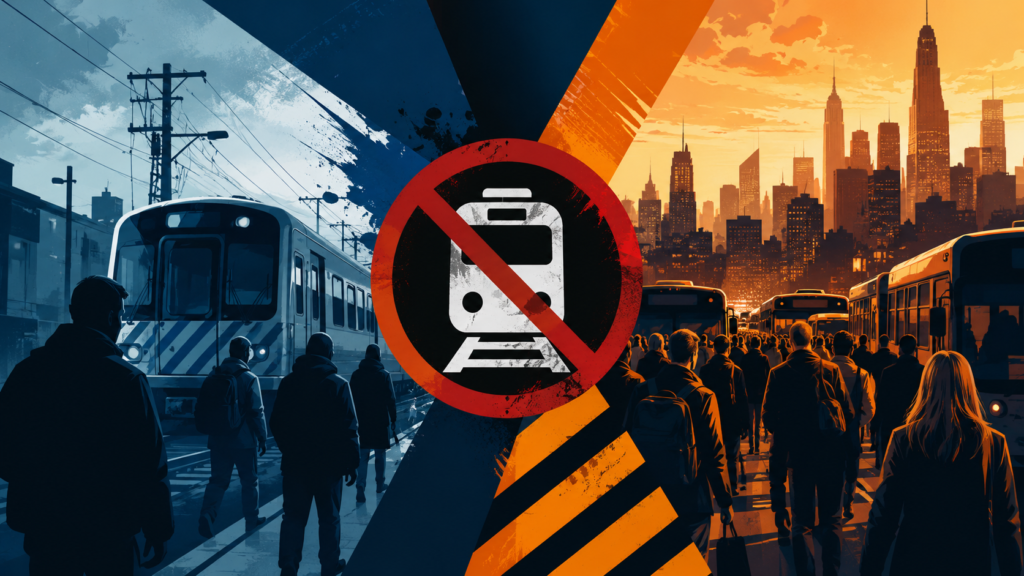
The Long Island Rail Road strike has thrown one of New York’s most important commuter networks into crisis, leaving tens of thousands of passengers scrambling for alternatives as the walkout entered its third day.
The strike has suspended LIRR service, disrupting a rail system that normally carries nearly 300,000 passengers a day between Long Island and New York City. The Metropolitan Transportation Authority said commuters should work from home if possible and warned those who must travel to allow extra time because replacement options are limited.
The walkout, involving thousands of unionized workers, is the first major LIRR strike since 1994. The dispute centers on pay, inflation, and working conditions, with unions pushing for stronger wage increases while the MTA argues that a larger settlement would place additional financial pressure on the transit system.
For commuters, the impact has been immediate. Many riders who depend on the LIRR to reach Manhattan have been forced to use shuttle buses, Nassau County bus services, subway transfers, ride-hailing apps, or private cars. But these alternatives cannot fully replace the capacity of the rail network, especially during peak travel hours.
The shutdown has also increased pressure on businesses across New York City and Long Island. Employers have been urged to allow remote work where possible, while workers in essential jobs face longer, more expensive, and less predictable journeys. The disruption comes at a difficult time for the region, with the Memorial Day travel period approaching and demand for transport expected to rise.
State officials and transit leaders have called on both sides to return to negotiations and reach a deal quickly. The MTA said it would continue talks with the unions, while emergency travel plans remain in place for passengers who have no choice but to commute.
Beyond the immediate inconvenience, the strike highlights a deeper problem in New York’s transportation system: millions of residents depend on a small number of critical transit routes, and when one of them stops, the effects spread quickly across the entire region.
For now, the message to commuters is clear: avoid unnecessary travel, work remotely if possible, and expect delays until an agreement is reached.