
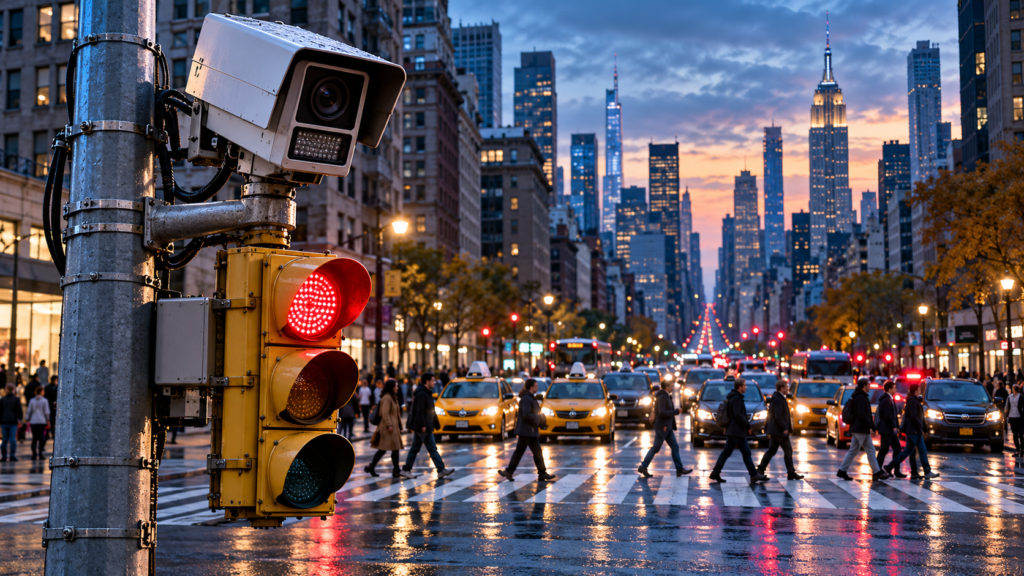
New York City has expanded its red-light camera program from 150 to 600 intersections across the five boroughs, reaching the maximum permitted under state law. Officials announced the completed rollout on October 21, describing it as a major step toward reducing dangerous driving and preventing crashes.
The expansion adds automated enforcement at 450 intersections. Transportation officials select locations using factors including histories of side-impact crashes and injuries caused by drivers running red lights. Mayor Zohran Mamdani’s administration says the cameras complement street redesigns and other measures under the city’s Vision Zero road safety initiative.
According to city figures reported by ABC7, red-light running has fallen by more than 80 percent at intersections equipped with cameras. Officials argue that automated enforcement discourages dangerous behavior while allowing violations to be documented without a police officer stationed at every crossing.
A red-light camera violation carries a $50 fine, with a notice mailed to the vehicle’s registered owner. The Department of Transportation reviews camera images before issuing notices. Vehicle owners are responsible regardless of who was driving, although camera-issued tickets do not add points to a driving record.
The rollout has also drawn objections. In a report published October 25, the New York Post interviewed motorists who questioned the program’s fairness, financial burden and treatment of drivers compared with cyclists and e-bike riders. Some expressed concern that revenue collection was taking priority over safety.
With the city now at its legal limit, any further expansion would require state lawmakers to authorize additional locations. For now, officials are presenting the completed network as a tool to reduce preventable collisions and improve safety for pedestrians, cyclists and motorists.