



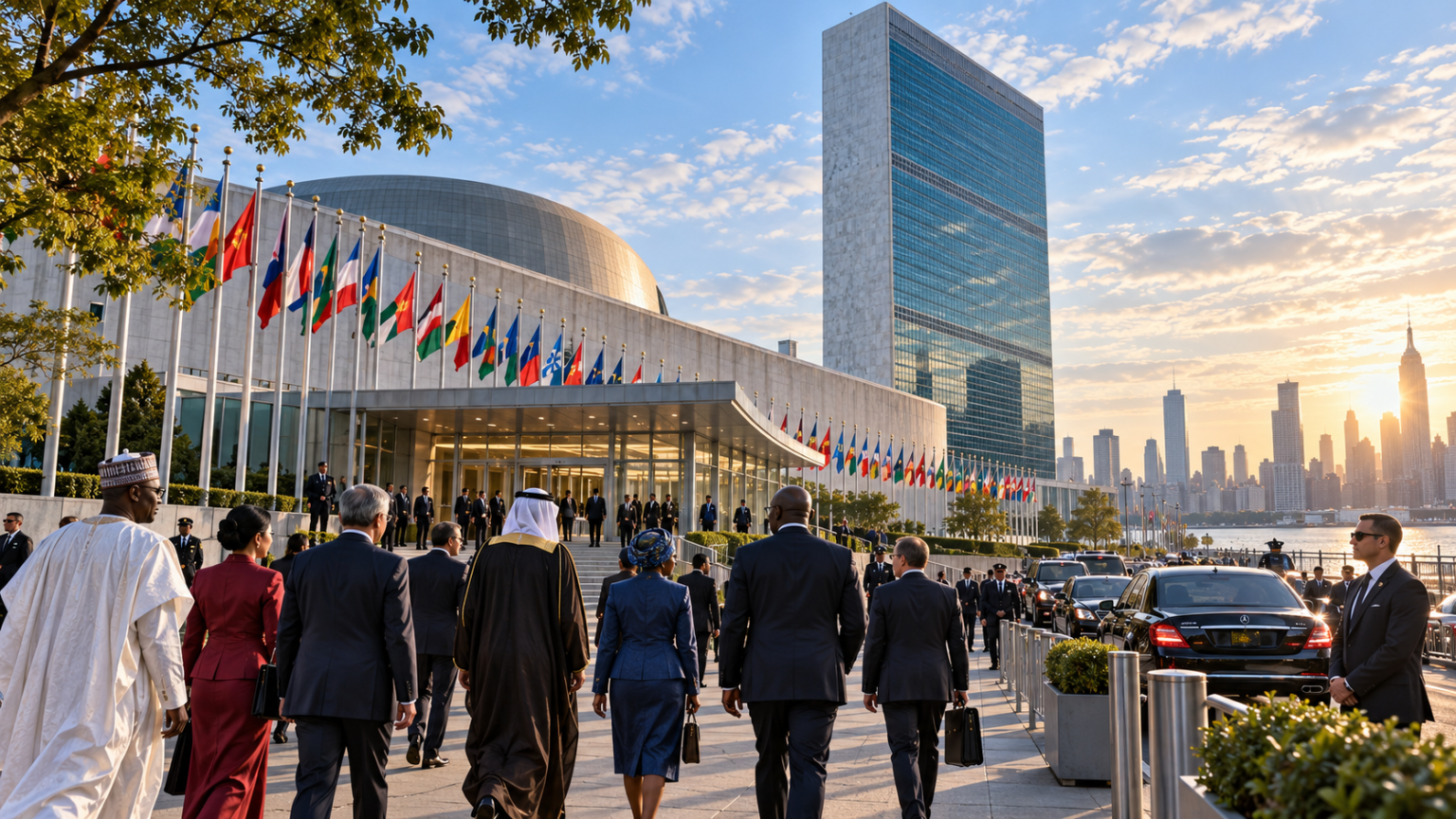
New York has become the center of global diplomacy as presidents, prime ministers and senior officials arrive for the high-level meetings of the United Nations General Assembly.
Nearly 130 world leaders are expected to participate in the gathering, which opens amid major international conflicts, economic uncertainty and growing questions about the ability of multilateral institutions to resolve global crises.
The wars in Ukraine and the Middle East are expected to dominate formal speeches, bilateral meetings and negotiations taking place on the sidelines of the assembly. Energy security, instability in global oil markets, climate change, artificial intelligence and international development will also feature prominently in the discussions.
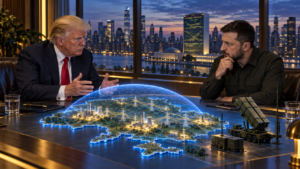
United States President Donald Trump is scheduled to address delegates before holding an intensive series of meetings with leaders and representatives from Europe, the Middle East and Latin America. His program includes talks with Ukrainian President Volodymyr Zelensky, British Prime Minister Andy Burnham and leaders from Denmark, Greenland and Venezuela.
Trump is also expected to meet representatives from the United Arab Emirates, Saudi Arabia, Oman, Bahrain, Kuwait and Qatar. Those discussions are likely to focus on regional security, the conflict involving Iran and threats to important maritime and energy routes.
Ukraine is seeking greater international support as its war with Russia continues without a comprehensive ceasefire. Zelensky is expected to discuss the possibility of halting attacks on energy infrastructure, as well as Kyiv’s continuing need for advanced air-defense systems.
Middle Eastern leaders, meanwhile, arrive in New York amid conflicts involving Iran, Yemen, Gaza and Lebanon. Disruption to shipping and oil supplies has added economic urgency to diplomatic efforts, placing the security of the Strait of Hormuz and other strategic waterways high on the agenda.
The General Assembly is also expected to confront broader questions about the future of the United Nations. Continuing wars, divisions among permanent members of the Security Council and difficulty enforcing international resolutions have intensified criticism of the organization’s effectiveness.
Artificial intelligence will receive unusual prominence during this year’s meetings. Technology executives and international officials are expected to discuss its implications for peace and security, including the dangers of autonomous weapons, disinformation and the malicious use of increasingly powerful systems.
The arrival of international delegations has brought extensive security measures and significant disruption to Manhattan. Authorities have established restricted zones around the UN headquarters on First Avenue, while temporary street closures, motorcades and security checkpoints are expected throughout the week.
New York officials have urged residents and visitors to rely on public transportation, particularly when traveling through Midtown and the East Side. The city has designated several days as gridlock alert days, warning that streets between approximately 34th and 63rd Streets could experience sudden closures and lengthy delays.
Police officers, federal agents and diplomatic security teams have also been deployed around hotels, official residences and meeting venues used by foreign delegations. These measures are intended to protect visiting leaders while allowing the city’s transport and commercial networks to continue operating.
Beyond the speeches delivered inside the General Assembly Hall, some of the week’s most consequential diplomacy may occur behind closed doors. Bilateral meetings and informal negotiations provide governments with opportunities to explore compromises that may be politically difficult to discuss publicly.
For New York, the annual gathering brings both international attention and logistical challenges. For world leaders, however, it represents a rare opportunity for direct diplomacy at a moment when several overlapping crises threaten international security and economic stability.