





s without essential radar data and radio communications.
For safety reasons, the FAA stopped incoming flights at John F. Kennedy International Airport, LaGuardia Airport and Newark Liberty International Airport. Philadelphia, Boston, Teterboro and Westchester County airports were also affected by ground stops or traffic restrictions.
The problems began at approximately 9:45 a.m. and were not fully resolved for about eight hours. Newark, one of the hardest-hit airports, stopped accepting commercial arrivals for much of the day and recorded more than 600 cancellations.
Flight-tracking data indicated that approximately 7,000 flights were delayed or canceled nationwide, including around 1,400 at the three major airports serving the New York metropolitan area. More than 100 aircraft were diverted to alternative airports because they could not reach their intended destinations.
The disruption occurred at a particularly sensitive time, as world leaders and diplomatic delegations were traveling to New York for the high-level meetings of the United Nations General Assembly. The additional traffic increased pressure on an already congested aviation network.
Transportation Secretary Sean Duffy announced later in the day that the damaged telecommunications lines had been repaired and airport operations were gradually resuming. However, he warned that passengers would continue to experience delays as airlines worked to reposition aircraft, reorganize crews and clear the backlog.
Officials initially offered conflicting accounts of who damaged the cable. Duffy first attributed the incident to an Amtrak construction crew, but Amtrak denied responsibility. New Jersey Transit subsequently confirmed that work was underway at one of its sites, while questions remained about the utility markings and the contractor involved.
FAA Administrator Bryan Bedford said safety remained the agency’s priority and defended the decision to halt arrivals while radar and radio services were unavailable.
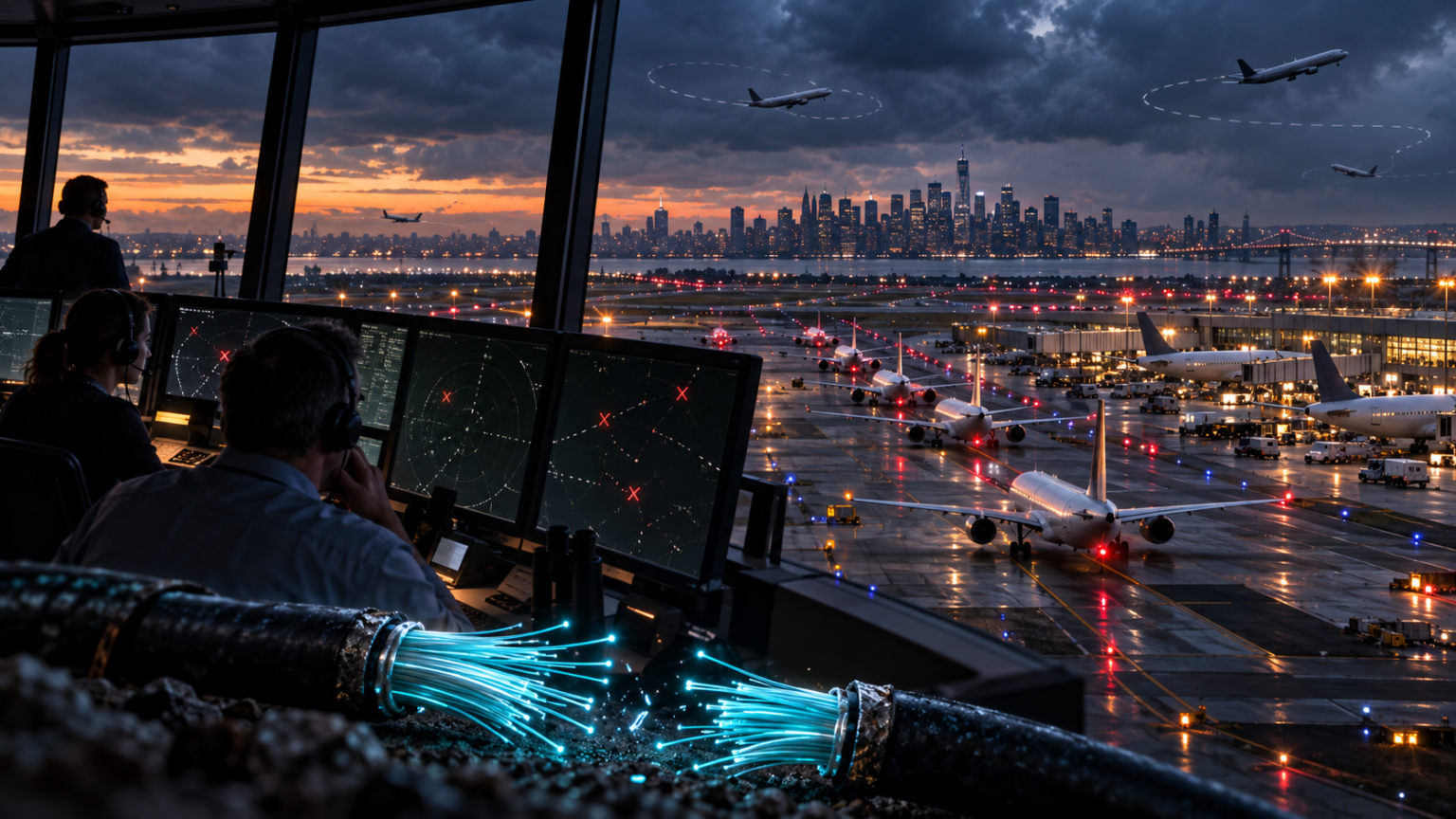
The incident has renewed concerns about the reliability of the United States’ aging air traffic control network. A backup connection is designed to keep critical systems operating when a primary circuit fails, but the damaged fiber line meant that redundancy was unavailable precisely when it was needed.
Congress previously approved $12.5 billion to begin modernizing the air traffic control system, including communications technology and staffing. Federal transportation officials are seeking an additional $17.5 billion to complete the planned upgrades.
The same Philadelphia-area air traffic facility was involved in previous communications failures that affected Newark Airport, adding pressure on federal authorities to improve the network’s resilience.
Passengers with upcoming flights were advised to check directly with their airlines before leaving for the airport. Although normal operations resumed after repairs, residual delays and cancellations were expected to continue as the regional aviation system recovered.