
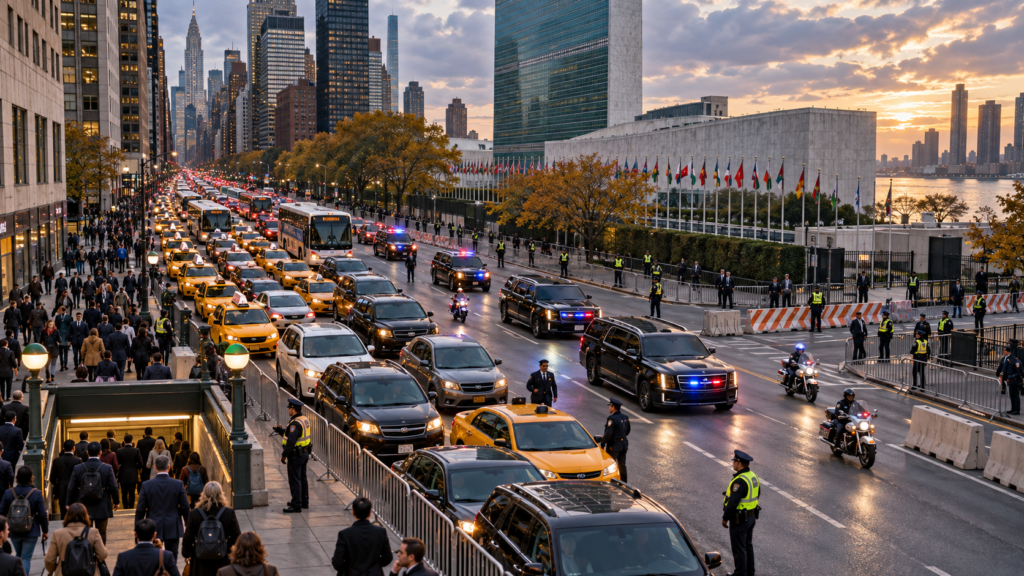
Manhattan is facing major traffic disruption as world leaders and diplomatic delegations arrive in New York for the high-level meetings of the United Nations General Assembly.
City authorities have warned drivers to expect extensive congestion, security checkpoints and sudden street closures throughout the week, particularly in Midtown and along Manhattan’s East Side.
The most significant restrictions are concentrated around the United Nations headquarters on First Avenue. Authorities have closed First Avenue between East 41st and East 48th Streets, while East 44th through East 47th Streets are closed between First and Second Avenues.
East 42nd Street is also expected to remain closed between First and Second Avenues while the meetings are in session, generally until approximately 9 p.m. The East 42nd Street exit from the FDR Drive has been blocked, and other sections of the highway may be temporarily closed as official motorcades move through the area.
Although the fixed closures are centered around East 41st to East 48th Streets, the wider area between East 34th and East 63rd Streets may experience serious delays. Security officials can close additional roads without advance notice whenever presidents, prime ministers and other senior officials travel between the UN complex, hotels and diplomatic meetings.
The city’s Department of Transportation has designated September 21 through September 25 as Gridlock Alert Days. Officials said drivers should anticipate lengthy delays across Manhattan and strongly encouraged residents and visitors to avoid driving whenever possible.
The increased congestion is not limited to the immediate surroundings of the United Nations. Diplomatic motorcades may affect major cross-town routes, parts of the FDR Drive and streets near hotels hosting foreign delegations. Travel times can change quickly because many security-related closures are not announced beforehand.
Bus services passing through Midtown and the East Side may also be delayed, shortened or diverted. Passengers have been advised to check for service updates before traveling and allow additional time to reach their destinations.
Subway services remain the most reliable option for many commuters because trains are generally unaffected by surface-level security restrictions. Walking and cycling may also be practical alternatives, although access for cyclists and pedestrians could be limited around protected areas.
The First Avenue Tunnel remains available for northbound passenger vehicles and bicycles traveling through the affected district. However, officials cautioned that conditions could change depending on security requirements.
A significant police presence has been deployed around the UN complex, nearby hotels and diplomatic residences. Barricades, controlled-access zones and vehicle inspection points have been established as part of the operation to protect visiting delegations.
Authorities have not reported a specific threat connected to the gathering, but the concentration of international leaders requires one of New York City’s largest annual security operations.
Residents, workers and visitors have been advised to monitor official transportation alerts, avoid unnecessary trips through Midtown East and build extra time into their journeys. Drivers who must enter Manhattan should expect limited parking, changing routes and possible delays extending well beyond the immediate UN security zone.