
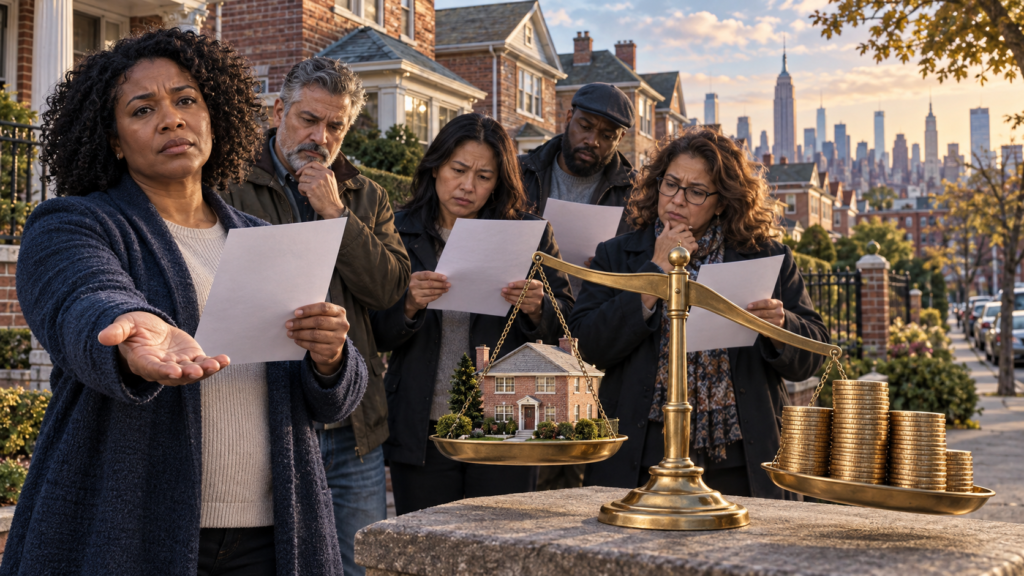
Homeowners in Queens are calling on New York City to review their property-tax accounts and return money they say was collected because of inaccurate assessments and administrative errors.
The complaints form part of a broader dispute involving condominium and cooperative owners across the city. Residents say incorrect property information or miscalculations caused their buildings to receive tax bills that were higher than the amounts legally owed.
Some affected owners reported successfully convincing the Department of Finance that their assessments were wrong. However, they say obtaining full reimbursement has proved more difficult. In at least one reported case, a building received a refund covering only two years, despite residents claiming that the error had affected their bills for a considerably longer period.
Property taxes for condominium and cooperative units in New York City are generally calculated using the assessed value of comparable rental buildings, rather than the direct market value of each apartment. Critics argue that this complex system makes bills difficult for ordinary owners to understand and allows inaccuracies to continue unnoticed for years.
When an error affects an entire building, the financial consequences may be distributed among many residents through maintenance charges or common expenses. Even a relatively small annual mistake can therefore accumulate into a substantial amount when applied across numerous units and multiple tax years.
Homeowners argue that once the city confirms an error, the correction should extend back to the date on which the inaccurate assessment began. They say limiting reimbursements leaves residents paying for a mistake they did not cause and may not have had enough information to identify earlier.
The city’s Department of Finance allows property owners with credits on their accounts to request refunds. Most credits are otherwise applied automatically to future tax bills, and the department advises applicants that processing a refund claim can take approximately eight weeks.
However, a credit appearing on an account is different from challenging the underlying assessment. Owners who dispute a property’s valuation or classification may need to file through a separate review or appeals process and must comply with strict deadlines.
The controversy comes as housing expenses continue to rise across Queens. Mortgage payments, insurance, maintenance costs and building-compliance requirements have already placed pressure on many cooperative and condominium owners, making unexpected tax charges particularly difficult for households on fixed or moderate incomes.
Residents are asking the city to conduct a broader audit, provide clearer explanations of how assessments are calculated and establish a simpler process for recovering verified overpayments. They also want property records corrected promptly so the same errors do not appear on future bills.
The dispute has renewed calls for greater transparency in New York City’s complicated property-tax system and stronger safeguards to ensure that homeowners are charged only what they legally owe.