
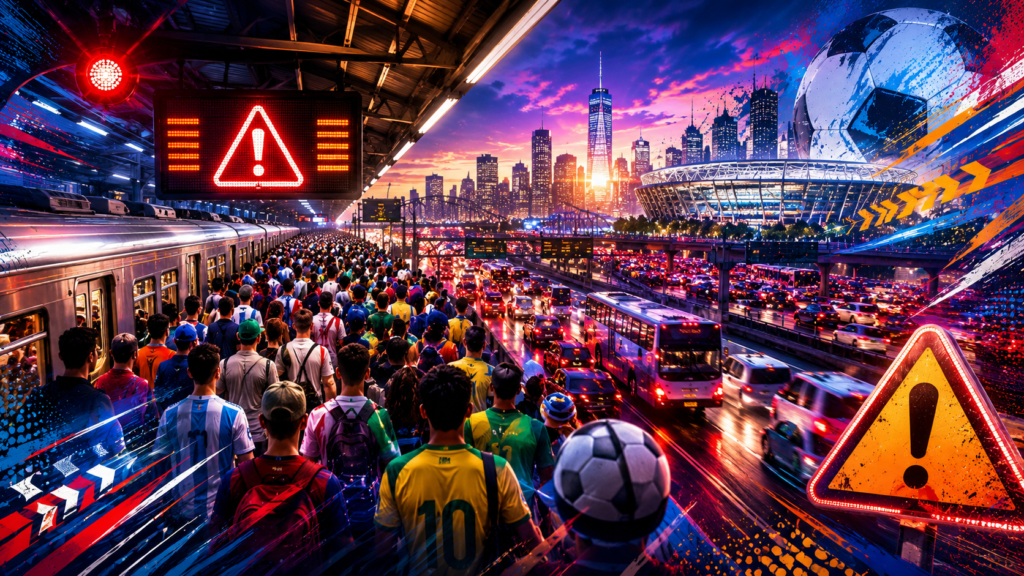
Transportation authorities in the New York metropolitan area are warning travelers to expect continued congestion and occasional delays as World Cup 2026 activities bring large crowds to the region. Rail networks, bus services, and road connections between New York and New Jersey have experienced significant pressure on match days, particularly during peak travel periods before and after games.
Officials report that passenger volumes have surged on key transit routes serving MetLife Stadium, one of the tournament’s primary venues. As thousands of fans travel to and from matches, several train and bus services have faced temporary overcrowding, resulting in longer waiting times and operational adjustments to accommodate demand.
Transit agencies have deployed additional staff, increased service frequency where possible, and introduced crowd-management measures at major stations to improve passenger flow. Despite these efforts, transportation operators continue to urge travelers to allow extra time for their journeys and remain flexible with their schedules.
Road traffic has also been affected by the influx of visitors, with increased vehicle volumes on major highways connecting New York City to northern New Jersey. Temporary traffic controls, dedicated event routes, and special parking arrangements have been implemented to reduce disruptions and maintain safe access to event locations.
Authorities emphasized that most delays have been manageable and that transportation systems have continued to operate effectively despite the extraordinary demand generated by the tournament. Officials credited close coordination between transit agencies, law enforcement, and event organizers for helping to minimize disruption and maintain public safety.
Visitors are being encouraged to use public transportation whenever possible, follow official travel advisories, and monitor real-time service updates before heading to matches or fan events. Transportation agencies expect elevated passenger numbers to continue throughout the remainder of the tournament as more high-profile matches take place in the region.
While the World Cup has brought logistical challenges, officials say the tournament is also showcasing the region’s ability to host major international events, welcoming visitors from around the world while keeping critical transportation networks moving.