




The Metropolitan Transportation Authority has unveiled new drawings and planning concepts for the Interborough Express, an ambitious light-rail project that would create a direct public transportation connection between Brooklyn and Queens.
The proposed line, commonly known as the IBX, would stretch approximately 14 miles from the Brooklyn Army Terminal in Bay Ridge to Roosevelt Avenue in Jackson Heights. It would largely follow an existing freight-rail corridor, allowing the MTA to expand the city’s transit network without constructing an entirely new route through densely developed neighborhoods.
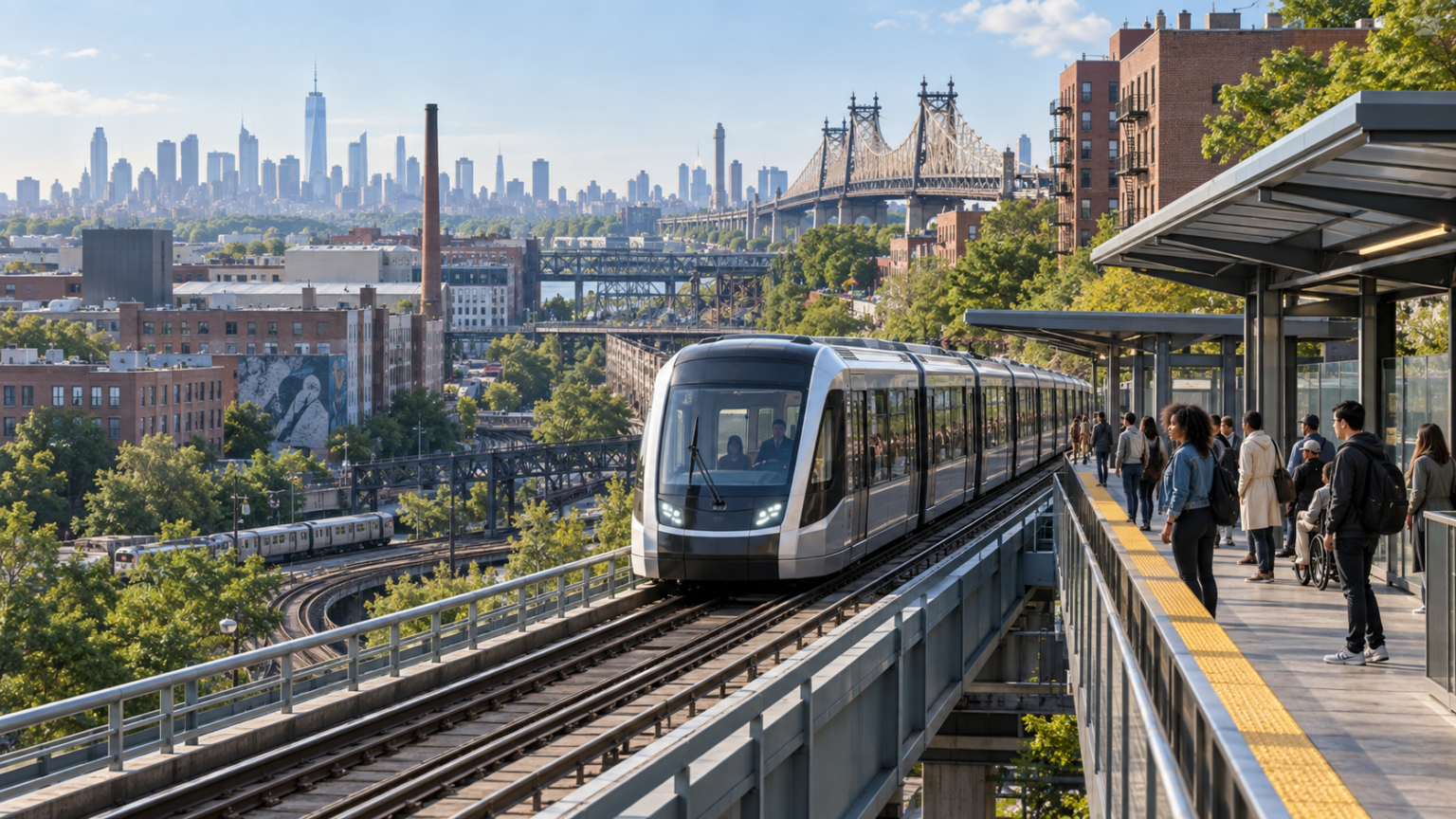
The concepts show modern light-rail vehicles operating on dedicated tracks, together with accessible stations, pedestrian connections and redesigned areas around the proposed stops. The plans remain subject to environmental review and further technical development, meaning individual station designs and parts of the alignment could still change.
Unlike most of New York’s subway network, which is heavily oriented toward Manhattan, the Interborough Express is intended to support trips between the outer boroughs. Many Brooklyn and Queens residents currently need to travel into Manhattan or rely on several bus and subway transfers to reach destinations in the neighboring borough.
The new line would connect communities including Bay Ridge, Sunset Park, Borough Park, Midwood, East Flatbush, Brownsville, East New York, Ridgewood, Middle Village and Jackson Heights. It is also expected to provide connections with as many as 17 subway lines, in addition to dozens of bus routes and the Long Island Rail Road.
Transportation planners estimate that the complete journey between the two ends of the line could take around 40 minutes. The service would operate throughout the day and is expected to carry more than 100,000 passengers on an average weekday once fully operational.
For the MTA, the project represents more than the introduction of another rail service. It reflects a broader effort to reshape public transportation around the way New Yorkers now travel, particularly residents whose jobs, schools and family connections do not require them to pass through Manhattan.
The project could also stimulate economic activity along the corridor by improving access to employment centers, commercial districts and educational institutions. Supporters argue that communities historically underserved by the subway would gain faster and more reliable connections to opportunities elsewhere in the city.
However, the Interborough Express still faces several challenges, including securing funding, completing environmental assessments and addressing sections where freight trains and passenger vehicles may need to share limited space. Construction would also require careful planning to reduce disruption to surrounding neighborhoods.
If approved and completed, the IBX would be one of the most consequential additions to New York’s transportation system in generations, creating a long-awaited rail link between Brooklyn and Queens while reducing pressure on Manhattan-centered routes.