





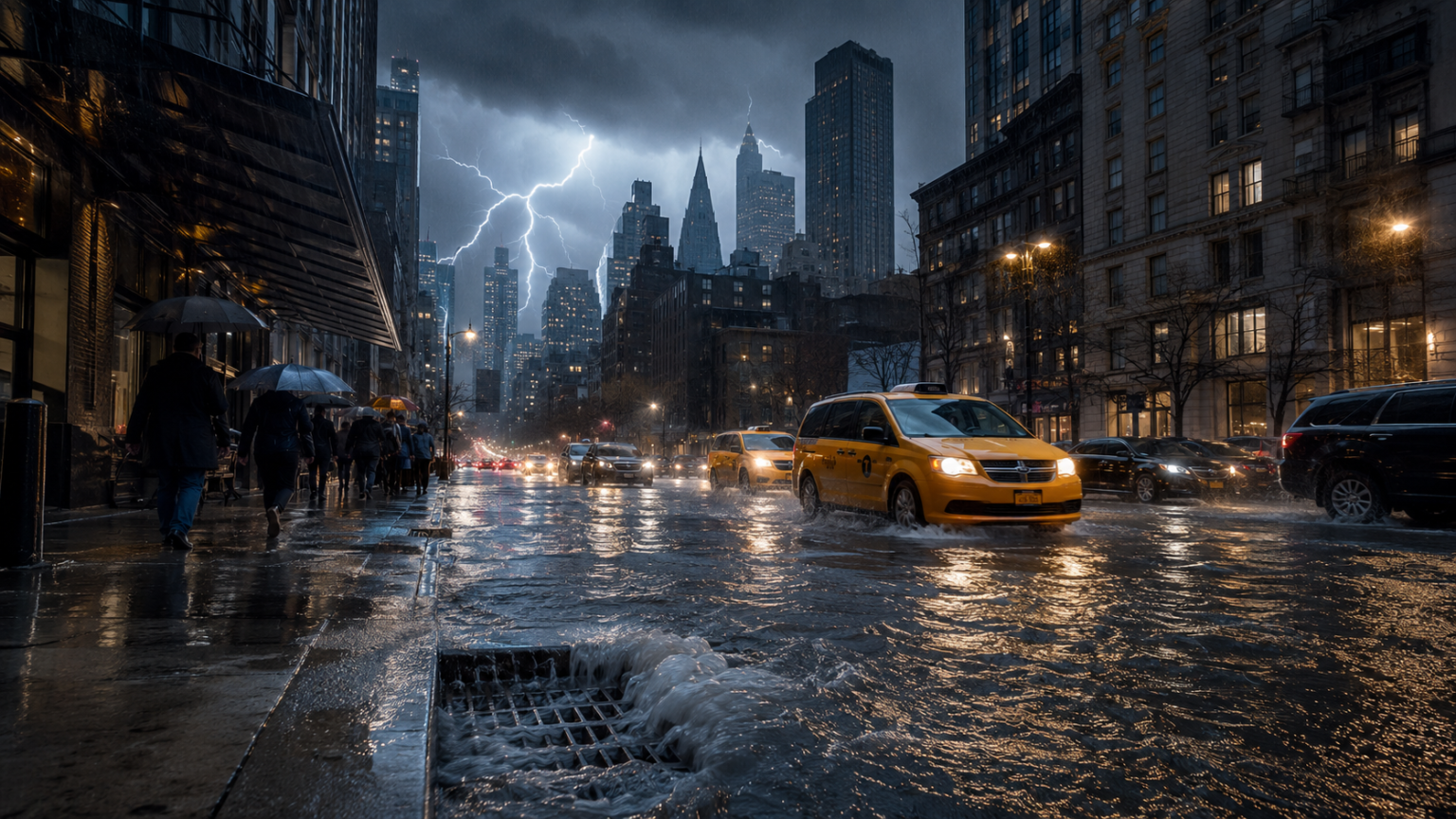
New York City faced another period of unsettled weather as rain and thunderstorms moved across the region, raising concerns about flash flooding, water accumulation and travel disruption during the morning commute.
Periods of heavy rain affected parts of the city and the wider tri-state area, creating difficult conditions for drivers and pedestrians. Officials urged residents to exercise caution around low-lying streets, underpasses and neighborhoods with a history of drainage problems, where water can rise rapidly during intense downpours.
The greatest concern was the possibility of rainfall overwhelming drainage systems within a short period. Even localized storms can cause street flooding in New York, particularly when rain falls faster than sewers can remove it. Motorists were advised not to drive through flooded roads because water depth can be difficult to judge and vehicles may become stranded.
Wet conditions also carried the potential to slow traffic and affect bus and subway services. Commuters were encouraged to allow additional travel time, monitor official service updates and remain alert for temporary road closures or changes to public transportation.
Forecasters expected the widespread rain to ease gradually as the morning progressed. Conditions were predicted to become warmer during the afternoon, although an isolated shower or thunderstorm could still develop in some areas.
The unstable weather was part of a broader system affecting sections of New York State and neighboring areas. Authorities warned that thunderstorms could produce brief but intense rainfall, strong wind gusts and reduced visibility.
Residents were advised to secure loose outdoor objects, avoid flooded basements and move to higher ground if water began rising around their homes. People living in vulnerable areas were also encouraged to keep phones charged and ensure emergency alerts were enabled.
New York has experienced repeated episodes of heavy rain in recent years that have exposed weaknesses in the city’s drainage infrastructure. Officials continue to promote flood-prevention measures while urging residents to treat every flash-flood warning seriously.
Although improving conditions were anticipated later in the day, authorities stressed that weather patterns could change quickly and encouraged New Yorkers to follow updated forecasts before traveling.