






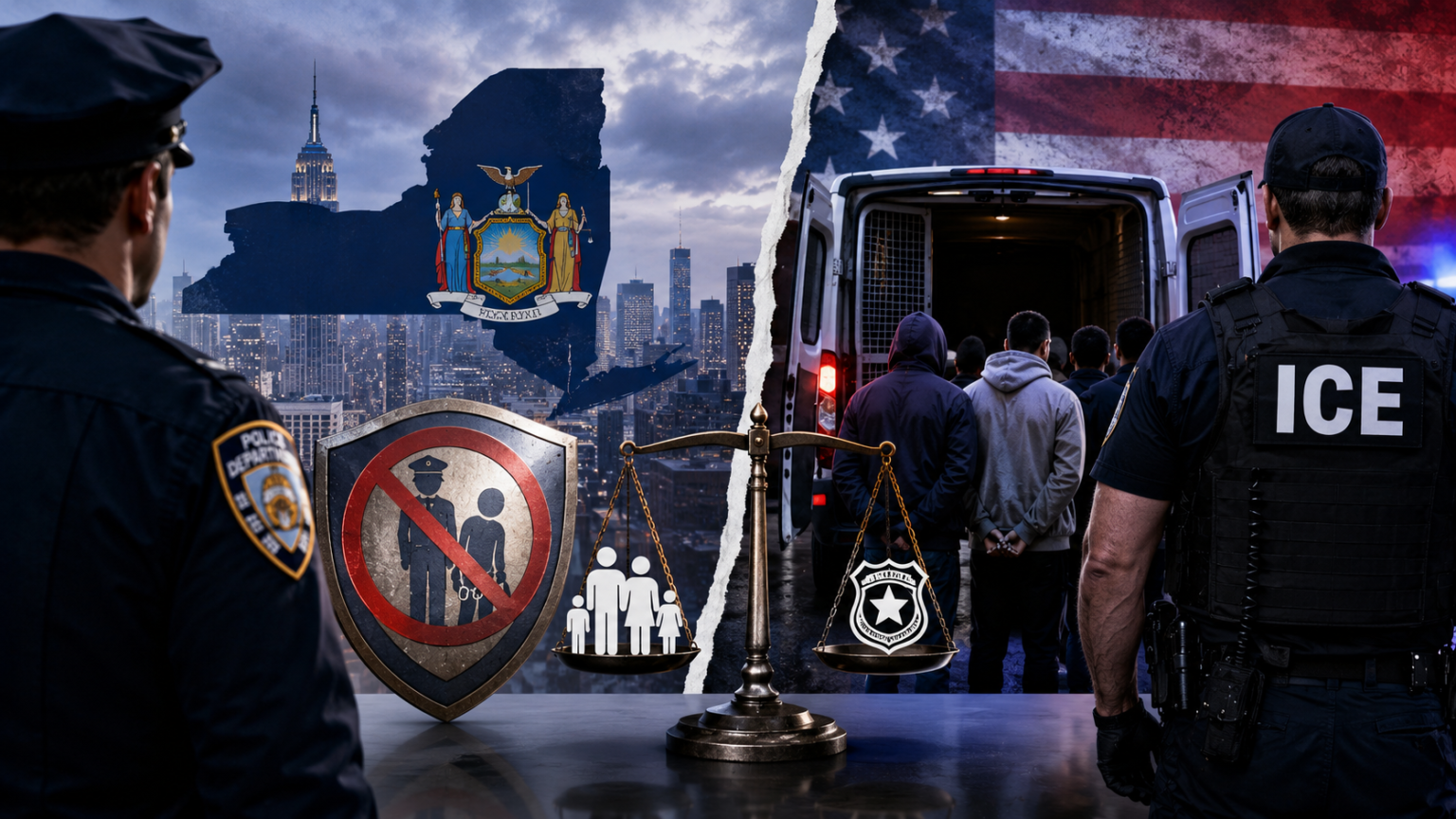
A new law restricting New York state and local law-enforcement agencies from entering into agreements with federal immigration authorities has taken effect, opening a fresh political and legal battle over the role local police should play in immigration enforcement.
The Local Cops, Local Crimes Act, signed by Governor Kathy Hochul in May, prohibits state and local law-enforcement agencies and local governments from entering into or maintaining agreements with U.S. Immigration and Customs Enforcement under Section 287(g) of the Immigration and Nationality Act. Existing agreements became void and unenforceable on August 25.
Under 287(g), ICE can enter agreements that allow designated state or local officers to perform certain federal immigration-enforcement functions. New York’s legislation is intended to separate those civil immigration responsibilities from the work of local police.
Hochul has defended the measure as a public-safety policy, arguing that local officers should concentrate their resources on combating crime in their communities rather than carrying out federal civil immigration enforcement. The law does not prohibit cooperation between local and federal authorities in criminal investigations, nor does it prevent action based on judicial warrants.
The legislation has faced particularly strong resistance in Nassau County, where County Executive Bruce Blakeman has defended the county’s cooperation with ICE and questioned the state’s authority to force local agencies to terminate their agreements. Nassau had developed one of New York’s most prominent local partnerships with federal immigration authorities.
The dispute escalated as the law took effect. New York Attorney General Letitia James issued subpoenas to several law-enforcement agencies whose responses concerning termination of their ICE agreements were considered inadequate. They included the Nassau County Police Department and Nassau County Sheriff’s Office, along with sheriff’s offices in Broome, Steuben and Rensselaer counties.
The controversy has also moved into federal court. Fifteen New York sheriffs filed a lawsuit challenging the restrictions, arguing that the state is improperly interfering with locally elected officials’ ability to participate in a federal immigration-enforcement program authorized by Congress. The lawsuit seeks to block provisions restricting cooperation with federal immigration authorities.
Supporters of the law argue that involving local officers in civil immigration enforcement can undermine trust between police and immigrant communities and divert personnel from investigating local crimes. Opponents counter that restricting cooperation with ICE could make it more difficult for local authorities to transfer people accused or convicted of crimes to federal immigration custody.
The confrontation in Nassau County has therefore become part of a much broader debate over where responsibility for immigration enforcement should lie — and how far states can go in limiting voluntary cooperation between their local governments and federal authorities.
With legal challenges underway and state officials signaling that agencies must comply, the Local Cops, Local Crimes Act is likely to remain a significant point of contention in New York’s immigration and public-safety debate in the months ahead.