





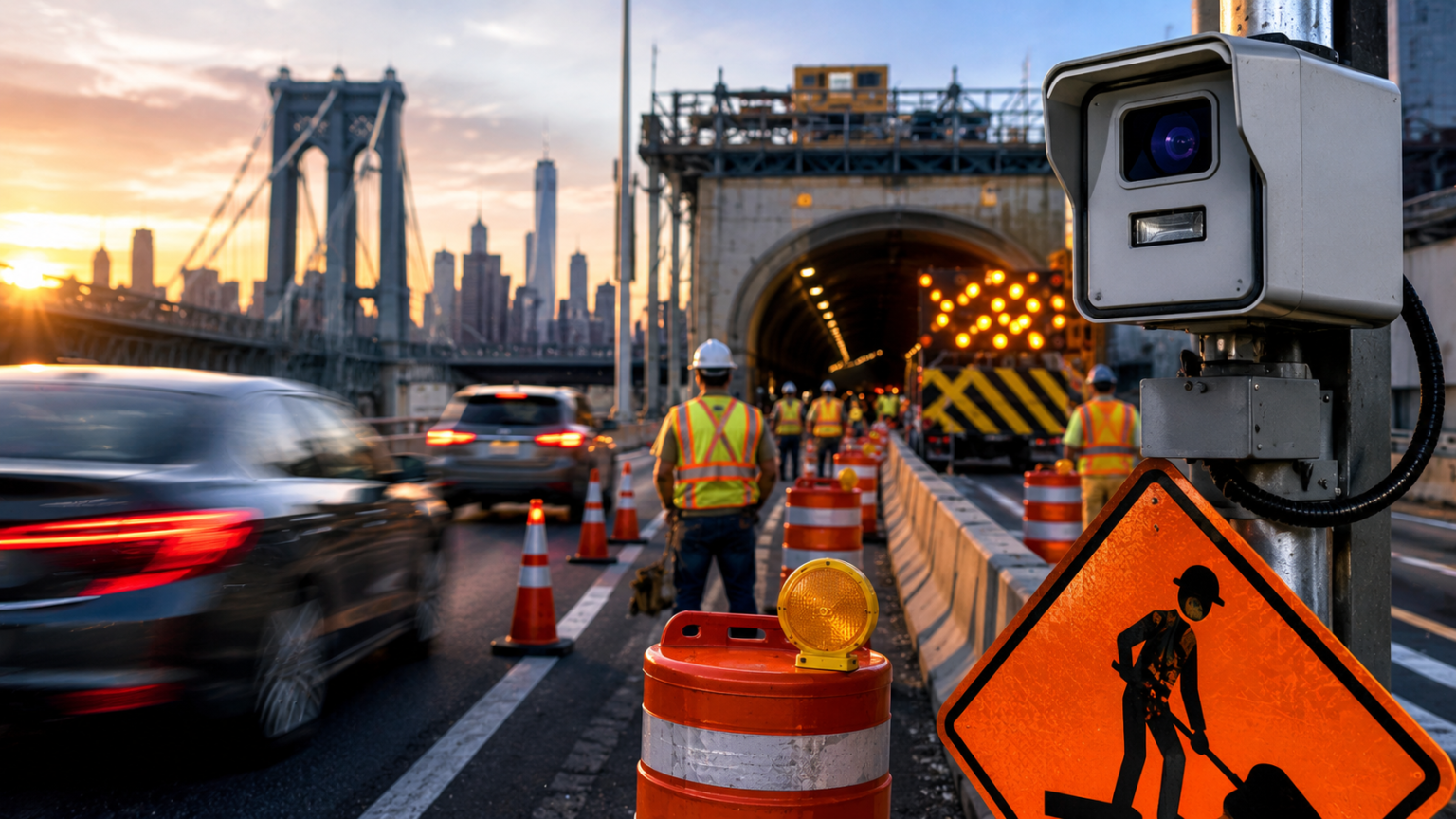
New York drivers will face a new layer of enforcement beginning today, June 30, as the Metropolitan Transportation Authority activates speed cameras in active construction zones on its bridges and tunnels.
The move is part of New York’s Automated Work Zone Speed Enforcement Program, which was first approved in 2021 for state highways and later expanded in 2025 to include MTA Bridges and Tunnels. The program is designed to reduce dangerous driving, prevent crashes, and protect construction crews working close to fast-moving traffic.
According to the MTA, the cameras will be placed in active work zones on MTA vehicular bridges and tunnels. Drivers recorded traveling more than 10 miles per hour above the posted speed limit may receive a warning or fine. The agency says the first phase will begin with warning notices, while fines will be issued in a later phase this year.
The new enforcement applies to MTA Bridges and Tunnels facilities across the five boroughs, including major crossings such as the Bronx-Whitestone Bridge, Throgs Neck Bridge, Robert F. Kennedy Bridge, Queens Midtown Tunnel, Hugh L. Carey Tunnel, and Verrazzano-Narrows Bridge.
Officials say the goal is not only to punish speeding, but to change driver behavior in places where construction workers face serious risks. New York State reported 450 work zone intrusions in 2024 on roads maintained by the State Department of Transportation and Thruway Authority, with more than 150 resulting in injuries and four resulting in fatalities.
Under the statewide program, cameras use radar to detect speeding vehicles and capture images, speed data, location, lane, time, and direction of travel. A certified technician reviews each case before a Notice of Liability is mailed to the registered owner of the vehicle.
The penalty structure starts at $50 for a first violation, rises to $75 for a second violation within 18 months, and reaches $100 for a third or subsequent violation within that same period. These violations are civil penalties, meaning they do not add points to a driver’s license and are not reported to insurance companies.
The MTA says drivers will see signs before entering active work zones where the cameras are being used. The enforcement units are expected to operate during work hours, with camera and radar equipment deployed in active construction areas.
The program comes as New York continues to invest heavily in bridge, tunnel, and roadway maintenance across the city. For workers carrying out repairs near live traffic, even a small reduction in speeding could make a major difference in safety.
For motorists, the message is simple: slow down in work zones, follow posted speed limits, and pay attention to signs. For construction crews, the new cameras represent another layer of protection in some of the most dangerous working environments in the city.