
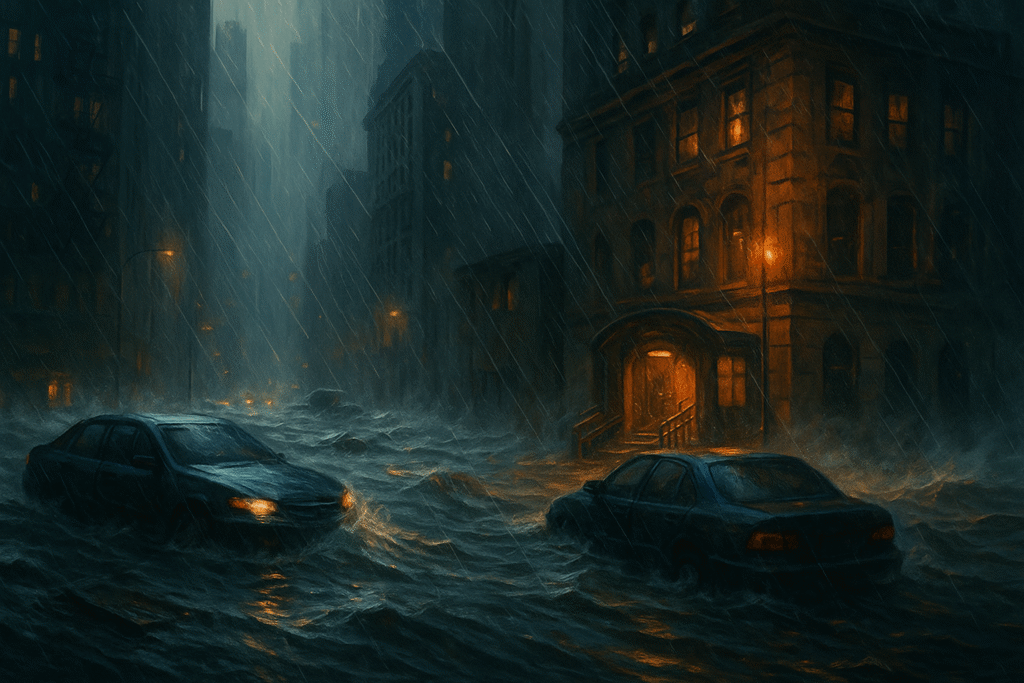
A wave of torrential rain battered New York City overnight, overwhelming its drainage systems and triggering flash floods that paralyzed much of the metropolis. The downpour flooded subway stations, submerged vehicles, and left two men dead after they were trapped inside basement apartments in Manhattan and Brooklyn.
According to the National Weather Service, parts of the city recorded more than four inches of rain within hours — an intensity that far exceeded the capacity of the city’s stormwater infrastructure. Emergency crews carried out dozens of rescues across Queens and the Bronx, while the Metropolitan Transportation Authority suspended several subway lines due to water entering tunnels and platforms.
Mayor Eric Adams urged residents to avoid unnecessary travel and warned that basement dwellings — common in many boroughs — remain particularly vulnerable to sudden flooding. “This tragedy underscores the urgent need to strengthen our city’s resilience to extreme weather,” he said at a press conference.
Climate experts point out that such incidents are no longer rare. Rising global temperatures are intensifying rainfall patterns, putting cities like New York — built on aging drainage systems — at growing risk. Despite billions invested in flood mitigation and green infrastructure projects, critics argue the pace of adaptation is still too slow to match the escalating threat.
As cleanup operations continue, the focus turns once again to preparedness and climate resilience. For many New Yorkers, the latest floods serve as a grim reminder that the city’s future will increasingly depend on how well it adapts to a changing climate — and how fast it acts before the next storm hits.