
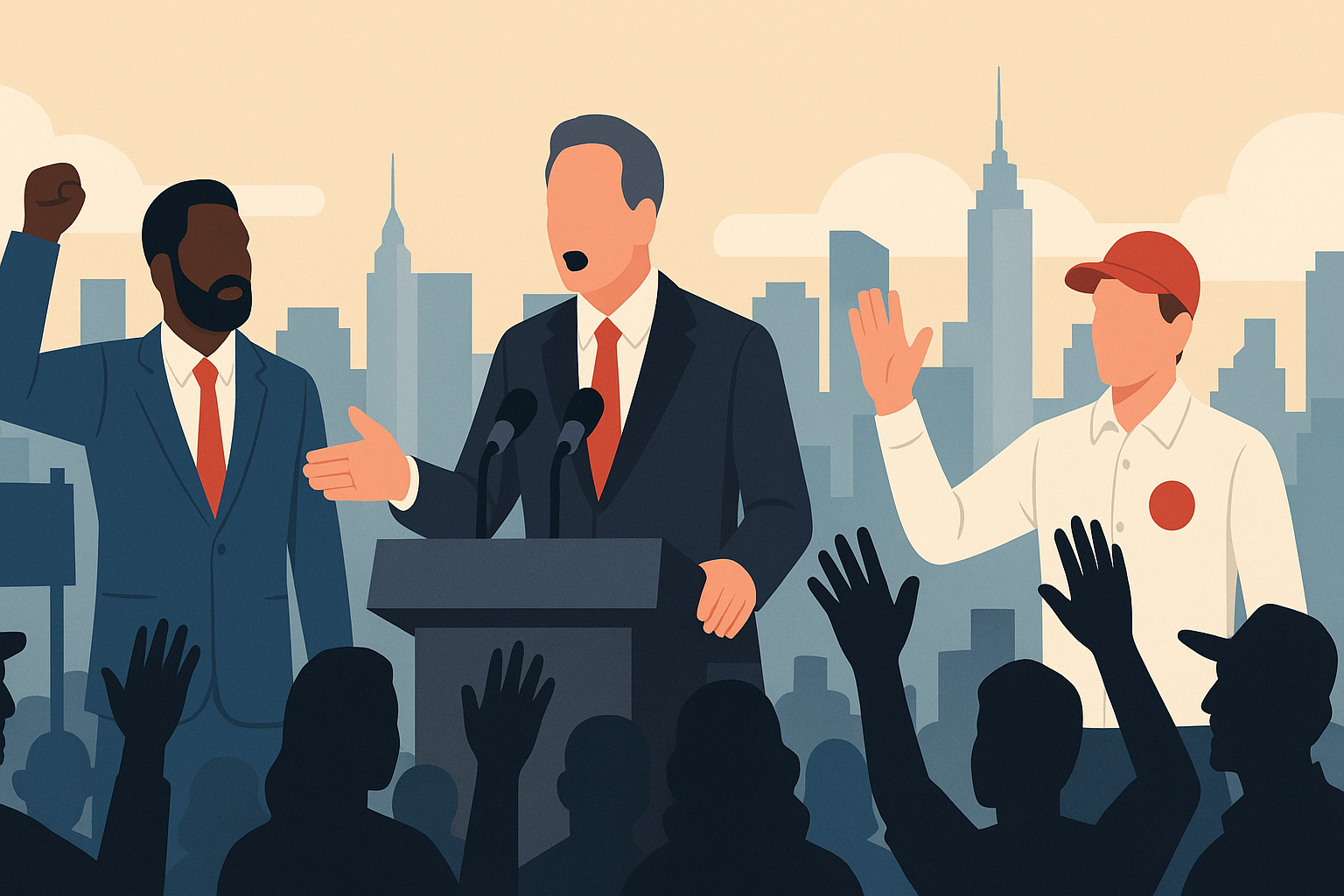
The 2025 race for New York City mayor has entered its decisive phase, with leading candidates intensifying their campaigns ahead of Election Day. As debates conclude and the final rallies unfold, voters across the five boroughs are preparing to choose the city’s next leader amid growing political tension and public anticipation.
The contest features three major contenders: Zohran Mamdani, the Democratic candidate and state assemblyman known for his progressive platform; Andrew Cuomo, running as an Independent after his previous tenure as New York’s governor; and Curtis Sliwa, the Republican candidate and founder of the Guardian Angels, representing a conservative voice in the race.
Diverging Visions for the City
Each candidate has outlined sharply different visions for the future of New York City.
Mamdani has positioned himself as the candidate of change, advocating for expanded affordable housing, fare-free public transportation, and higher taxes on the wealthy to fund social programs.
Cuomo, returning to the political stage after his resignation in 2021, has promised a message of stability and experience, focusing on crime reduction, economic recovery, and citywide infrastructure upgrades.
Sliwa continues to campaign on a tough-on-crime agenda, pledging to increase police presence and combat what he calls “the decline of urban safety and public order.”
Voter Priorities and Political Dynamics
Public safety, affordability, and housing remain at the forefront of voter concerns, while issues such as immigration policy and city governance have become major talking points during debates. Analysts note that the diversity of the field reflects a broader ideological divide among New Yorkers, from progressive reformists to traditional moderates and conservatives.
Polls suggest a competitive race, with Mamdani holding a slim lead among younger and working-class voters, while Cuomo enjoys significant support from older and moderate demographics. Sliwa, meanwhile, has maintained a solid base among conservative and law-and-order voters, particularly in Staten Island and parts of Queens.
High Stakes for the Nation’s Largest City
This election is seen as more than a local contest — it’s being closely watched across the country as a reflection of shifting political attitudes in major U.S. cities. The outcome could signal whether New York is moving toward a more progressive urban agenda or returning to a centrist governance model rooted in economic pragmatism.
With just days remaining before the vote, the candidates are making their final appeals, hoping to sway undecided voters and energize their bases. Early voting begins this weekend, and officials are urging residents to turn out and make their voices heard.