
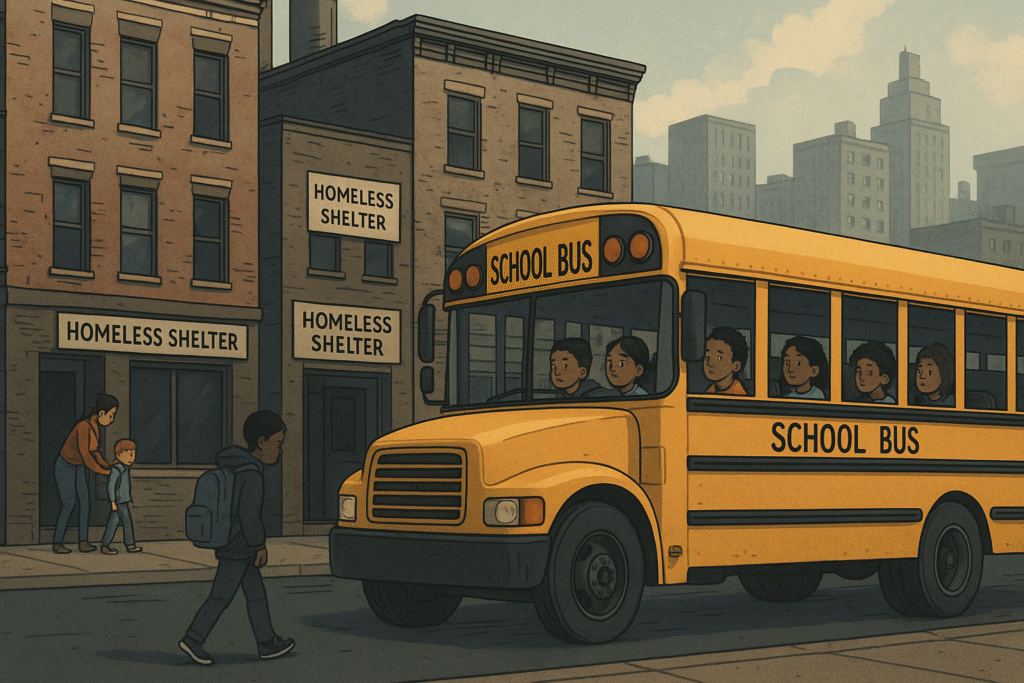
A new report by Advocates for Children of New York (AFC) has revealed a grim reality: nearly 154,000 public school students in New York City experienced some form of homelessness during the last academic year — equivalent to one in every seven students enrolled in the city’s public school system.
According to the findings, over 65,000 students lived in shelters, while approximately 7,000 stayed in motels or temporary accommodations. The remaining tens of thousands were forced to “double up” — living with relatives or friends due to economic hardship or eviction.
The data highlights the far-reaching effects of the housing crisis on education, painting a picture of instability that extends well beyond the classroom.
“Behind these numbers are children who wake up uncertain where they’ll sleep next, and who struggle to focus in school because they’re worried about basic survival,” said Jennifer Pringle, Director of Project L.E.A.P. at AFC. “It’s a crisis of both housing and education.”
The report also points to serious academic consequences. Roughly 67% of students living in shelters were chronically absent, missing at least 10% of school days throughout the year. Academic performance among this group remains drastically below citywide averages — with only 22% of homeless students in grades 3–8 achieving proficiency in state language and math exams.
Experts say that constant relocation, overcrowded shelters, and lack of access to stable internet or quiet study spaces contribute to this persistent educational gap. In addition, transportation barriers and bureaucratic delays in transferring students between schools exacerbate absenteeism and emotional stress.
While the Department of Education has pledged to improve coordination between schools and homeless services, advocates argue that systemic reform is urgently needed — including increased funding for school-based social workers, more bilingual liaisons for migrant families, and long-term housing support programs.
New York City’s homeless student population has nearly doubled in a decade, reflecting growing inequality, rising rent costs, and the strain of recent migrant arrivals.
“We can’t talk about improving education without addressing homelessness,” added Pringle. “Until every child has a safe and stable home, equal opportunity in our schools will remain out of reach.”