
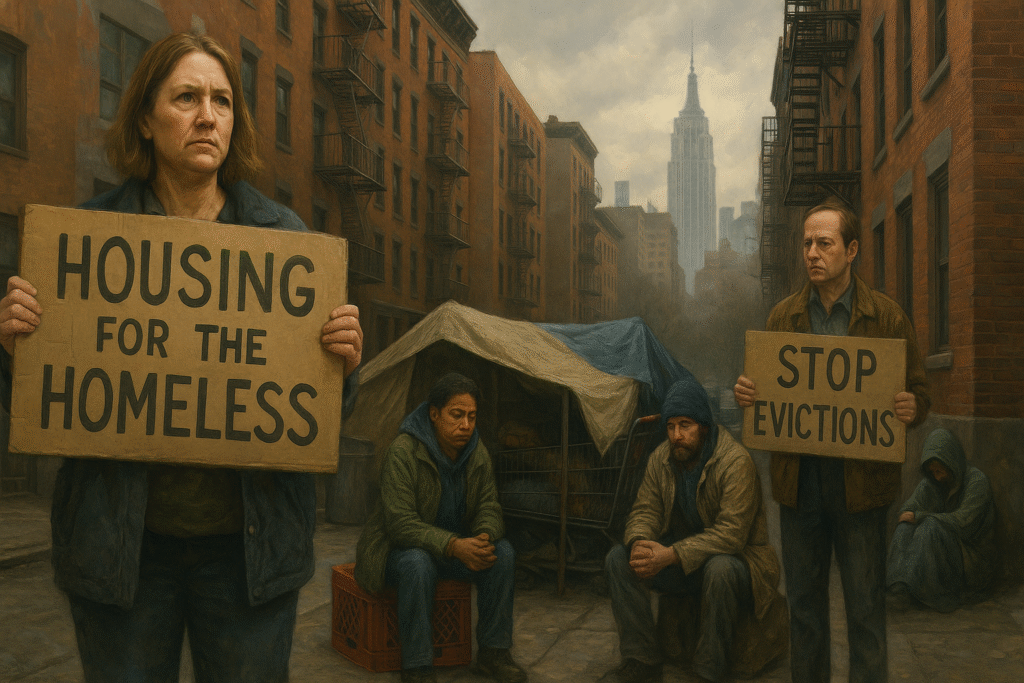
A coalition of homeless advocacy groups has filed a lawsuit against the City of New York, accusing officials of violating state housing laws by attempting to roll back incentive programs that help homeless residents secure permanent housing. The legal action, filed in Manhattan Supreme Court on Thursday, seeks to block the city’s plan to limit rental assistance vouchers that tens of thousands of low-income families rely on to avoid returning to shelters.
The lawsuit, led by organizations including the Coalition for the Homeless, Legal Aid Society, and VOCAL-NY, argues that the city’s decision to tighten eligibility criteria for housing vouchers under the CityFHEPS program would have “devastating consequences for New York’s most vulnerable populations.”
“This policy change effectively pushes people back into homelessness,” said Mary Brosnahan, executive director of the Coalition for the Homeless. “Instead of helping New Yorkers rebuild their lives, the city is making it harder to find stability.”
City officials have defended the move, saying it aims to address budget pressures and ensure that assistance is directed toward those most in need. The Department of Social Services (DSS) stated that the reforms were designed to “streamline the system” and reduce “overlapping benefits” between city and state programs.
However, advocates counter that the changes — which include stricter work requirements, shorter benefit periods, and higher documentation demands — disproportionately affect single mothers, the elderly, and formerly incarcerated individuals who already face barriers in the housing market.
According to city data, over 80,000 people — including nearly 25,000 children — currently live in New York’s shelter system. Homelessness has surged in recent years, fueled by rising rents, post-pandemic evictions, and an influx of migrants seeking refuge in the city.
“We’re not asking for luxury — just dignity,” said Jamal Perez, a Bronx resident and father of two who joined the lawsuit after losing his voucher renewal. “Without this support, I have nowhere to go.”
The lawsuit also cites New York State’s right-to-shelter mandate, a decades-old policy requiring the city to provide housing to anyone without shelter. Advocates claim that canceling housing incentives would lead to “unlawful shelter denials” and worsen the strain on an already overwhelmed system.
City Hall has yet to comment on the lawsuit, but sources close to the Adams administration told Daily Euro Times that officials are “reviewing legal options” and “remain committed to balancing fiscal responsibility with compassion.”
Housing policy experts warn that the outcome of this case could set a precedent for how U.S. cities manage housing assistance amid growing budget shortfalls.
“New York has long been the testing ground for progressive housing policies,” said Dr. Ellen Morris, a housing economist at Columbia University. “If this lawsuit succeeds, it could reaffirm the legal responsibility of cities to protect the right to housing — not just provide emergency beds.”
As the case moves forward, homeless shelters continue to operate at near-capacity, with advocacy groups urging the city to expand—not reduce—voucher programs that have proven effective in transitioning families from shelters to stable homes.