
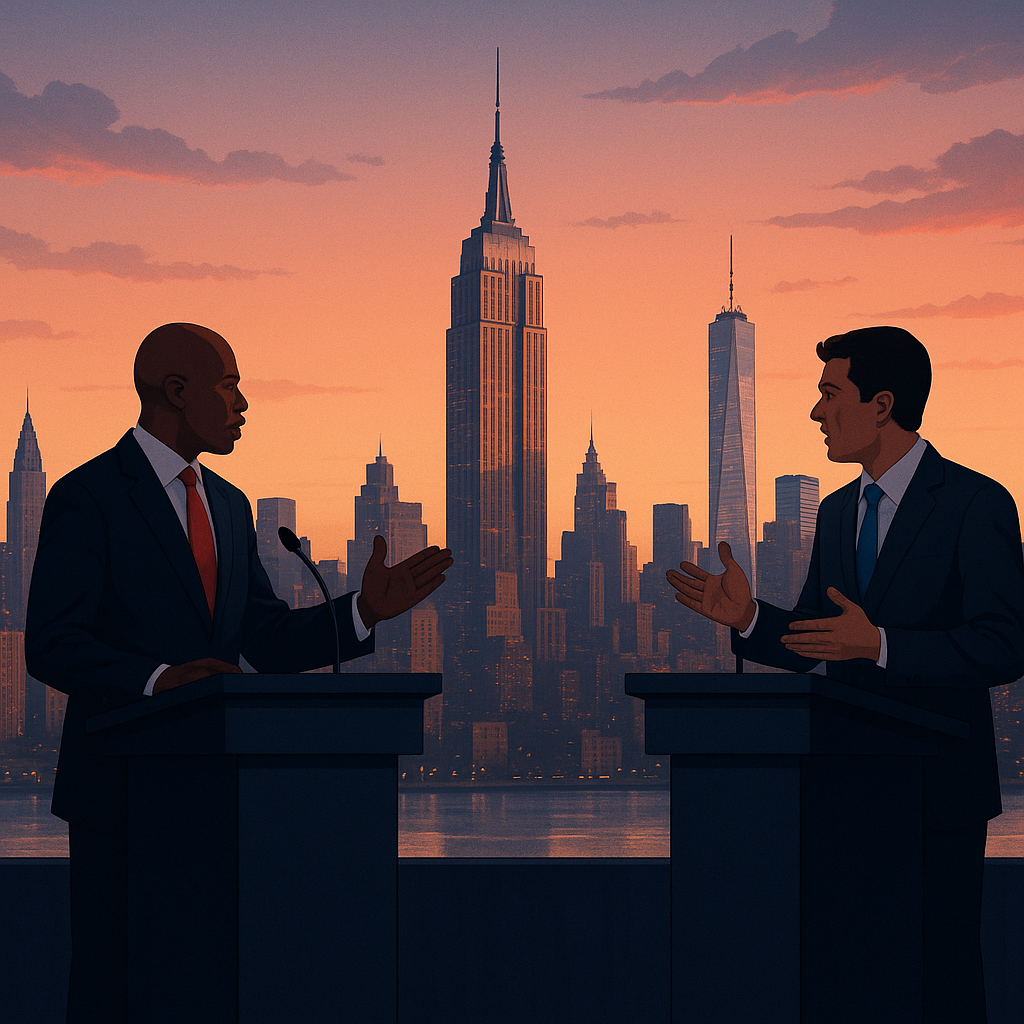
The race for New York City’s mayoralty has entered a decisive phase, with candidates intensifying their campaigns ahead of the much-anticipated televised debate set to take place next week. The contest, marked by sharp exchanges, contrasting visions, and deep voter polarization, has turned into one of the most closely watched political battles in the nation.
At the center of attention are the two leading contenders — incumbent Mayor Eric Adams, seeking re-election on a platform of stability and public safety, and State Assemblymember Zohran Mamdani, representing a progressive wave focused on housing reform, economic justice, and civil rights. Their upcoming debate, hosted by NY1 and the New York Times, is expected to be a defining moment in the race.
“New Yorkers want answers — not slogans,” Adams said during a campaign stop in the Bronx. “We’ve made the city safer, cleaner, and more equitable, but we still have work to do.”
Mamdani, meanwhile, has accused the Adams administration of “favoring corporate interests” and failing to tackle the city’s housing crisis, pointing to record-high rents and homelessness as signs of policy failure.
“This city belongs to the people who live and work here, not just the developers who profit from it,” Mamdani said in Queens. “We’re fighting for a New York that’s affordable, fair, and inclusive.”
The election, scheduled for November 5, comes at a time of mounting challenges for the city — including economic inequality, crime perception, migration pressures, and debates over police accountability. Analysts say these issues have reshaped the political landscape, creating a clear divide between moderate voters prioritizing law and order and progressives demanding systemic change.
Polls show a tight race, with Adams leading slightly among older and moderate voters, while Mamdani enjoys strong support from younger residents and immigrant communities. Third-party and independent candidates, though trailing, could play a spoiler role by drawing votes from both sides.
In the coming days, both campaigns are expected to ramp up advertising, hold rallies across the boroughs, and target undecided voters in key neighborhoods such as Brooklyn’s Park Slope, Queens’ Astoria, and Upper Manhattan.
The debate is expected to focus on public safety, housing, education, climate resilience, and the city’s financial management, with each candidate hoping to deliver a defining message that resonates beyond their base.
Political analysts say this election could signal a broader shift in the city’s identity — whether it continues under Adams’ centrist governance or swings toward a new, progressive era under Mamdani’s movement.
“New York has always been the political heartbeat of America,” said political commentator Maria Torres. “What happens here often sets the tone for national debates — and this election is no exception.”