
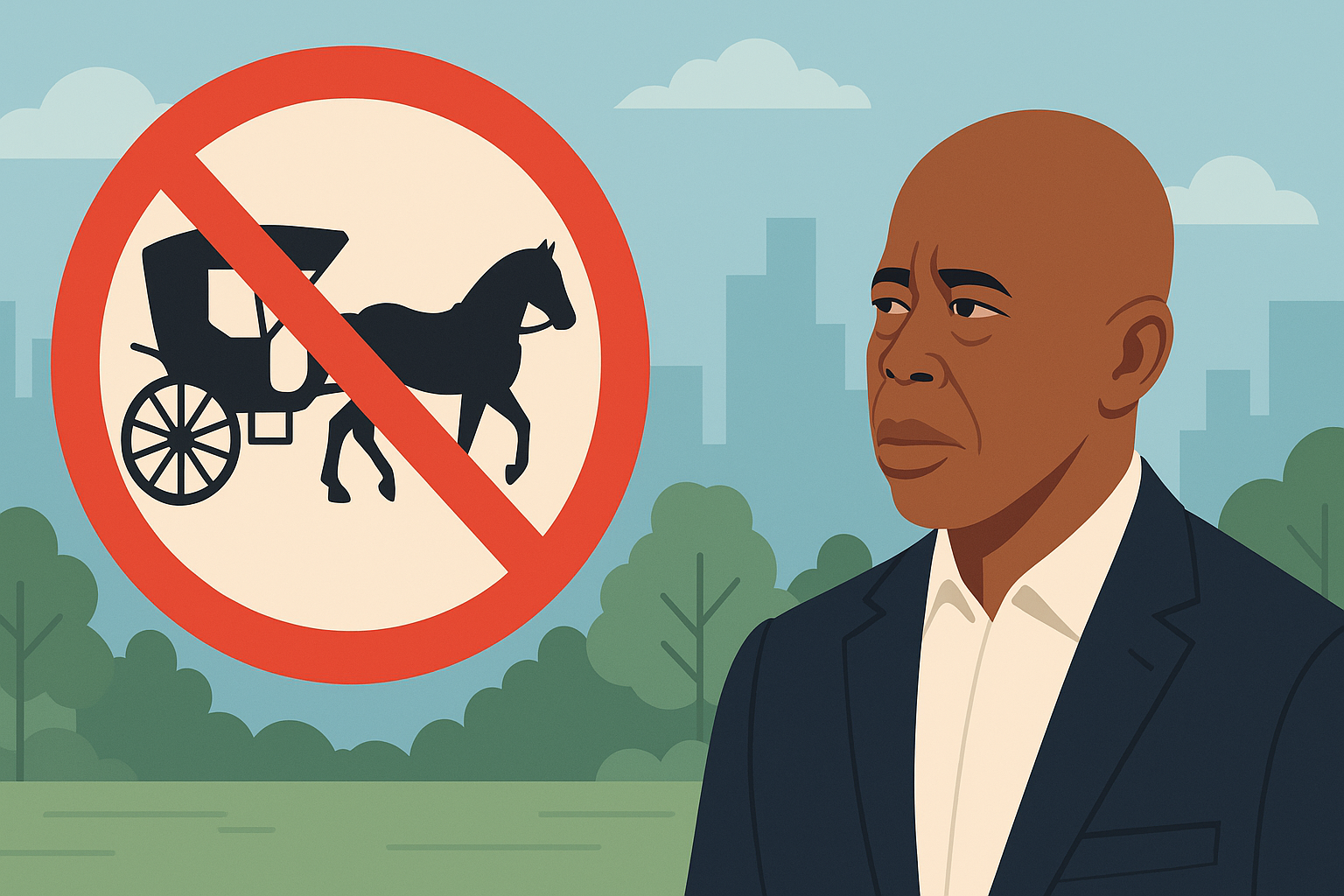
New York City is preparing for a major change to one of its long-standing tourist traditions. Mayor Eric Adams has declared his support for new legislation that would permanently end the use of horse-drawn carriages in Central Park by late 2026.
The measure was introduced following a number of recent incidents in which horses collapsed or were involved in traffic accidents, reigniting concerns about public safety and animal welfare. For advocates, the incidents highlight the risks of maintaining the practice in a city as busy and congested as New York.
“New Yorkers value their traditions, but no tradition should come at the cost of safety or humanity,” Mayor Adams said. “It is time to modernize this practice and prioritize both people and animals.”
Concerns Over Animal Welfare
Animal rights organizations have long criticized the industry, pointing to the physical strain placed on horses that work long hours on city streets, endure harsh weather, and navigate constant traffic. Several high-profile collapses of carriage horses in Manhattan in recent years have amplified calls for reform and galvanized public support for a ban.
Economic and Tourism Impact
To address concerns over job losses, supporters of the legislation are proposing the introduction of electric carriages as an alternative. These vehicles would allow drivers to continue working while offering tourists a safe, modern, and environmentally friendly experience. “We can preserve the charm of the rides without causing suffering,” said a spokesperson for NYCLASS, an animal advocacy group.
Opposition From Drivers
Carriage drivers, however, remain strongly opposed. Many argue that their industry is already subject to strict regulation and represents a piece of New York’s cultural identity. “This is a tradition that has supported families for generations,” one driver explained. “Visitors expect to see horse-drawn carriages in Central Park. Removing them would strip away part of the city’s character.”
Legislative Path Forward
The proposal is expected to go before the City Council in the coming months. If approved, the law would gradually reduce carriage licenses until the practice is completely phased out by the end of 2026.
For now, the horse-drawn carriages continue to operate in Central Park, standing at the intersection of history and controversy. The debate reflects a broader challenge facing New York City—how to respect tradition while adapting to modern values of safety, compassion, and sustainability.