






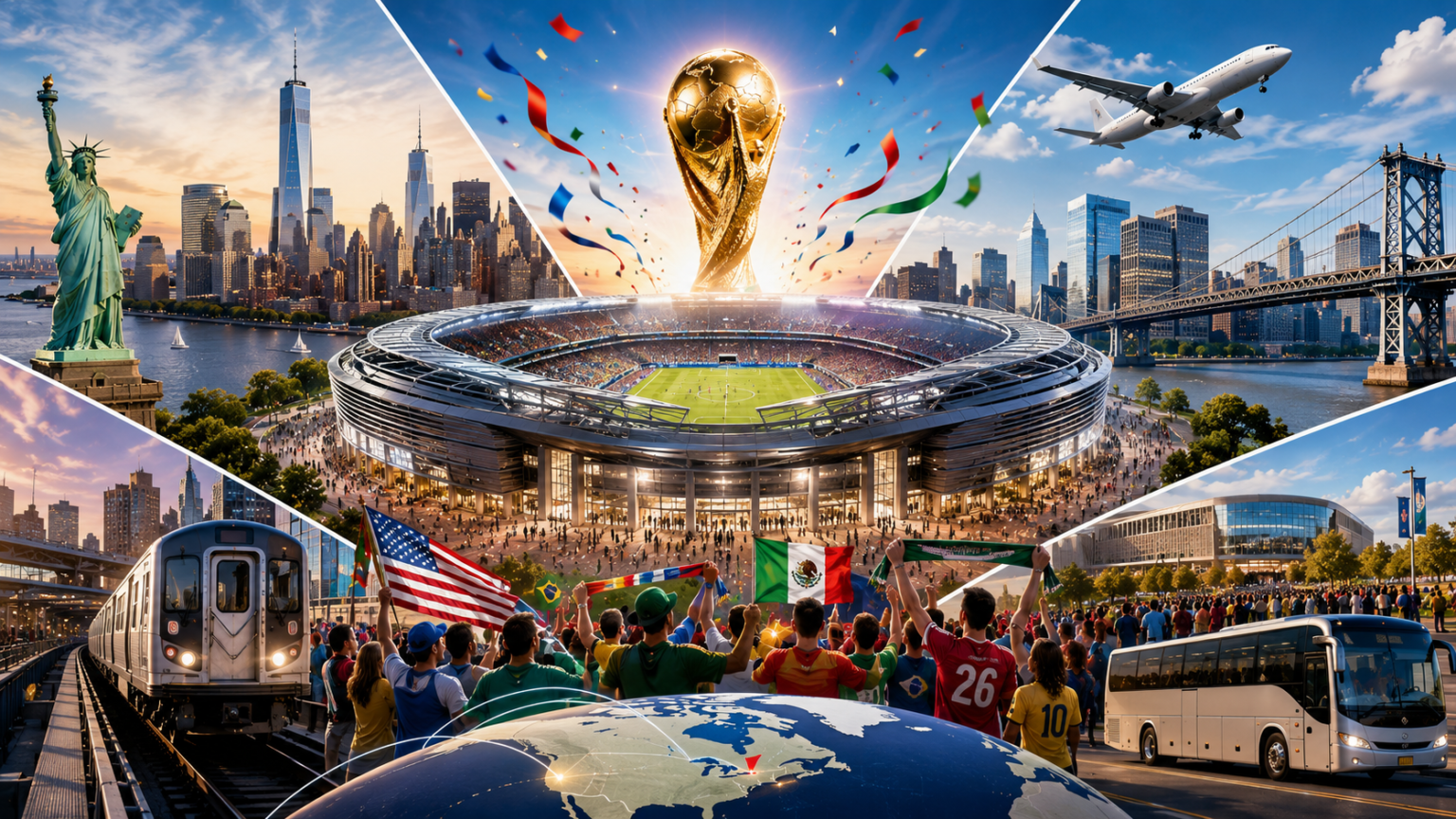
New York and New Jersey are entering the final stretch of preparations for the 2026 FIFA World Cup, as local officials, transport agencies, businesses, and tourism groups work to prepare the region for one of the biggest sporting events in the world.
The New York-New Jersey area will play a central role in the tournament. MetLife Stadium in East Rutherford, New Jersey — officially referred to by FIFA as New York New Jersey Stadium — is scheduled to host eight matches, including group-stage games, knockout matches, and the World Cup final on July 19, 2026. FIFA confirmed that the final will be held at the New York-New Jersey venue, making the region the stage for the tournament’s biggest moment.
The tournament itself will be the largest World Cup in history, with 48 teams, 104 matches, and 16 host cities across the United States, Canada, and Mexico. For New York and New Jersey, that means not only football matches but also a major wave of visitors, media attention, security planning, fan events, and business activity.
Transportation is one of the biggest preparation challenges. Thousands of fans will need to move between New York City, New Jersey, airports, hotels, fan zones, and MetLife Stadium. After criticism over high travel prices, transport fares to World Cup matches were reduced, including a reported cut in round-trip bus tickets from New York City to MetLife Stadium from $80 to $20, while NJ Transit also reduced planned round-trip train pricing.
The official New York-New Jersey World Cup schedule includes major group-stage fixtures such as Brazil vs. Morocco on June 13, France vs. Senegal on June 16, and Norway vs. Senegal on June 22, in addition to later knockout matches and the final. These games are expected to draw large international fan communities across the region, especially from countries with strong diaspora populations in New York and New Jersey.
New York City has also moved to prepare local businesses for the economic opportunity. On May 14, 2026, the New York City Council passed a package of legislation aimed at helping small businesses benefit from the tournament. The measures include efforts to connect businesses with World Cup-related activity, improve readiness, and ensure that local communities can participate in the economic impact rather than simply observe it.
The business impact could be significant. Hotels, restaurants, transport operators, retail shops, event companies, security services, and tourism businesses are all expected to benefit from the arrival of fans and media. The tournament gives New York and New Jersey a chance to present themselves not only as sports hosts but also as global tourism and commercial destinations.
New Jersey is also increasing its preparations through fan festivals, transport planning, grants, and statewide coordination. Local business publications report that the state is moving from planning into execution, with attention on visitor experience, public safety, technology tools, and MetLife Stadium readiness.
Security will be another major focus. Hosting the World Cup final requires coordination between city, state, federal, stadium, transport, and emergency agencies. The region must manage crowd control, traffic, fan movement, public spaces, and possible protests or security risks, while still creating a welcoming environment for international visitors.
The event also carries symbolic importance. New York is often viewed as a global city, while New Jersey will physically host the matches at MetLife Stadium. Together, the two states must present a unified host identity to fans around the world. The success of the tournament will depend on how smoothly they coordinate transport, hospitality, security, fan experiences, and business participation.
For local residents, the World Cup will bring both excitement and disruption. The benefits may include tourism revenue, global exposure, and cultural celebration. The challenges may include traffic, crowded transit, hotel price pressure, and security restrictions around major event zones.
As the countdown continues, New York and New Jersey are preparing for more than a football tournament. They are preparing for a global stage. If handled well, the 2026 World Cup could become a major economic and cultural moment for the region, ending with the world’s most-watched football match in New Jersey.