





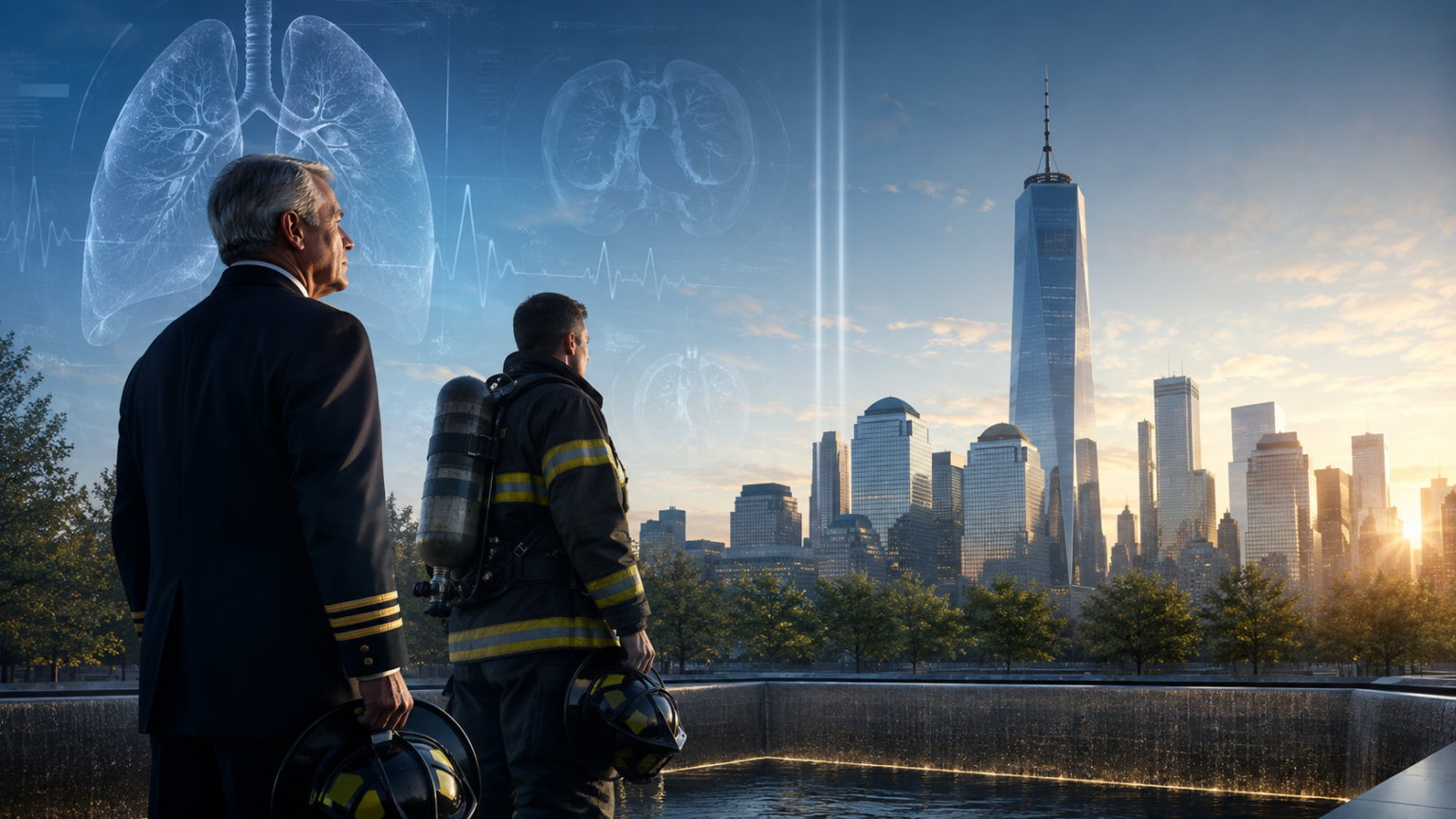
The New York City Fire Department has released a new report examining the illnesses and long-term health complications that firefighters and other first responders continue to experience 25 years after the September 11 attacks.
The report highlights the lasting medical consequences of exposure to the enormous cloud of dust, smoke and hazardous materials released when the World Trade Center towers collapsed. Thousands of firefighters, emergency workers and volunteers spent days or months at Ground Zero conducting rescue, recovery and cleanup operations.
Many responders inhaled a mixture of pulverized concrete, glass fibers, chemicals and other toxic substances. In the years that followed, medical programs recorded respiratory diseases, digestive disorders, cardiovascular complications and several forms of cancer among members of the affected population.
Firefighters have also reported chronic coughing, reduced lung function, asthma-like symptoms and conditions linked to inflammation of the airways. Some illnesses emerged soon after the attacks, while others took years or even decades to develop.
The report emphasizes that the health impact of September 11 is still evolving. As surviving responders grow older, doctors are monitoring how exposure-related illnesses interact with the natural effects of aging and other medical conditions.
Mental-health complications also remain a central concern. Firefighters who witnessed the attacks, lost colleagues or participated in the recovery operation have faced elevated risks of post-traumatic stress, depression, anxiety and sleep disorders. Health specialists say continued psychological support is as important as physical monitoring.
The Fire Department’s findings reinforce calls for long-term funding of programs that provide medical screening, treatment and compensation to responders and survivors. Advocates warn that any interruption in healthcare assistance could leave thousands of people struggling to manage serious illnesses linked to their service at Ground Zero.
Researchers continue to examine medical records and long-term trends to understand the full consequences of exposure. Their work could also improve future responses to large-scale disasters involving toxic dust, fires and building collapses.
The report comes as New York prepares to mark the 25th anniversary of the attacks, which killed nearly 3,000 people, including 343 FDNY members. Since then, additional firefighters and emergency workers have died from illnesses associated with their work at the World Trade Center site.
Fire officials said the anniversary must serve not only as an occasion to remember those killed on September 11, but also to recognize the responders who continue to face its health consequences.
A quarter of a century later, the medical legacy of the attacks remains an ongoing public-health challenge—and a reminder that the costs of September 11 did not end when the rescue and recovery operations concluded.