





A Longstanding Tension Turns Into a Legal Battle
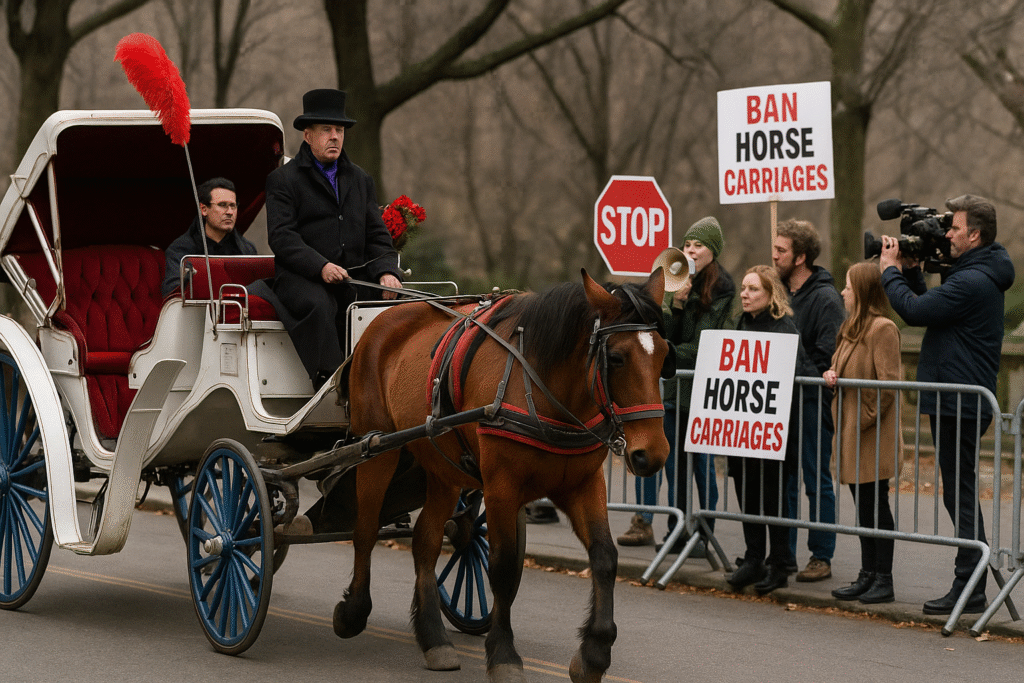
The long-running dispute between Central Park’s horse carriage drivers and animal rights activists has escalated into a full-blown courtroom confrontation. The Central Park Horse Carriage Drivers Association has filed a $1 million defamation lawsuit against a coalition of activists, accusing them of conducting a “malicious and coordinated smear campaign” aimed at destroying their livelihoods.
According to court documents filed in Manhattan Supreme Court, the association alleges that activists spread false claims on social media and at public demonstrations, portraying carriage operators as abusive and negligent toward their horses. The lawsuit seeks damages for reputational harm, emotional distress, and loss of income.
Allegations of Defamation and Harassment
The complaint specifically names several prominent figures within the New Yorkers for Animal Rights Coalition, accusing them of publishing misleading videos, doctored images, and “inflammatory language designed to incite public outrage.”
“We have endured years of harassment and lies,” said Michael Donnelly, president of the Carriage Drivers Association. “These people have crossed the line from advocacy to defamation. Our horses are healthy, well-cared for, and regulated under strict city laws.”
The drivers’ group claims that the campaign led to booking cancellations, verbal harassment from tourists, and a decline in public support, putting dozens of drivers and stable hands at financial risk.
Activists Respond: “Truth Is on Our Side”
Animal rights groups responded swiftly, dismissing the lawsuit as an intimidation tactic. Samantha Green, spokesperson for the activists, said:
“This lawsuit is an attempt to silence our free speech and distract from the truth — that forcing horses to work in Manhattan traffic is inhumane and outdated.”
Green added that the movement to ban horse-drawn carriages in New York is gaining traction, with growing support from lawmakers and the public. Activists have long argued that the industry endangers both horses and pedestrians in one of the world’s busiest cities.
City’s Regulatory Stance
Currently, New York City law permits the operation of horse-drawn carriages but under strict regulations: horses must receive regular veterinary checks, are prohibited from working in extreme heat or cold, and must be stabled in approved facilities.
The city has repeatedly reviewed proposals to phase out horse carriages, but none have passed so far due to strong opposition from unions and tourism stakeholders.
Legal experts suggest the lawsuit could test the boundaries between free speech and defamation in the context of public advocacy. “If the court finds that activists knowingly spread false claims, this could set a major precedent,” said attorney David Hirsch, a specialist in media law.
A Fight Over Tradition and Change
The case underscores a deeper cultural clash between preserving tradition and embracing modern ethics. For decades, horse-drawn carriages have been iconic symbols of Central Park — featured in films, postcards, and wedding proposals. But critics argue that nostalgia should not justify animal suffering in the modern age.
As the legal process unfolds, the lawsuit has reignited public debate over whether New York should end its carriage industry altogether or find a compromise that protects both livelihoods and animal welfare.
Insight:
What began as a campaign for animal rights has evolved into a defining test of truth, image, and identity in New York City. The outcome of this lawsuit could reshape how advocacy groups and traditional industries coexist — and whether emotion or evidence will drive the city’s next move.