




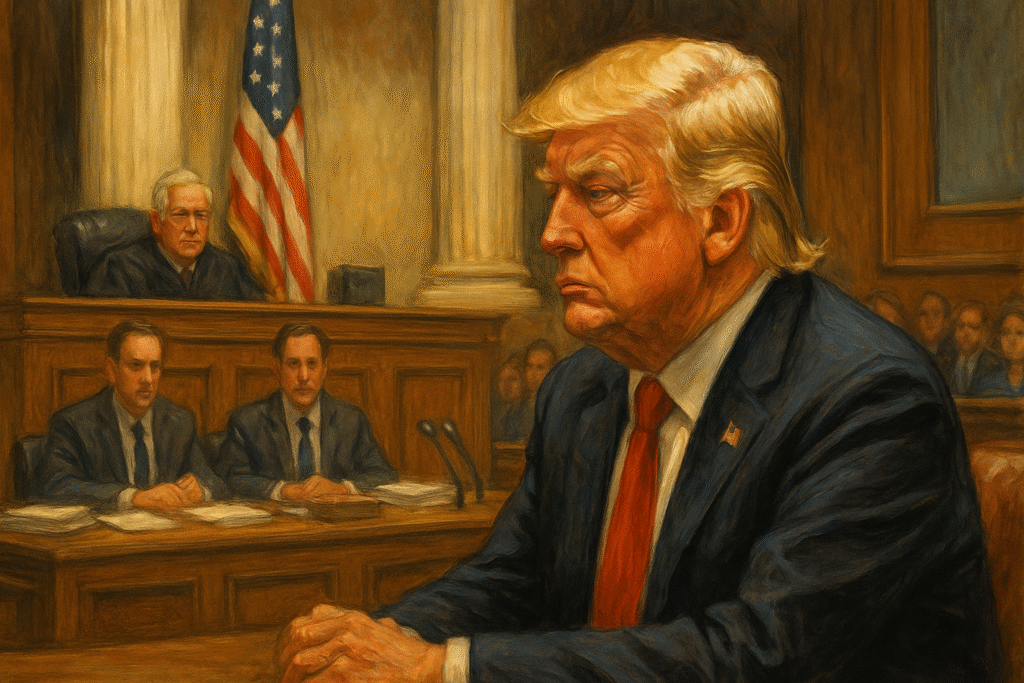
Former U.S. President Donald Trump has officially filed an appeal with the New York Court of Appeals, seeking to overturn his conviction in the high-profile “hush-money” case, a legal battle that continues to intertwine national politics with New York’s judicial system.
Trump’s legal team submitted the appeal on Monday, arguing that the trial was “fundamentally flawed” and that the court had “allowed political motivations to override due process.” The case, which centered on alleged payments made to silence adult film actress Stormy Daniels during the 2016 presidential campaign, resulted in Trump’s conviction earlier this year on multiple counts of falsifying business records.
The appeal represents the latest phase in a prolonged legal and political saga that has kept New York courts in the national spotlight. Trump’s attorneys contend that the prosecution stretched state law to criminalize what they claim were routine business entries, asserting that “no fair-minded jury” could have reached a guilty verdict given the evidence presented.
In contrast, Manhattan District Attorney Alvin Bragg, whose office led the prosecution, defended the trial’s integrity. “This case was about accountability under the law—nothing more, nothing less,” Bragg’s office said in a statement. “No individual, regardless of their position, is above the law.”
Legal analysts note that Trump faces an uphill battle in securing a reversal. The New York Court of Appeals, the state’s highest judicial authority, rarely overturns convictions unless clear procedural errors or violations of constitutional rights are demonstrated.
Still, the case carries significant political implications, as Trump remains a central figure in American politics and a likely presidential contender in the upcoming election cycle. The appeal’s outcome could influence both his eligibility and public perception heading into the campaign trail.
Outside Trump Tower in Midtown Manhattan, supporters and protesters gathered shortly after the filing, with chants and signs reflecting the city’s sharp political divide. “This is about justice being weaponized,” said one supporter, while an opposing demonstrator countered, “It’s about accountability for everyone, even former presidents.”
As the legal process unfolds, New York once again finds itself at the heart of a national debate—one where law, politics, and public opinion collide in a city long accustomed to being the stage for America’s most consequential stories.