



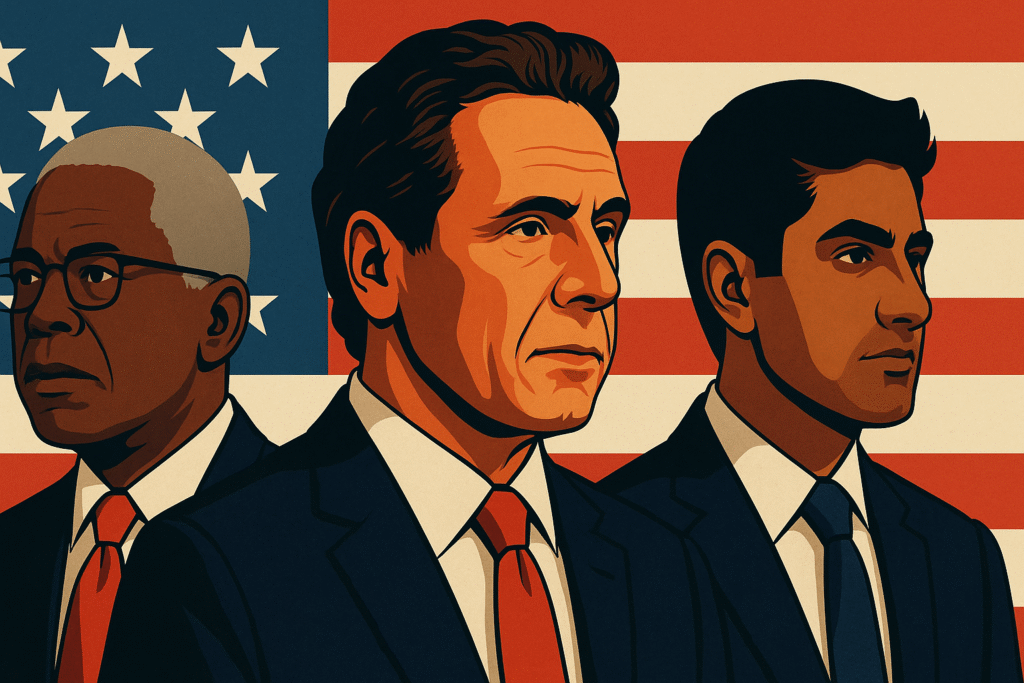
In a move that has reshaped the dynamics of the 2025 New York City mayoral race, former New York Governor David Paterson has announced his endorsement of Andrew Cuomo, marking a significant shift in the political landscape just weeks before Election Day.
Paterson’s decision comes as a surprise to many political observers, given that he had previously expressed support for former Mayor Eric Adams earlier in the race. In a statement, Paterson said his endorsement reflects a belief that “Cuomo’s leadership experience and crisis management skills are what New York needs to move forward.”
The endorsement adds fresh momentum to Cuomo’s late-stage campaign, which has steadily gained traction amid tightening polls. According to the latest CityPulse survey, Zohran Mamdani—the Democratic candidate representing a new wave of progressive politics—continues to lead with 31%, while Cuomo has risen to 27%, narrowing the gap significantly. Adams trails at 21%, with the remaining percentage split among independent and minor party candidates.
Analysts suggest that Paterson’s backing could help Cuomo consolidate moderate and centrist voters, particularly among older and working-class New Yorkers who previously supported Adams. However, progressive voters remain firmly aligned behind Mamdani, whose campaign has focused on housing affordability, police reform, and climate justice.
Political commentator Laura McIntyre noted, “Paterson’s endorsement signals that establishment Democrats are coalescing around Cuomo to block a progressive upset. It also revives debates about Cuomo’s legacy and whether New York voters are ready to welcome him back into elected office.”
The upcoming televised mayoral debate, scheduled for next week, is expected to be pivotal. Cuomo is likely to emphasize his record in economic recovery and infrastructure, while Mamdani’s campaign plans to spotlight issues of equity and accountability.
With voter enthusiasm on the rise and endorsements shifting rapidly, the New York City mayoral race is shaping up to be one of the most unpredictable contests in recent memory—a reflection of a city still defining its political identity after years of turbulence and transformation.