




Public debate is intensifying within New York’s Jewish communities as Democratic mayoral candidate Zohran Mamdani faces growing criticism over his past remarks and policy positions on the Israel–Palestine conflict. The controversy has exposed a widening divide between progressive and traditional Jewish voters in one of the city’s most politically active constituencies.
Rising Concern Among Community Leaders
Mamdani — a state assemblyman from Queens known for his progressive activism — has long positioned himself as a champion of social justice and equality. Yet, his outspoken support for Palestinian rights and his criticism of Israeli government actions have unsettled segments of the city’s Jewish population.
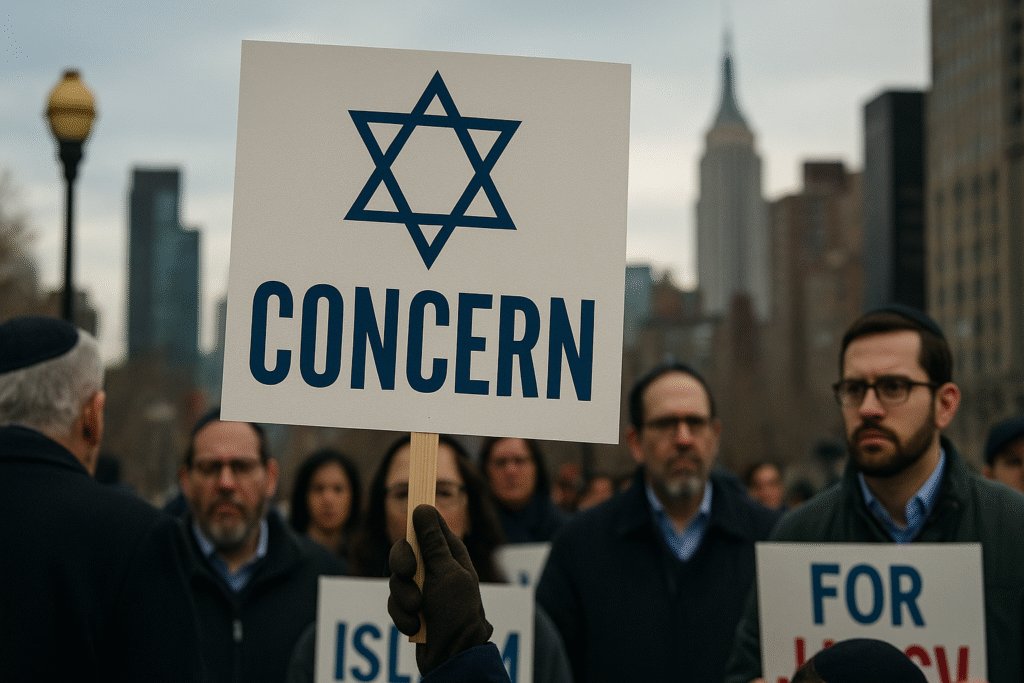
A Brooklyn-based rabbi told NYI, “I believe Mamdani poses a danger to the Jewish community in New York.” His words, widely shared across social media, triggered fierce debate between those accusing Mamdani of harboring anti-Israel sentiment and those defending his record as a critic of state policy rather than of Jewish identity.
A City Split Between Activism and Identity
New York is home to the largest Jewish population outside Israel — and Jewish voters have historically played a pivotal role in mayoral politics. Mamdani’s critics argue that his rhetoric risks alienating moderate and Orthodox blocs, especially in Brooklyn and Staten Island, where concerns about antisemitic incidents have risen in recent years.
Conversely, progressive Jewish groups such as Jews for Justice NYC and IfNotNow have voiced support for Mamdani, describing him as a “candidate for coexistence” and rejecting claims that he threatens Jewish safety. “Criticizing government policy is not antisemitism,” said one activist. “Mamdani represents the new generation that wants to end hate in all forms — including antisemitism and Islamophobia.”
Campaign Response
In a recent press conference, Mamdani addressed the controversy directly:
“New York’s diversity is our greatest strength. My campaign is built on justice for every community — Jewish, Muslim, Black, Latino, and beyond. I oppose antisemitism with the same conviction that I oppose Islamophobia or racism in any form.”
His campaign further emphasized that Mamdani has repeatedly spoken out against antisemitic hate crimes and has met with local rabbis to foster interfaith understanding.
Political Implications
Analysts say this controversy could shape voter turnout in key boroughs as early voting continues. With nearly 80 000 ballots already cast citywide, Mamdani’s ability to navigate identity politics while focusing on housing, cost-of-living, and safety issues may determine whether he can broaden his appeal beyond his progressive base.
Broader Context
The debate reflects a larger national trend in American politics, where discussions over Israel and Palestine increasingly influence domestic elections. For New York, a city defined by pluralism, the Mamdani episode underscores both the promise and tension of multicultural democracy — where global issues often echo in local campaigns.