






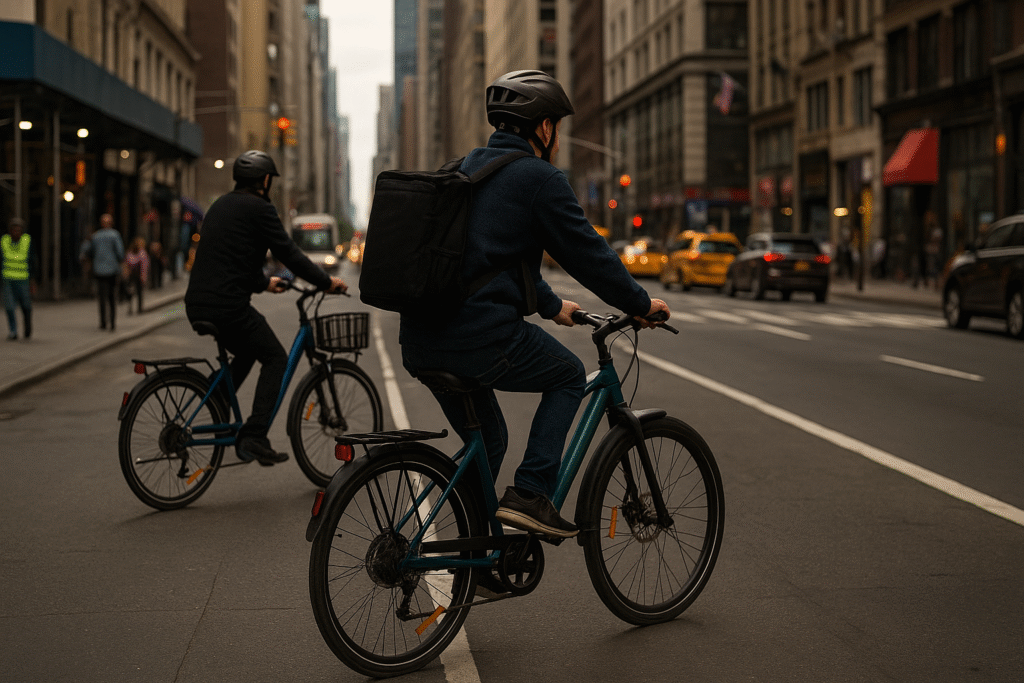
The City of New York has officially implemented a 15-mile-per-hour (24 km/h) speed limit for all electric bicycles, pedal-assist bikes, and small electric scooters, marking a significant shift in urban mobility policy aimed at improving road safety and regulating the city’s fast-growing micromobility sector.
A Move Toward Safer Streets
The new regulation, which took effect Friday morning, applies to all five boroughs and covers shared-mobility services as well as privately owned e-bikes and scooters.
Transportation Commissioner Ydanis Rodriguez said in a statement that the change “reflects the city’s commitment to protecting pedestrians, delivery workers, and riders themselves.”
“We’ve seen a massive rise in e-bike use in New York,” Rodriguez added. “Setting a fair and enforceable speed limit is critical to keeping our streets safe for everyone — from delivery riders to seniors crossing at intersections.”
Background: Growth and Complaints
Over the past three years, the number of registered e-bikes and e-scooters in New York City has more than tripled, fueled by the booming delivery economy and rising concerns over subway reliability. However, this surge has also brought complaints from pedestrians and motorists about reckless riding and sidewalk congestion.
According to the NYC Department of Transportation (DOT), there were more than 1,200 e-bike-related accidents in 2024 — a 38 percent increase from the previous year. City officials say the new limit aims to curb these incidents and prevent fatal collisions.
How the Rule Will Be Enforced
The NYPD and DOT will jointly oversee the rollout of the rule. Initial enforcement will focus on education and warnings, with fines and potential impoundments planned for repeated violations.
Many delivery-app companies have pledged to update their fleet software to automatically cap top speeds at 15 mph. Shared-mobility operators like Citi Bike and Bird have also begun adjusting their e-bike programming to comply with the new citywide limit.
Mixed Reactions
While safety advocates welcomed the decision, some delivery workers voiced frustration, arguing that the lower speed limit could slow down deliveries and reduce income. Others said the policy unfairly targets e-bike users instead of addressing broader infrastructure problems such as the lack of protected bike lanes.
Pedestrian safety groups, however, hailed the move as “long overdue.”
“It’s a smart and balanced approach,” said Lydia Martinez, a spokesperson for Walk Safe NYC. “This limit acknowledges the growing role of e-bikes but puts people’s safety first.”
Looking Ahead
The 15 mph cap is part of a larger “Vision Zero 2.0” initiative that includes new protected lanes, updated crosswalk signals, and stricter rules for delivery services. City officials plan to review the policy’s impact by early 2026 to assess whether further adjustments are needed.
For now, New York joins other major global cities such as Paris, London, and Amsterdam in regulating e-bike speeds as part of a broader effort to balance innovation with public safety.