




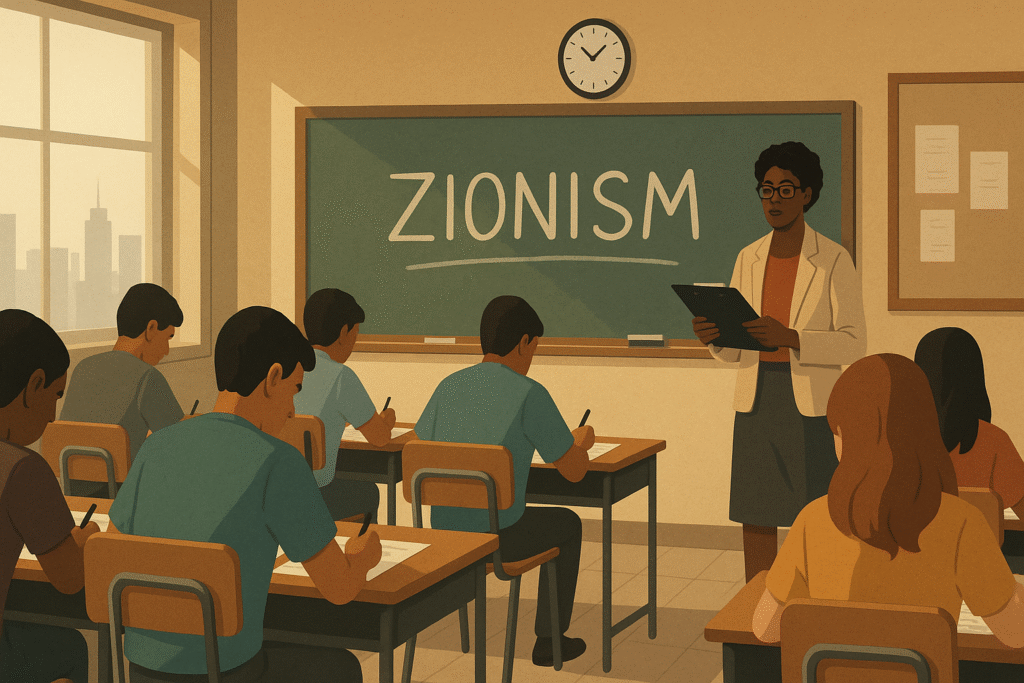
A state-issued history exam review packet has sparked intense backlash among parents, educators, and advocacy groups after its definition of “Zionism” was criticized as politically biased and historically misleading. The controversy, which began earlier this week, centers on material distributed to high school students preparing for the New York State Global History Regents Exam, a key standardized test required for graduation.
The packet, circulated by the New York State Education Department (NYSED), described Zionism as “a movement that led to the displacement of Palestinians and ongoing conflict in the Middle East.” Critics argue that the wording presents a one-sided and politicized view of a complex historical and religious movement, and fails to provide the broader context of Jewish self-determination and the aftermath of centuries of persecution.
“This is not just an academic issue — it’s a matter of fairness and truth,” said Rachel Mendelson, a parent from Brooklyn whose daughter is preparing for the Regents exam. “Students deserve a balanced view that explains Zionism as the Jewish national movement, not a political indictment.”
Several Jewish organizations, including the Anti-Defamation League (ADL) and the Jewish Community Relations Council of New York, have called on the Education Department to revise or withdraw the material. The ADL released a statement saying that the definition “distorts history and risks fueling antisemitic attitudes in classrooms.”
The NYSED responded by acknowledging the complaints and promising an immediate review.
“We take these concerns seriously,” said a department spokesperson. “The goal of the Regents curriculum is to educate, not to take sides on geopolitical conflicts. Any material that does not reflect academic balance will be corrected.”
However, some educators defended the inclusion of the passage, arguing that it reflects global perspectives and encourages students to think critically about historical events from multiple viewpoints.
“Teaching world history means engaging with different narratives,” said James Porter, a social studies teacher in Queens. “The goal isn’t to promote bias, but to help students understand how the same event can be seen differently depending on who’s telling the story.”
The issue has reignited broader debates about politics in education, particularly surrounding topics such as the Israeli–Palestinian conflict, colonialism, and nationalism. Parents from both Jewish and Arab backgrounds have expressed frustration, saying that New York schools should focus on factual history rather than political framing.
State officials are expected to release updated guidance next week, with some lawmakers calling for an independent review of curriculum standards related to Middle Eastern history.
As the controversy unfolds, the incident highlights the growing tension between academic freedom, cultural sensitivity, and political neutrality in U.S. classrooms — a balance educators across the country continue to struggle to maintain.