






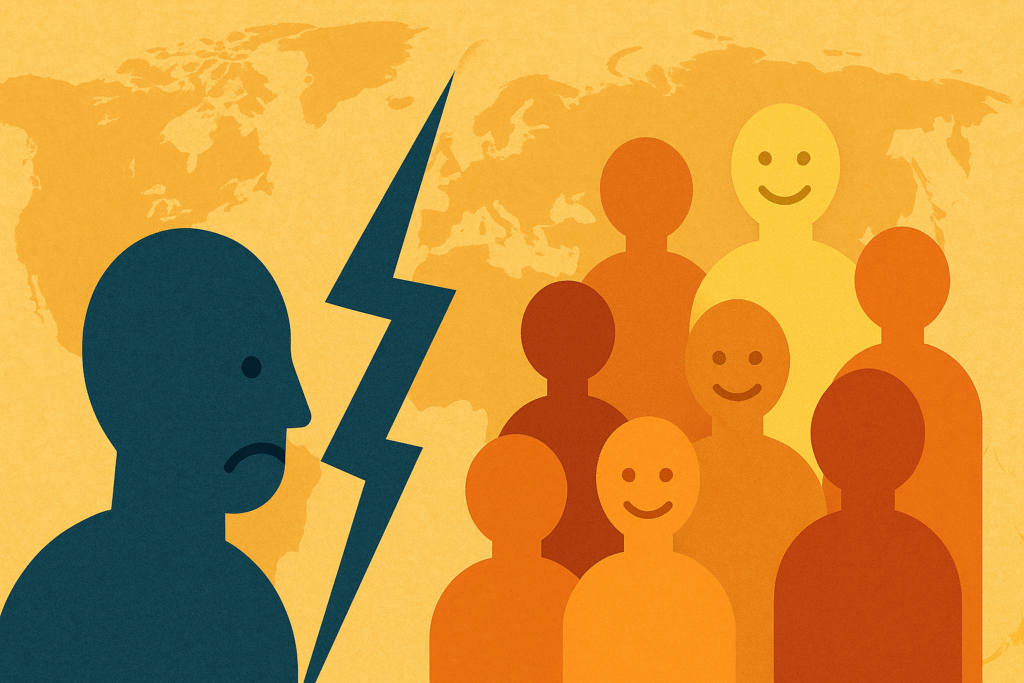
The United States has seen a notable decline in global happiness, falling from 11th place in 2012 to 24th in the 2025 World Happiness Report. The annual report, based on data from the Wellbeing Research Centre at the University of Oxford and the Gallup World Poll, evaluates the average life satisfaction of people across 147 countries between 2022 and 2024.
Finland Leads Again, U.S. Slides Down
Finland secured the top position for the eighth consecutive year, with Denmark, Iceland, Sweden, and the Netherlands completing the top five happiest nations. Notably, Mexico and Costa Rica entered the top 10 for the first time since the report’s inception in 2012, signaling a shift in global well-being trends.
Political Polarization and Trust Deficits
The report attributes much of the U.S. decline to growing political polarization and increasing distrust in institutions. “The countrywide evolution of happiness and trust is highly associated with the rise in the likelihood of voting for anti-system parties,” the report notes, referencing trends seen in both the United States and Western Europe.
This erosion of trust in systems and institutions has impacted public sentiment, contributing to a broader decline in reported well-being.
Social Isolation on the Rise
Another significant factor is the growing trend of social isolation. Over the past two decades, the number of people living alone in the U.S. has increased significantly, leading to a 53% rise in people regularly eating alone. The study found a strong correlation between eating with others and higher well-being, suggesting that isolation contributes to lower happiness scores.
Global Insights: What Makes Countries Happier?
The report highlights several key factors linked to national well-being:
Social Connections: Countries with strong community bonds and frequent social interaction tend to score higher in happiness. Shared meals and close-knit households are particularly associated with elevated well-being.
Household Size: Families with four to five members were found to be the happiest in many parts of the world, especially in Mexico and Europe, though solo living remains common in Europe.
Generosity and Community Support: Nations where generosity and acts of kindness are prevalent report fewer despair-related deaths, including suicides and drug overdoses.
Afghanistan Remains the Least Happy Country
Afghanistan continues to rank lowest in the global happiness index, with a score of just 1.36 out of 10. It has remained at the bottom for six consecutive years, highlighting severe challenges to well-being due to ongoing conflict and instability.
Conclusion
As the global understanding of happiness evolves, the 2025 World Happiness Report sheds light on how factors such as political trust, social connectivity, and community support play crucial roles in shaping individual and national well-being. For the United States, reversing the decline in happiness may require addressing polarization, rebuilding trust, and fostering stronger social ties.