






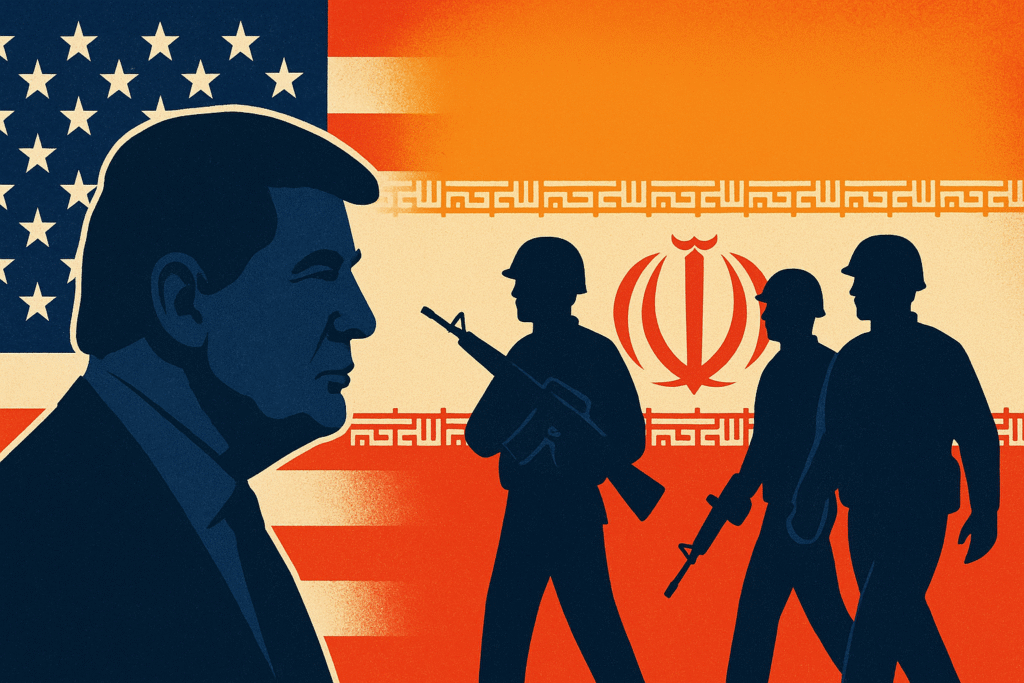
The Senate is preparing for a high-stakes vote as early as June 26 to determine whether President Donald Trump must obtain congressional approval before further military action against Iran, amid growing bipartisan debate over the balance of war powers between Congress and the presidency.
The move comes in the wake of Trump’s June 21 airstrikes on Iranian nuclear facilities — a decision that has drawn both praise and criticism from lawmakers, and raised renewed questions about executive authority in matters of war. While a fragile cease-fire is in place between Israel and Iran, its future remains uncertain.
The Resolution: Limiting Trump’s Military Action
Senator Tim Kaine (D-Va.) introduced a resolution that would require congressional authorization before any further military engagement with Iran. The resolution follows the constitutional principle that Congress has the sole authority to declare war, a power Kaine says has been bypassed too frequently by modern presidents.
Kaine, who introduced a similar resolution during Trump’s first term (which was passed by Congress but later vetoed), warned that another war in the Middle East would be “a catastrophic blunder.”
The Senate measure has a fast-track path to a vote by June 27 but could be voted on as early as June 26. The decision will come shortly after a classified briefing from administration officials including Defense Secretary Pete Hegseth and Secretary of State Marco Rubio.
Executive vs. Legislative War Powers
Trump and his Republican allies argue that, as commander in chief, the president is constitutionally empowered to take swift military action to defend national interests. Sen. Lindsey Graham (R-S.C.) defended Trump’s airstrikes, stating, “There is only one Commander in Chief, and thank God it’s President Trump.”
House Speaker Mike Johnson (R-La.), a constitutional lawyer by training, echoed that sentiment. He dismissed the 1973 War Powers Resolution — which limits the president’s ability to engage in hostilities without congressional consent — as outdated and unconstitutional, citing modern real-time communication and media oversight as sufficient substitutes for legislative checks.
However, Democrats like Senate Minority Leader Chuck Schumer (D-N.Y.) disagree, insisting that Trump had a legal obligation to consult Congress. “There is a legal obligation for the administration to inform Congress about precisely what is happening,” Schumer said.
Intraparty Divisions and Political Fallout
While many Republicans support Trump’s position, not all are on board. GOP Senators such as Rand Paul and Representatives like Thomas Massie and Marjorie Taylor Greene have spoken out against the Iran strikes.
Greene, who was a vocal Trump supporter during the 2024 campaign, called the airstrikes a “bait and switch,” accusing Trump of betraying his non-interventionist promises. “Contrary to what brainwashed Democrat boomers think, Trump is not a king, MAGA is not a cult,” she said.
What’s Happening in the House?
Two war powers proposals are pending in the House of Representatives:
- A bipartisan resolution from Rep. Thomas Massie (R-Ky.) and Rep. Ro Khanna (D-Calif.)
- A resolution from three top Democrats: Reps. Jim Himes (Intelligence), Gregory Meeks (Foreign Affairs), and Adam Smith (Armed Services)
Their joint statement reads:
“President Trump must not be allowed to start a war with Iran, or any country, without congressional approval, without meaningful consultation or congressional authorization.”
Due to new House rules imposed by Republicans, a vote on the resolutions may be delayed up to 15 legislative days, complicating any swift action.
Will the Cease-fire Make the Vote Moot?
House Speaker Johnson said that if the cease-fire holds, the House may not need to act. “I hope we don’t [vote], because it would be a terrible look and it will not pass the House,” he said.
Public Opinion and Political Stakes
A Reuters/Ipsos poll conducted June 21–23 — after the U.S. strikes and before Iran’s retaliatory attack on a U.S. base in Qatar — showed that 79% of Americans are worried Iran could retaliate against U.S. civilians, and many are concerned for American troops stationed in the Middle East.
Political analysts note that how lawmakers vote could have ramifications for the 2028 presidential race. Support for Trump’s actions may help Republican hopefuls but alienate Democratic voters. Conversely, Democrats voting against the president’s war powers risk being labeled weak on national security.
Historical Parallels
The debate over war powers is not new. In 2002, many Democrats — including then-Senator Hillary Clinton — supported military action in Iraq. That decision became a key dividing issue in the 2008 Democratic primary, with Barack Obama, who had opposed the war, ultimately winning the nomination and presidency.
Now, two decades later, the U.S. faces a similar crossroads — with rising tension in the Middle East, partisan divides in Washington, and a looming question about who should hold the authority to take the nation to war.