




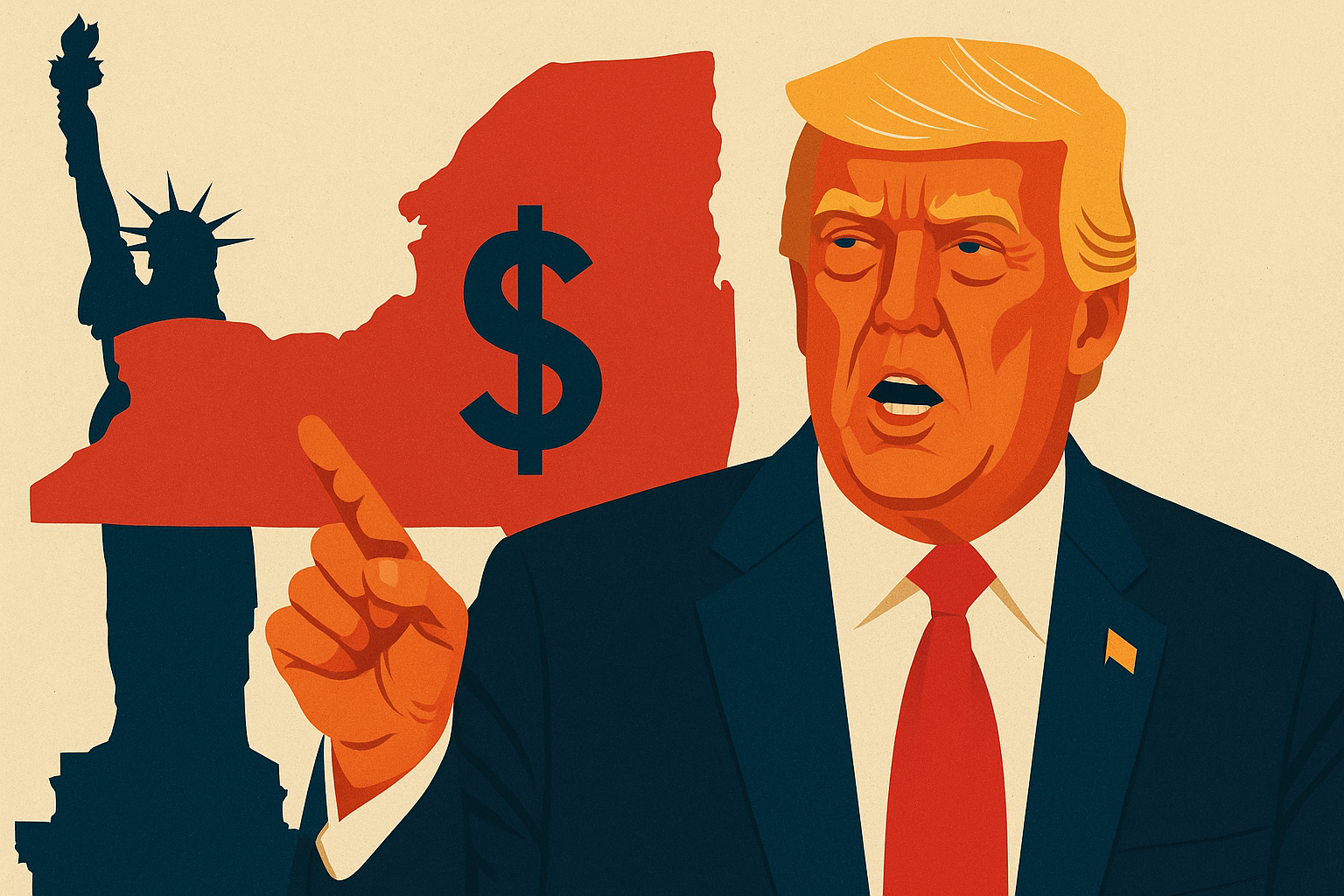
Former U.S. President Donald Trump has waded into New York City’s mayoral race, endorsing Andrew Cuomo and threatening to withhold federal funding from the city should Democratic frontrunner Zohran Mamdani win. The announcement — delivered at a campaign-style rally in Pennsylvania — has injected national politics into what had largely been a local contest, further polarizing an already tense election.
A Bold Endorsement and a Warning
Trump’s remarks came just a day before New Yorkers headed to the polls. Declaring Cuomo “the only one who can save New York from total collapse,” Trump described Mamdani as a “radical socialist” whose policies would “destroy the greatest city in the world.”
“If Mamdani wins, the Biden administration can keep its money — because there won’t be any federal funds for a city that refuses to protect its own people,” Trump said to loud applause.
The former president’s comments drew immediate criticism from Democrats and civil rights groups, who called them a direct threat to democratic governance and an attempt to interfere in local elections for political gain.
Cuomo’s Reaction: Welcome but Measured
Cuomo, running as an independent after his 2021 resignation from the governorship, responded cautiously to Trump’s endorsement. “I appreciate anyone who recognizes the importance of experience and competence,” he said in a statement, “but my focus remains on the people of New York — not on partisan politics.”
The move places Cuomo in a delicate position. While the endorsement may energize moderate and conservative voters disillusioned with progressive leadership, it risks alienating liberals who view Trump as an existential threat to American democracy.
Political analysts say the former governor is walking a fine line. “Cuomo wants to project authority and pragmatism,” said Dr. Ellen Hughes, a political science professor at Columbia University. “But Trump’s endorsement could be toxic in a city that voted overwhelmingly against him in both 2016 and 2020.”
Mamdani Pushes Back
Zohran Mamdani, the Democratic candidate and current state assemblyman from Queens, condemned Trump’s remarks as “an attack on New York’s independence and democracy.”
“The former president’s threats are nothing more than political blackmail,” Mamdani said at a rally in Brooklyn. “New York doesn’t bow to billionaires or bullies — it builds for everyone, not just for the rich.”
Mamdani’s campaign has continued to surge in grassroots energy, particularly among younger voters and working-class communities. His platform focuses on expanding affordable housing, climate resilience, and reforming public safety — themes that have resonated with New Yorkers seeking systemic change.
A Local Election with National Stakes
Trump’s intervention underscores how New York’s mayoral election has evolved into a national flashpoint, symbolizing a broader ideological clash between progressive and centrist factions within the Democratic Party — and the lingering influence of Trump-era populism.
“This is no longer just about who runs City Hall,” said James Alvarez, a political strategist. “It’s about which vision of urban America prevails — one focused on economic justice and reform, or one that doubles down on order and austerity.”
Federal Funding in the Crosshairs
Federal support for New York City — spanning transportation, housing, and public safety programs — amounts to tens of billions of dollars annually. Trump’s threat, while unlikely to materialize without congressional backing, highlights the potential vulnerability of cities dependent on federal aid amid partisan gridlock.
City officials swiftly dismissed the warning as “political theater.” A spokesperson for the Mayor’s Office of Management and Budget said: “Federal funds are allocated by law, not presidential whim. Threats like these have no basis in constitutional reality.”
The Broader Picture
With the city already grappling with economic inequality, rising housing costs, and infrastructure strain, the introduction of national politics into the race has further energized an already record-breaking turnout.
As polls close tonight, New York’s election has become more than a battle for City Hall — it’s a referendum on the balance of power between local democracy and national influence.
In the words of one voter outside a Manhattan polling station: “This isn’t just a mayoral election anymore. It’s a message about who really gets to decide what happens in New York — New Yorkers or Washington.”