





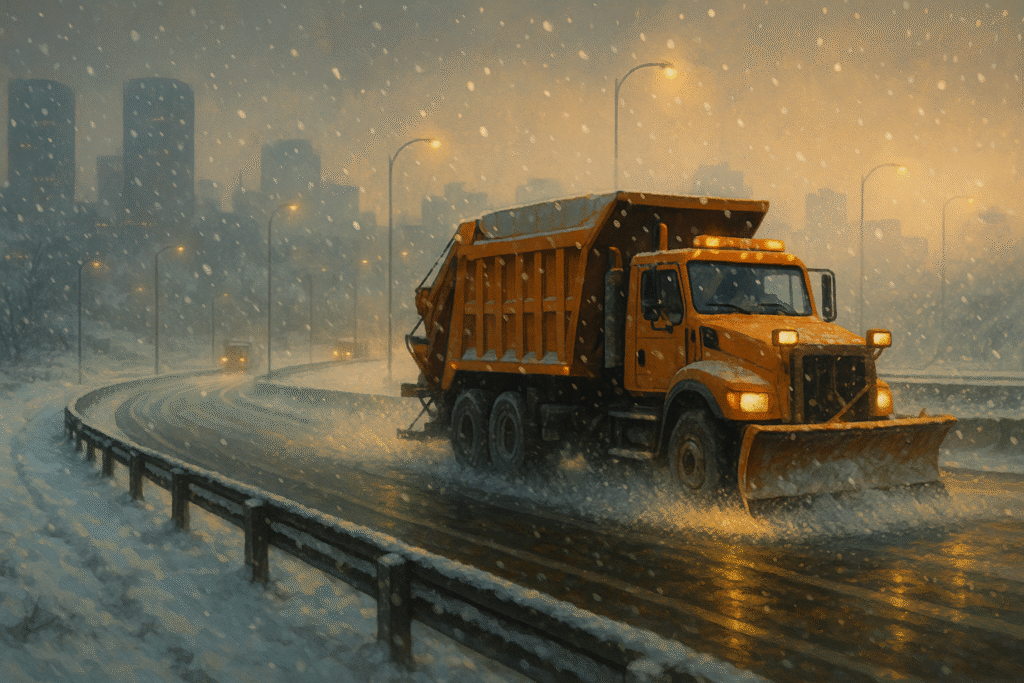
In anticipation of a colder-than-usual winter, the New York City Department of Sanitation (DSNY) has officially deployed its fleet of salt-spreading trucks across the city’s major highways and bridges. The move marks the beginning of the city’s seasonal snow preparedness operations, aimed at preventing snow and ice buildup that can cripple traffic and public transportation.
Proactive Winter Strategy
The DSNY described the deployment as one of its “first lines of defense” against hazardous winter conditions. Over 700 trucks equipped with brine sprayers—vehicles that disperse a salt-water solution—are now stationed across the five boroughs. The solution is designed to create a thin barrier on road surfaces, preventing snow from bonding and easing later plowing operations.
“We don’t wait for the first flake to fall,” said Jessica Tisch, DSNY Commissioner. “This is about being ready before winter storms hit. The brine treatment helps us get a head start in keeping roads safe for drivers, buses, and emergency services.”
Advanced Equipment and Coverage
Each vehicle is capable of spraying up to 1,500 gallons of brine solution in a single run. The city’s sanitation team has mapped priority routes, including expressways, hospital zones, and transit corridors, ensuring that essential areas are covered first.
In addition, DSNY has restocked its 250,000-ton salt reserves, strategically stored in depots throughout the city. The brine application will continue on dry, clear days leading up to anticipated temperature drops.
Why Brine Matters
Experts note that liquid brine is a more efficient and environmentally friendly alternative to traditional rock salt. It reduces overall salt usage, cuts costs, and minimizes runoff that can harm local waterways. “It’s a smart, science-driven approach,” said Dr. Lisa Raymond, an environmental engineer at NYU. “Pre-treating roads before snowfall can reduce accidents by up to 40%.”
Citywide Readiness
Alongside DSNY’s fleet, the Department of Transportation and Emergency Management are coordinating on storm response drills and public advisories. Residents are urged to monitor weather updates, prepare vehicles for winter driving, and avoid unnecessary travel during snow events.
A Cold Winter Ahead
Meteorologists predict that the 2025 winter season could be among the coldest in recent years, influenced by Arctic air patterns and increased precipitation levels. The city’s proactive measures—such as the brine-spraying trucks—are intended to minimize disruption and keep New York moving, even when temperatures drop below freezing.
As Commissioner Tisch summed up:
“New Yorkers know how to handle the cold—but our job is to make sure the city itself is ready to handle it too.”