





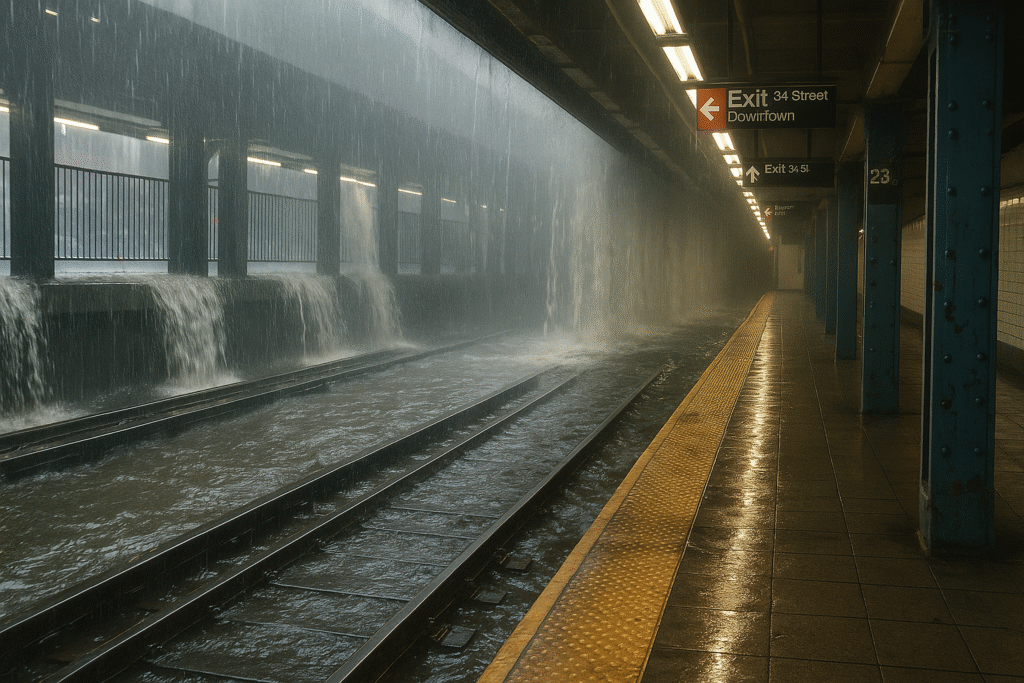
A powerful nor’easter storm swept through the New York metropolitan area early Friday, causing flash floods that submerged sections of the subway system, blocked roadways, and led to widespread transportation delays across the city.
The National Weather Service reported that parts of Brooklyn, Queens, and Lower Manhattan received over 3 inches of rain in less than two hours, overwhelming drainage systems and flooding multiple subway stations. Videos shared by commuters showed water cascading down stairways and platforms as MTA workers scrambled to contain the flooding.
“We’re seeing significant impacts across the system,” said MTA spokesperson Eugene Resnick. “Several lines, including the A, F, and 7 trains, experienced partial suspensions or major delays due to water accumulation and power concerns.”
By mid-morning, MTA announced service suspensions on several routes while emergency crews worked to pump water from tunnels and restore operations. Bus services were also delayed, with reports of vehicles stranded on partially flooded streets in Williamsburg, Astoria, and Harlem.
The city’s Department of Emergency Management issued an alert urging residents to avoid unnecessary travel, warning of “hazardous conditions” due to standing water and poor visibility.
“This kind of flooding can be life-threatening,” Mayor Eric Adams said during a press briefing. “We’re asking all New Yorkers to stay alert, check MTA advisories, and give our first responders and maintenance crews the space they need to do their work.”
Air travel was also affected, with LaGuardia Airport temporarily halting some arrivals and departures due to runway flooding. Drivers along the Brooklyn-Queens Expressway and FDR Drive faced severe congestion as multiple lanes became impassable.
Meteorologists explained that the storm, typical of nor’easters that strike the region in fall and winter, was intensified by warm ocean temperatures and moist air from the Atlantic, leading to record rainfall rates in short bursts.
City engineers warned that such extreme weather events are becoming more frequent as New York continues to grapple with climate change and outdated stormwater infrastructure.
Despite the chaos, no fatalities were reported, though several minor injuries were confirmed due to slips and falls in flooded stations.
As of Friday evening, the MTA said it expected most subway lines to resume normal service by early Saturday, but cleanup operations would continue throughout the night.
“We’re getting better at responding,” said Resnick, “but the reality is — our city must prepare for storms like this to become the new normal.”