






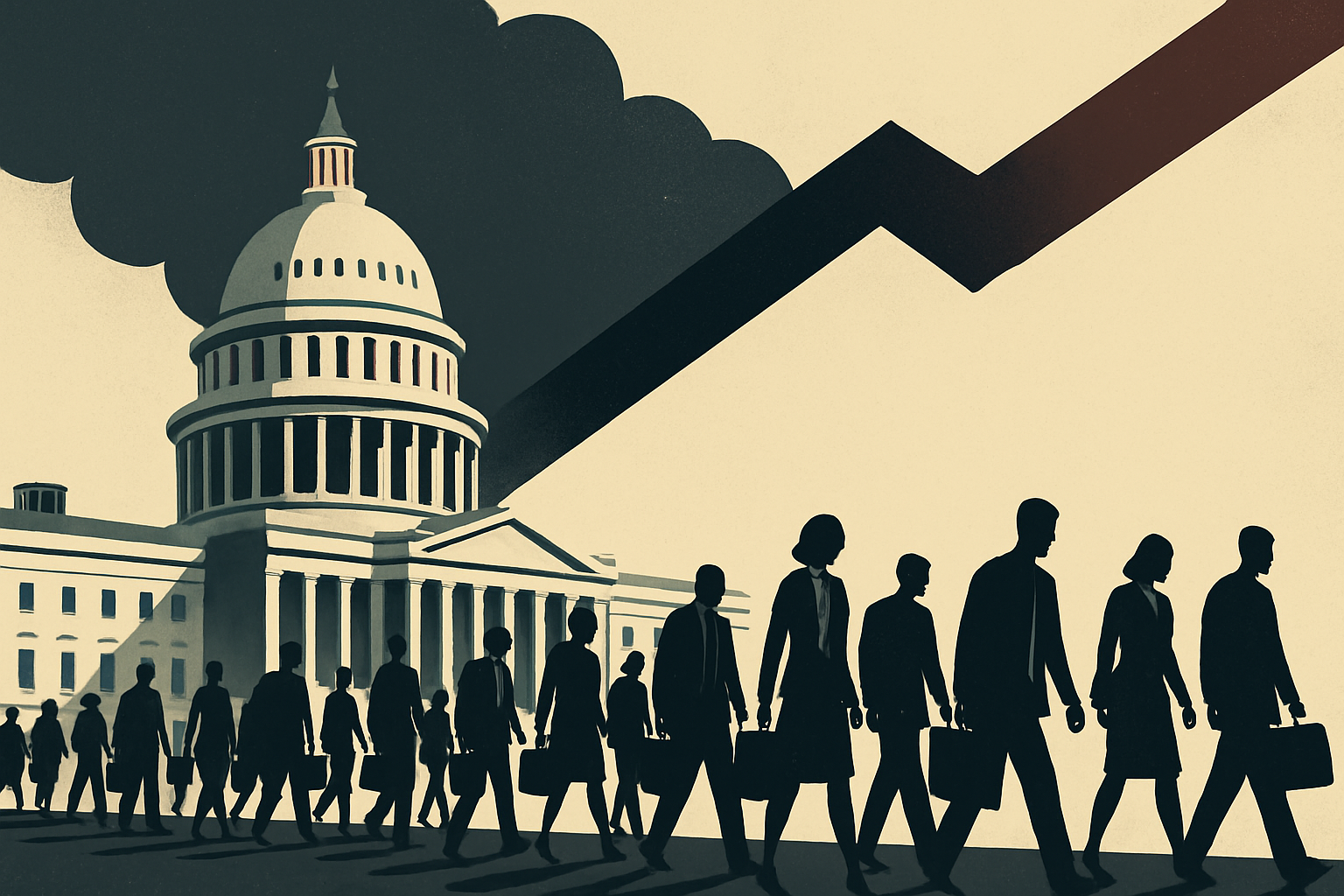
The United States faces the prospect of an unprecedented wave of federal employee resignations as the looming threat of a government shutdown continues to create instability across federal agencies.
Largest Resignation in U.S. Federal History
This week could mark the largest mass resignation in the history of the American federal workforce. Estimates suggest that more than 100,000 employees are preparing to leave their posts. Observers attribute this extraordinary development to mounting administrative pressures, uncertainty over pay and benefits, and the strain of repeated austerity-driven policies.
Root Causes: Policy Gridlock and Austerity
Government analysts point to several underlying factors fueling the exodus. Years of budget disputes in Congress have eroded confidence in institutional stability, while recent austerity measures have cut resources in critical departments. Many employees cite burnout from prolonged understaffing and an increasing workload as primary reasons for their decision to resign.
Broader Implications
The departure of such a large segment of the federal workforce could have sweeping consequences for public services. Programs ranging from healthcare support and veterans’ services to transportation oversight and food safety inspections may face severe disruptions if resignations continue as expected.
Labor experts warn that the sudden loss of institutional knowledge could also hinder the government’s long-term ability to deliver essential services. Agencies already struggling to recruit qualified personnel may find it even harder to fill the gaps left behind.
Political Fallout
The mass resignations arrive as lawmakers debate a last-minute spending bill to avert a shutdown. Republican and Democratic leaders have expressed concern that the growing unrest among federal workers could further weaken public trust in government institutions.
If a shutdown occurs, the impact on the U.S. economy would be compounded: not only would critical economic data releases be suspended, but the withdrawal of a large federal workforce would add new uncertainties to financial markets already on edge.
Looking Ahead
Whether Congress succeeds in passing a funding measure in time remains uncertain. But the warning signs from within the federal workforce suggest that the challenge facing Washington is no longer just about keeping the government open — it is also about rebuilding confidence among the very employees responsible for keeping the state machinery running.