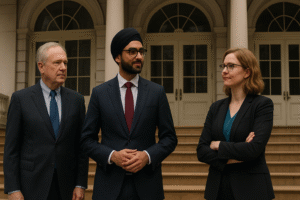




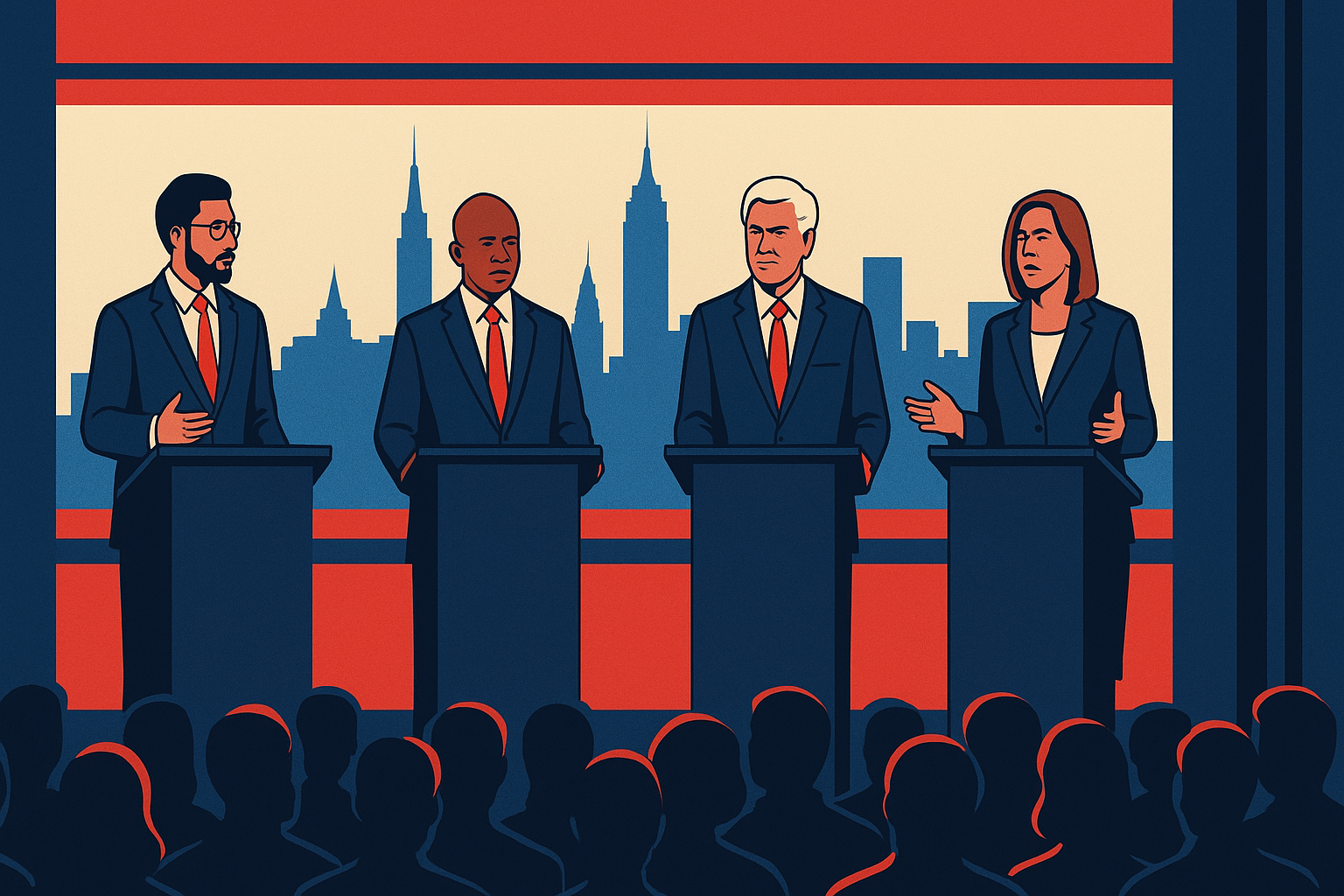
The campaign for New York City’s 2025 mayoral election is gathering momentum, with a diverse slate of candidates competing to shape the city’s future. The field includes prominent figures such as progressive Assembly member Zohran Mamdani, incumbent mayor turned independent Eric Adams, Republican candidate Chris Sliwa, along with several others from across the political spectrum.
Leading Contenders
Zohran Mamdani, representing the progressive wing of the Democratic Party, has built a strong base of support among grassroots organizations and younger voters. His campaign prioritizes affordable housing, improvements in public transit, and expanded protections for immigrant communities, framing him as a candidate of structural change.
Eric Adams, running as an independent after breaking away from the Democratic Party, is focusing on his record as mayor. He highlights achievements in crime reduction, economic recovery, and infrastructure development, appealing to centrist voters who favor stability and continuity.
Chris Sliwa, the Republican challenger, is drawing on his reputation as a community activist and public safety advocate. His platform emphasizes law-and-order policies, tax reductions, and streamlined city services, targeting voters concerned about security and fiscal management.
Other candidates, including civic leaders and representatives of smaller parties, have broadened the debate by introducing additional perspectives on climate resilience, education reform, small business support, and public health.
Central Issues
The election comes at a critical time, with New York City confronting multiple challenges: a housing affordability crisis, public safety concerns, economic inequality, and the need for climate adaptation. Candidates are also under pressure to present clear plans for addressing homelessness, funding public transportation, and balancing development with community needs.
Political Significance
Observers say the 2025 race reflects national political dynamics, bringing together progressive, centrist, and conservative visions. The outcome could signal the direction of New York’s politics for the next decade, underscoring the city’s importance as a cultural and economic leader in the United States.
What’s Next
The election is set for later this year, with televised debates and community forums expected to play a central role in shaping public opinion. Analysts predict that voter turnout—particularly among younger residents and communities of color—may prove decisive in what is shaping up to be a closely contested race.
As the campaign moves forward, New Yorkers will weigh competing visions: progressive reform, centrist continuity, or conservative revival, each offering a different path for the city’s future.