





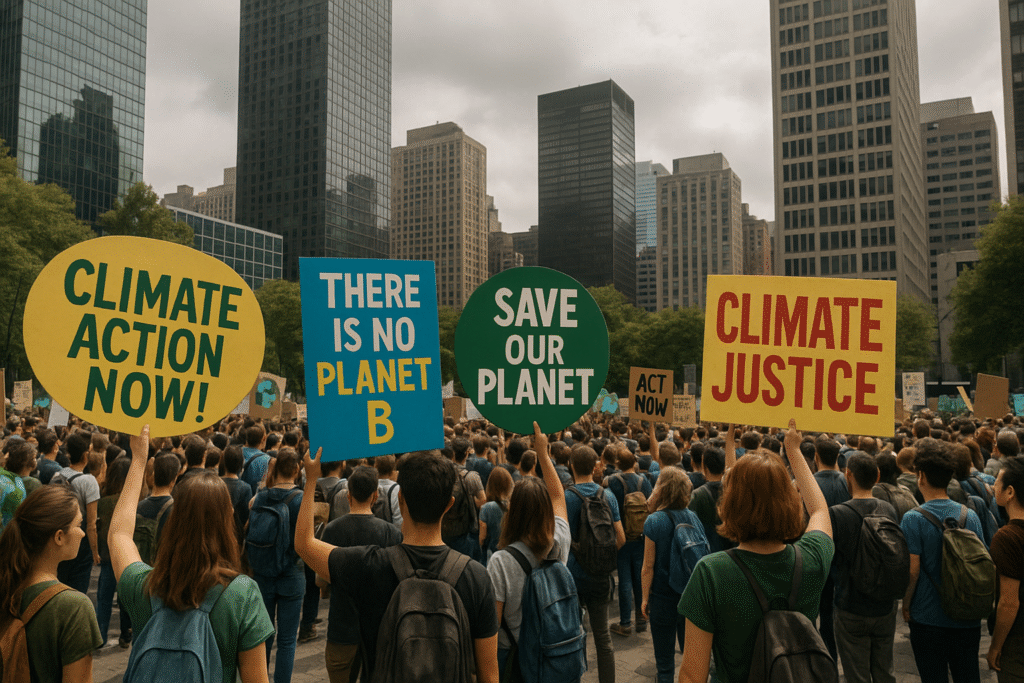
New York City is hosting what has become its largest Climate Week since the event’s inception, featuring more than a thousand conferences, community events, and activities across the city. Despite political headwinds and a decline in federal support for certain environmental initiatives, the program has attracted strong engagement from businesses, civil society organizations, and international delegations committed to advancing climate action.
Record-Breaking Agenda
Organizers confirmed that this year’s schedule is the most comprehensive to date, spanning high-level policy discussions, corporate climate pledges, grassroots campaigns, art installations, and public workshops. Key themes include the transition to renewable energy, strategies for urban climate resilience, food security, and accountability for corporate emissions.
Participation from multinational corporations, financial institutions, and advocacy groups reflects continued private-sector commitment to sustainability, even amid uncertainty surrounding federal climate policy.
Policy and Political Context
The event comes at a critical moment for U.S. climate policy. While New York State and City continue to pursue ambitious environmental goals—such as expanding renewable energy infrastructure and cutting carbon emissions—recent federal rollbacks have sparked concerns about the country’s overall climate trajectory.
International representation remains strong, with several delegations using Climate Week to reaffirm commitments aligned with the Paris Agreement. Organizers emphasized that the initiative demonstrates how state, city, and corporate leadership can sustain progress even when federal momentum slows.
Key Voices
New York Governor Kathy Hochul stressed the importance of local leadership in global climate efforts, stating:
“New Yorkers have always led the way in tackling global challenges. Climate Week is a chance to show that leadership and collaboration can drive real progress, even in difficult times.”
Environmental organizations echoed this call for urgency but cautioned against complacency. Advocacy groups pointed to worsening extreme weather events, rising global temperatures, and continued reliance on fossil fuels as reminders of the need for accelerated action.
Broader Implications
Analysts note that the scale and diversity of participation underline the resilience of the climate movement. Climate Week continues to serve as a global platform for dialogue, partnerships, and accountability, uniting leaders from different sectors to push forward measurable goals.
As the week progresses, focus will shift to whether the discussions translate into concrete outcomes, particularly in areas such as renewable energy financing, sustainable agriculture, and urban adaptation strategies.
For New York, hosting this landmark event not only cements its role as a financial and cultural hub but also positions the city as a leading center for global climate dialogue, even as broader political debates shape the direction of U.S. environmental policy.