






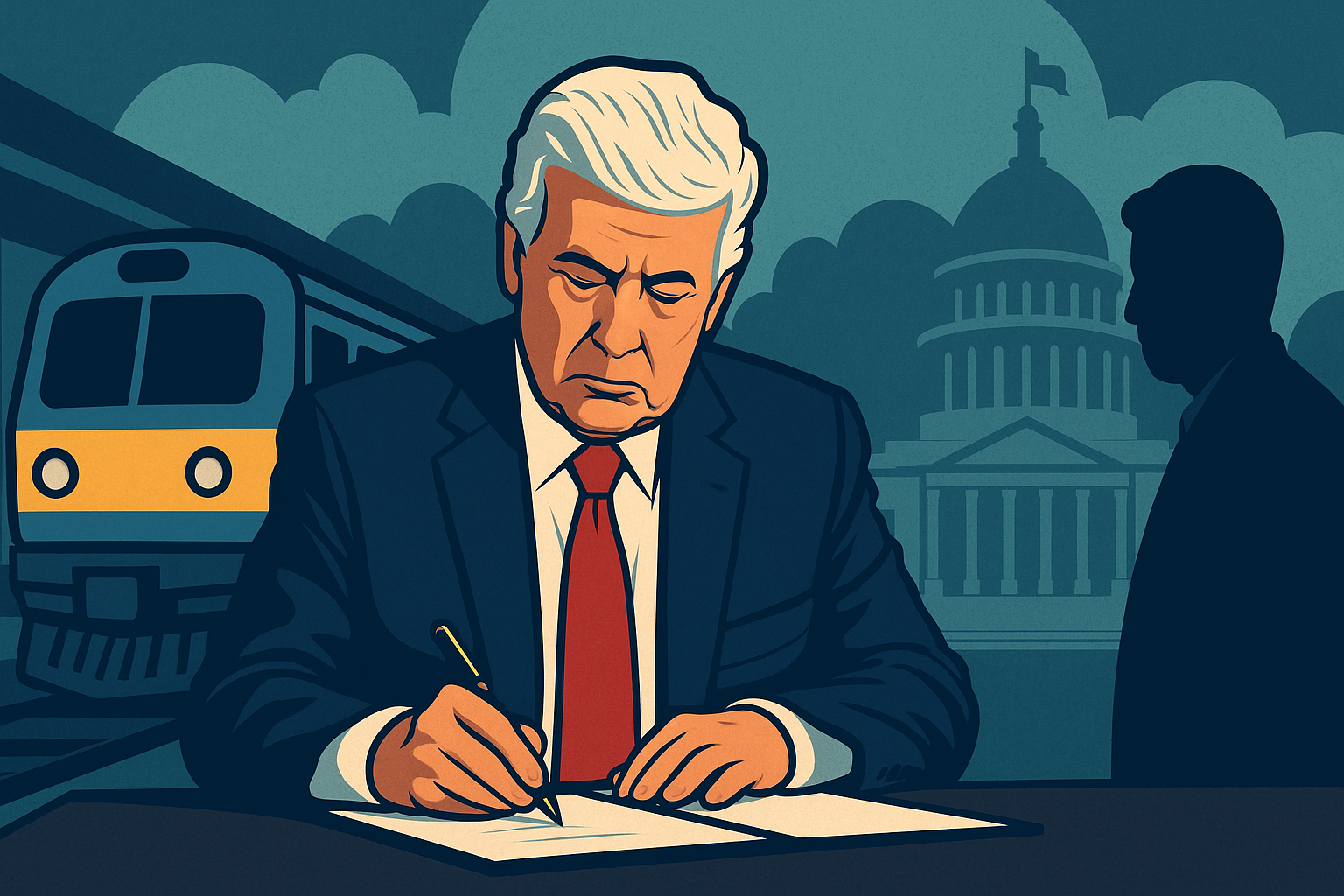
A major disruption to New York’s commuter rail system has been narrowly avoided after federal intervention helped prevent a potential Long Island Rail Road (LIRR) strike that could have lasted up to four months. The LIRR, one of the nation’s busiest commuter rail networks, was on the brink of a shutdown following stalled contract talks between employee unions, the Metropolitan Transportation Authority (MTA), and the state government.
Presidential Action to Avert Crisis
With negotiations deadlocked and the threat of a strike looming, President Donald Trump directed the formation of a federal emergency board (FEB) to mediate the dispute. The panel, made up of independent experts in labor relations and transportation, will examine the positions of both unions and management before issuing recommendations designed to break the impasse.
This decision halts any strike activity for at least 120 days, ensuring continuity of service for commuters while granting both sides more time to work toward an agreement.
Key Issues in Dispute
Union leaders have long voiced frustration over wage stagnation, demanding better pay, improved scheduling, and expanded health benefits. They argue that LIRR employees have been under strain as ridership surged back to near pre-pandemic levels.
For its part, the MTA points to budgetary pressures, citing rising operational costs and extensive infrastructure needs across the transit system. Officials say balancing fair compensation with fiscal responsibility remains a central challenge.
Economists warn that a full-scale strike could have crippled transit for hundreds of thousands of daily riders traveling between Long Island and Manhattan, potentially inflicting billions of dollars in losses on the regional economy.
Mixed Reactions
Governor Kathy Hochul praised the presidential intervention, calling it an essential step to shield commuters from “devastating service disruptions.” Union representatives cautiously welcomed the move, noting they would cooperate with the emergency board while continuing to push for a fair contract.
Commuter advocacy groups also reacted positively, though they stressed the need for a permanent resolution. “This pause gives temporary relief,” one group stated, “but riders deserve long-term stability, not recurring threats of disruption.”
Looking Ahead
The federal emergency board will begin hearings in the coming weeks, with a report expected before the end of the year. Although its recommendations are not legally binding, they often shape the final outcome of labor disputes in the transit sector.
For now, New Yorkers can rely on uninterrupted LIRR service. However, the next four months will be pivotal in determining whether an enduring labor agreement can be achieved—or whether the specter of a strike will resurface.